
Family Cruising Guide 2026: Best Cruise Lines, Kids Clubs & Family Cabins
Family cruising has never been more popular, with cruise lines investing billions in larger waterparks, dedicated kids’ clubs, multi-bedroom suites, and dining designed for every generation.
Family cruise holidays are one of the easiest ways for families to travel together, combining accommodation, dining, entertainment and transport into one seamless experience. Instead of managing hotels, transfers and activities separately, everything is included onboard, making it a simple and stress-free option for parents, children and even grandparents.
A family cruise is designed to suit all ages, from babies and toddlers to teenagers and multi-generational groups. Most cruise lines offer kids’ clubs, family cabins and a wide range of onboard activities, but the experience can vary significantly depending on the cruise line and ship you choose - so matching the right cruise to your family’s needs is key.
Family Cruise Holidays: The Ultimate Guide to Cruising with Children
If you’re planning a cruise with children, this guide breaks down everything you need to know - from the best cruise lines for families to what life onboard actually feels like for toddlers, teens, and multi-generational groups.
Whether you’re sailing from the UK or flying to join your ship, there is now a cruise holiday to suit almost every type of family.
Which cruise line is best for families?
Royal Caribbean is the best overall cruise line for families thanks to its wide range of activities for all ages, from toddlers to teenagers. Disney Cruise Line is best for younger children, MSC Cruises offers strong value, Norwegian Cruise Line suits teenagers, and P&O Cruises is a strong option for UK departures.
Quick Answer: Best Cruise Lines for Families
Best overall: Royal Caribbean
Best for young kids: Disney Cruise Line
Best value: MSC Cruises / Marella Cruises
Best for teenagers: Norwegian Cruise Line
Best UK sailing: P&O Cruises
Best premium family option: Princess Cruises
Below is a comprehensive guide which answers the most common questions asked by those planning a family cruise holiday.
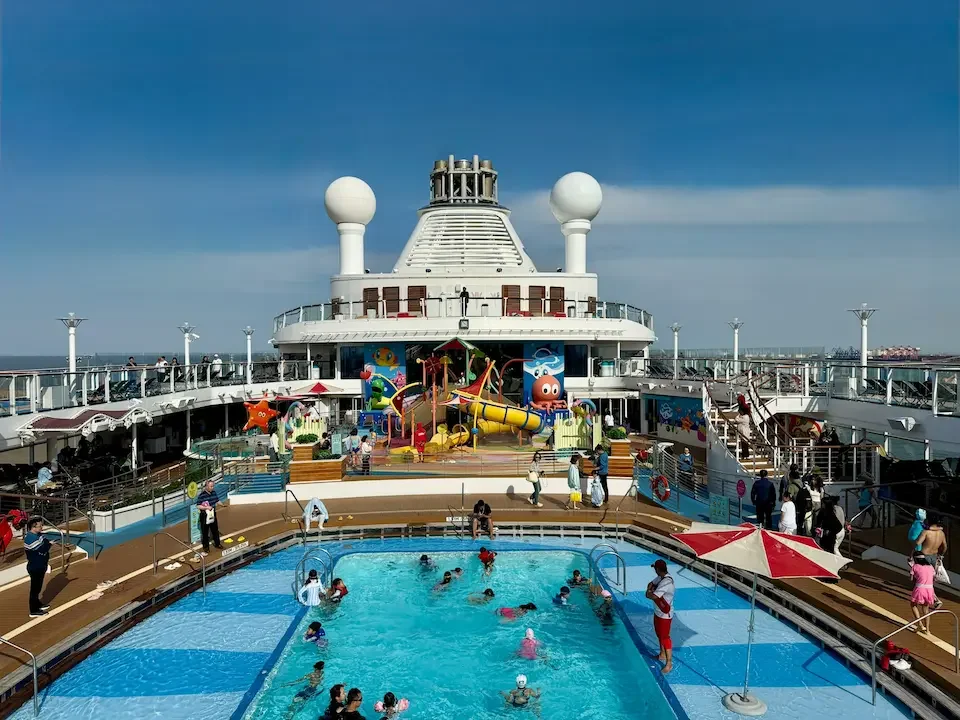
A Complete Family Cruising Guide in 2026/2027
Including: Best Family Cruise Lines, Costs, Kids Clubs, Food & Family Cabins
Discover the best cruise lines for families, what life onboard is really like, how much a family cruise costs, and expert tips for cruising with babies, toddlers, children and teenagers.
Family cruising - or a family cruise holiday - has become one of the most popular ways to travel together, offering a rare combination of convenience, variety and genuine downtime for parents. Unlike traditional resorts, a cruise holiday removes much of the logistical stress that comes with travelling as a family: there is no packing and unpacking between destinations, no searching for restaurants every night, and no need to constantly plan entertainment. Instead, everything moves with you.
For children, cruise ships feel like floating resorts designed around fun. For parents, they offer structure, safety and - perhaps most importantly - the chance to actually relax while children are entertained in age-appropriate clubs and activities.
The modern family cruise is no longer a simple holiday. It is a multi-layered experience designed to work for toddlers, teenagers and grandparents at the same time.
How Much does a Family Cruise Cost?
A family cruise typically costs from around £500–£900 per person for a short 3–5 night sailing, rising to approximately £900–£1,500+ per person for a 7-night cruise in a standard cabin during off-peak dates. For peak school holiday sailings or balcony cabins, prices can increase to around £1,500–£2,500+ per person, with suites or premium family accommodation costing significantly more depending on the cruise line and itinerary.
While the upfront price can seem higher than some resort holidays, a family cruise is often highly competitive once food, entertainment and accommodation are factored in.
The cost of a family cruise holiday is determined by many factors, such as cruise line, itinerary, and accommodation - but it can work out to be an extremely good value choice of family holiday. One of the most important aspects to understand is what is included in the fare, making it easier to compare against land-based holidays where many extras are charged separately.
Key Cost Drivers
Cabin Type: Interior cabins are the most budget-friendly, while ocean-view, balcony, and suite cabins increase in price sequentially.
Cruise Line: Family-oriented cruise lines have varying price points based on their target audience and on-board amenities.
Seasonality: Booking during school holidays (summer, Christmas, spring break) costs significantly more than traveling during off-peak times.
Add-ons: Excursions, specialty dining, Wi-Fi, and drink packages usually cost extra, although some lines offer promotional upgrades
What is usually included in the fare:
Accommodation in your chosen cabin or suite
Main dining rooms and buffet restaurants
Children’s clubs and supervised activities
Evening entertainment and live shows
Pool access and onboard facilities
Additional costs may include:
Drinks packages and speciality beverages
Shore excursions and guided tours
Specialty dining restaurants
Wi-Fi packages
Select onboard activities and spa treatments.
While cruises can appear expensive initially, the all-inclusive structure often makes them highly competitive when compared with resort holidays, especially if you can find a third/fourth person free deal, or similar. MSC Cruises offer free cruises for children up to 17 years on certain dates, which could ultimately mean you just pay for two adults.
What to Expect on a Family Cruise
A family cruise is a highly structured yet flexible holiday where accommodation, dining, entertainment and childcare all take place on one floating resort, allowing families to travel between destinations without the usual stress of planning logistics day to day. Onboard, children typically split their time between supervised kids’ clubs, pools and activity spaces, teenagers gravitate towards dedicated lounges and sports or gaming areas, and parents often enjoy a mix of relaxation time, entertainment and shared family meals in the evenings. A family cruise feels less like a traditional holiday and more like a self-contained experience where every age group has something tailored to them.
Why Families Choose Cruising
A family cruise works so well because it combines travel, accommodation and entertainment into one seamless experience, while still giving each member of the family space to enjoy their own time.
Families choose cruising because:
Everything is included in one main price, simplifying budgeting
Entertainment is available throughout the day and into the evening
Children’s clubs are professionally run and grouped by age
Dining is flexible, casual and available across multiple venues
Multiple destinations are included without the stress of travel logistics
The balance of shared time and independence is what makes a family cruise particularly appealing compared to traditional resort holidays.
Family Cruise Line Comparison
The following section compares cruise lines for family cruising.
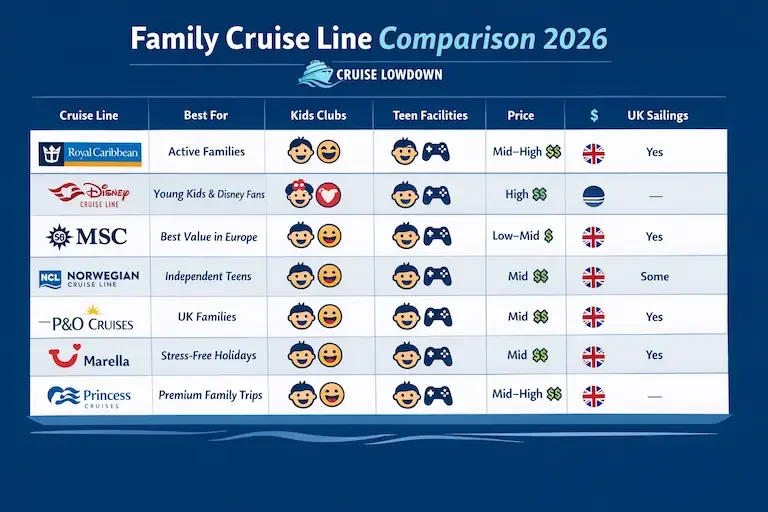
Family-friendly Cruise Lines Comparison Infographic. Image: Kathy Taylor, Cruise Lowdown (AI Generated)
Best Cruise Lines for Families
Royal Caribbean: Best for High-Energy Families
Royal Caribbean is one of the best cruise lines for families, offering large-scale ships packed with attractions such as surf simulators, climbing walls, zip lines, ice rinks and dedicated waterparks.
Royal Caribbean is often the first cruise line that comes up for family cruises, and for good reason. Its ships are designed as entertainment hubs, packed with attractions that rival theme parks.
Children’s clubs are extensive and well structured, split into age groups from toddlers through to teenagers. These programmes go far beyond supervision, offering themed events, science activities and evening parties that often become a highlight of the cruise for younger guests.
Royal Caribbean is often considered one of the best cruise lines for families with children and teenagers due to its scale, entertainment offering and structured kids’ programmes.
New family cruise flagships, such as the Icon Class mega ships (Icon of the Seas, Star of the Seas, Legend of the Seas), have whole “neighbourhoods” dedicated to families.
Best for: Families with older children and teenagers who want constant activity and variety
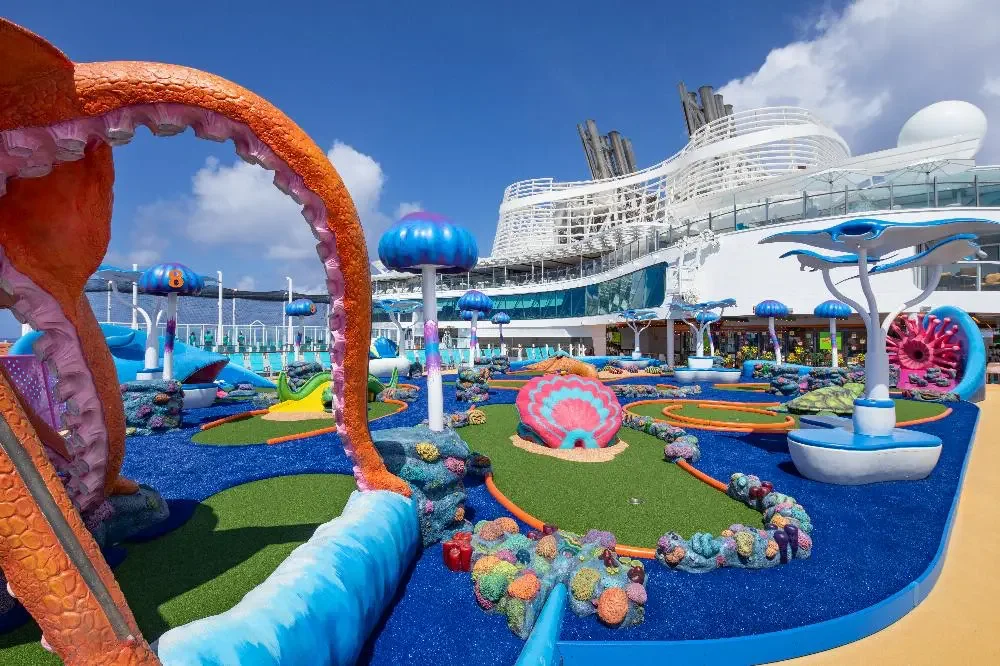
Disney Cruise Line: Best for Immersive Family Experiences
Disney Cruise Line is one of the most family-focused cruise lines in the world, combining character experiences, themed dining, children’s clubs and Broadway-style entertainment in a fully immersive holiday experience.
Why Disney Cruise Line is ideal for family cruises:
Fully immersive Disney storytelling across the entire ship
Age-specific kids’ clubs from nursery through teens
Character meet-and-greets included in the fare
Rotational dining with themed restaurants
West End and Broadway-style evening shows
Adults-only spaces for relaxation and downtime
What sets Disney apart is its ability to appeal across generations. Younger children are fully absorbed in character experiences and themed play spaces, while adults benefit from dedicated areas that feel surprisingly calm and refined compared to the rest of the ship.
Rotational dining means families experience different themed restaurants each night with the same serving team, creating a sense of familiarity even while moving between venues.
What children experience onboard Disney Cruise Line:
Included Daily character interactions and themed activities with favourite Disney characters
Supervised age-group clubs with games and crafts
Pool deck parties and family-friendly entertainment
Evening events and themed shows designed for all ages
Best for: Disney Cruise Line is best for family cruises with younger children or multi-generational Disney fans looking for a fully immersive, themed holiday experience.
Disney Cruise Line is widely regarded as one of the best cruise lines for families due to its combination of immersive entertainment, structured kids’ programmes and strong appeal across all age groups.
For an example see Disney Wish Kids Cubs and more.
MSC Cruises: Best Value for European Family Cruises
MSC Cruises is one of the best-value family cruise lines in Europe, combining competitive pricing with large ships, family-friendly facilities and extensive children’s programmes.
Why MSC Cruises is ideal for family cruises
Competitive family pricing
Children often sail free or at reduced fares (up to 17 yrs)
LEGO-themed kids’ clubs on many ships
Waterparks and family entertainment
Strong Mediterranean itinerary programme
Modern ships with plenty of onboard activities
MSC Cruises has rapidly positioned itself as one of the strongest family-friendly options in Europe, particularly for those looking for good value without compromising on facilities.
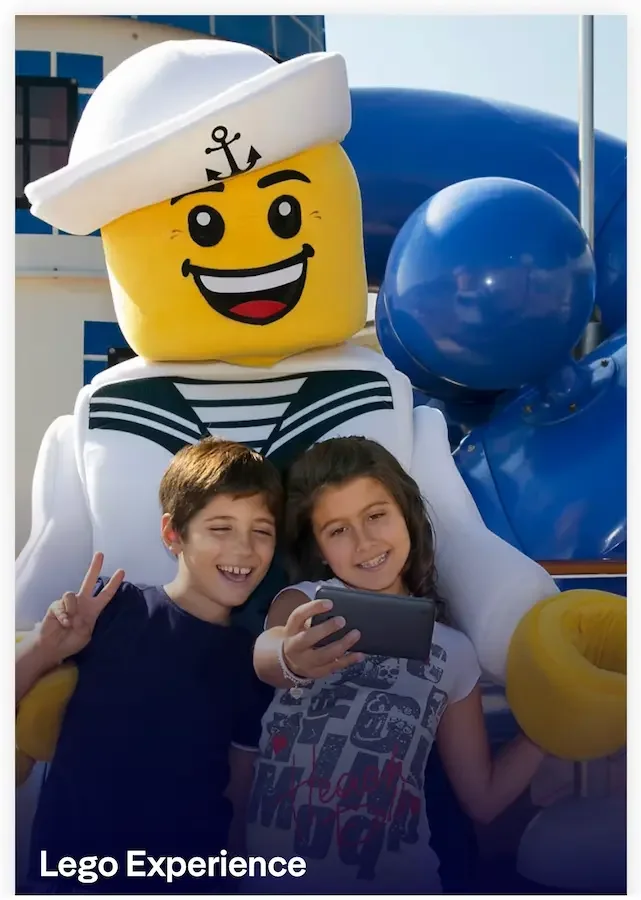
MSC Cruises offer value holidays for families including a Lego experience. Image: MSC Cruises website
Onboard ships often include LEGO-themed kids’ clubs, waterparks, bowling alleys and Formula 1 simulators*, alongside large entertainment theatres and family-friendly shows.
Budget consideration on MSC Cruises:
Whilst many activities and kids clubs are included, premium rides and games attract additional cost.
* Some ships (like MSC Virtuosa or MSC Grandiosa) occasionally offer an unlimited time-based fun package instead of a credit system.
Fun Pass Cost: Typically ranges between €80-€100/£80-£100 per person for a standard 7-night. The MSC Fun Pass is an all-access credit token used to pay for premium activities in the ship’s Amusement Area such as simulators and interactive rides.
MSC Cruises is known for competitive pricing, with children up to age 17 often sailing at reduced rates or free on selected sailings, making it especially appealing for larger families.
Best for: Families seeking affordable Mediterranean cruising with strong onboard facilities.
Norwegian Cruise Line: Best for Teenagers
Norwegian Cruise Line is one of the best cruise lines for teenagers, offering flexible dining, independent activities and some of the most innovative attractions at sea.
Why Norwegian Cruise Line is ideal for family cruises
Flexible dining with no fixed dining times
Go-kart tracks and virtual reality attractions
Dedicated teen lounges and social spaces
Relaxed onboard atmosphere
Excellent choice for older children
Strong focus on independence and flexibility
Norwegian Cruise Line focuses heavily on freedom and flexibility, which works particularly well for families cruising with older children.
Instead of fixed dining times, guests can eat when and where they like, which suits the unpredictable nature of travelling with teenagers. Onboard entertainment includes go-kart tracks, laser tag, virtual reality experiences and dedicated teen lounges.
This is a cruise line where teenagers are often left to independently explore the ship within safe boundaries, which in turn gives parents a genuine sense of holiday freedom.
Best for: Families with teenagers who want independence and flexibility.
P&O Cruises: Best for UK Family Holidays
P&O Cruises is one of the most popular family cruise lines for British travellers, offering UK departures, family-friendly facilities and a familiar onboard experience.
Why P&O Cruises is ideal for family cruises
Sail directly from Southampton
British-style dining and entertainment
Well-regarded Reef children’s clubs
School holiday sailings available
Family Conservatory Mini-Suites on selected ships
Easy option for first-time cruisers
P&O Cruises remains one of the most popular choices for British families sailing from Southampton. Its ships are designed with familiarity in mind, offering British-style dining, straightforward layouts and seasonal school holiday departures.
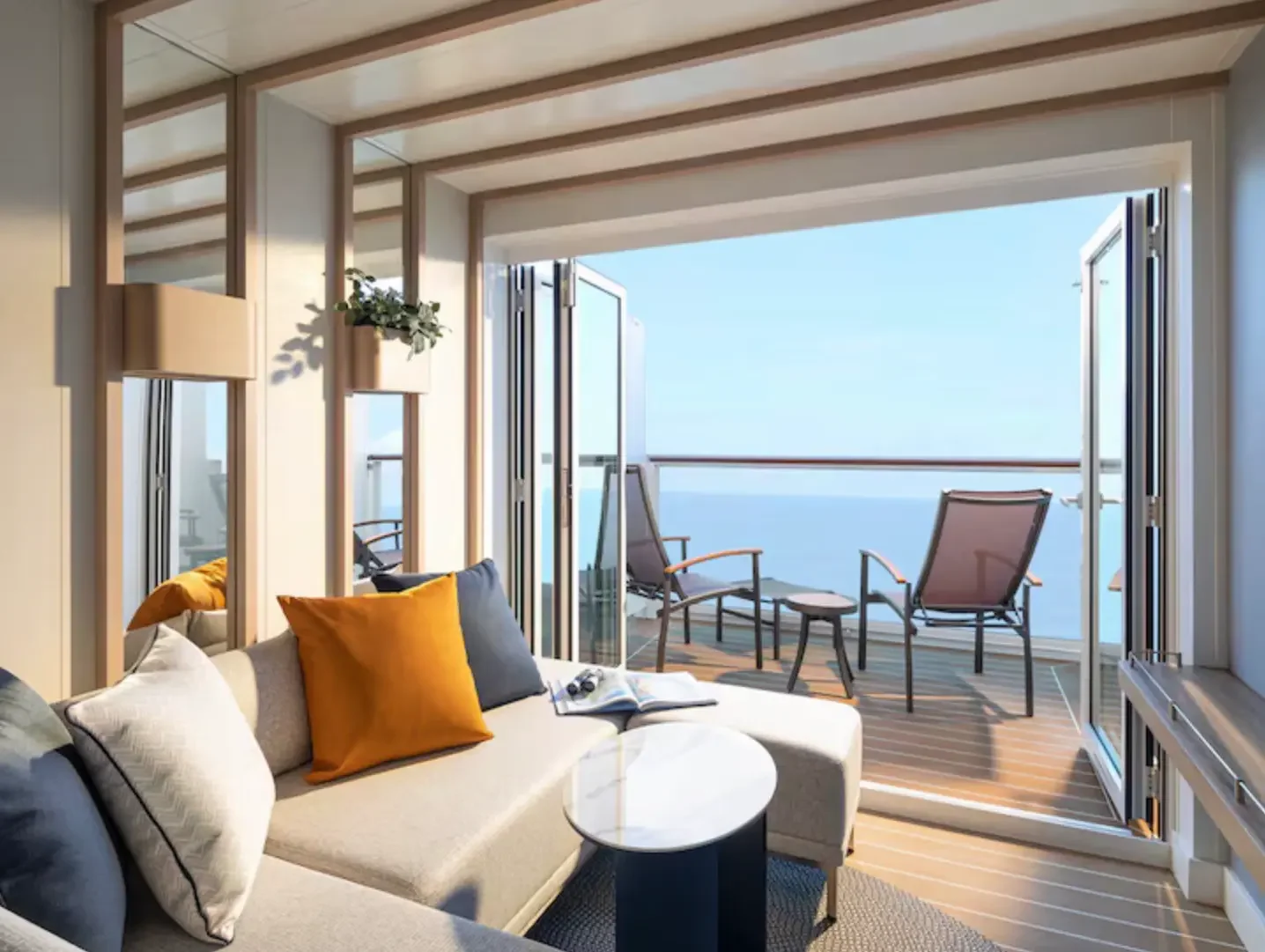
P&O Cruises have coveted family conservatory mini-suites sleeping 2-5 guests. Image: P&O Cruises
The Reef kids’ clubs are well structured, and entertainment is designed to be family-friendly without being overwhelming.
On Arvia and Iona, selected Conservatory Mini-Suites accommodate between two and five guests, providing additional flexibility for families. Of the two ships, Arvia offers the widest range of family-focused attractions and activities and is probably the best option for family fun.
Best for: First-time cruisers and families who prefer a traditional UK sailing experience.
Marella Cruises: Best for Stress-Free Value Holidays (but limited)
Although not fleet-wide, Marella Cruises is one of the easiest family cruise options for British travellers, with flights, transfers, meals and entertainment typically included in the holiday price. There are three (soon to be two) family-friendly ships in the Marella fleet - Marella Explorer, Marella Voyager and Marella Discovery 2 (from Winter Season 2026/2027 it be ones Adult only).
Why Marella Cruises is ideal for family cruises
Flights and transfers usually included
Family-friendly atmosphere
Straightforward pricing structure
Good value for first-time cruisers
Relaxed and informal onboard environment
Strong fly-cruise programme from regional UK airports
Whilst not having as many family attractions onboard as on other cruise lines, Marella Cruises appeals to families looking for simplicity. With flights, transfers, meals and entertainment typically included, it removes many of the hidden costs that can surprise first-time cruisers.
The onboard atmosphere is relaxed and informal, making it especially accessible for families who may be new to cruising.
Best for: Families wanting an easy, all-in-one value package holiday experience.
Princess Cruises: Best Premium Family Cruise Option
Princess Cruises offers a more premium family cruise experience, combining spacious ships, excellent dining and modern children’s facilities with a relaxed onboard atmosphere.
Why Princess Cruises is ideal for family cruises
Modern children’s clubs on newer ships
More premium onboard experience
Excellent dining options
Family-friendly entertainment
Spacious public areas
Good balance between family facilities and adult spaces
Princess Cruises is often overlooked when discussing family cruises, but its newer ships have significantly improved their appeal for families.
Ships including Sky Princess, Sun Princess and Star Princess feature bright, modern children’s clubs and family facilities while maintaining the more refined atmosphere that Princess is known for.
Best for: Parents wanting a more premium experience with facilities to keep children entertained.
What a Family Cruise Actually Feels Like Onboard
Brochures will tell you about waterslides, kids’ clubs and family entertainment, but they don’t really explain what family life onboard is actually like. The reality is that most families settle into a surprisingly comfortable routine within a day or two, and that’s often what makes a cruise feel so much more relaxing than a land-based holiday.
Parents Don’t Spend All Day With Their Children
One of the biggest surprises for first-time family cruisers is how little time they actually spend together during the day.
After breakfast, younger children often head off to kids’ clubs while teenagers vanish in search of friends, sports courts or gaming lounges. Parents suddenly find themselves with an unexpected hour by the pool, a quiet coffee overlooking the sea or even a spa treatment.
Generally, everyone comes back together for lunch, an afternoon swim or evening entertainment. It creates a balance that’s surprisingly difficult to replicate in a resort, where someone is usually trying to decide what to do next.
Why Teenagers Seem To Disappear
Many parents worry that teenagers will be bored on a ship, but actually, the opposite is usually true (as I found out travelling with our four teenage daughters).
Within the first day or so, they often meet other teenagers through organised activities or simply by hanging around the basketball court, sports deck or teen lounge. Before long they’re messaging new friends, grabbing pizza between activities or competing in gaming tournaments.
Ships are designed to feel safe and self-contained, giving teenagers a level of independence they rarely get on holiday at home. Don’t be surprised if you only see them at breakfast and dinner (we always made “Check-in” times) - they’re probably having the time of their lives.
Dining Isn’t As Chaotic As You Might Expect
The buffet on embarkation day can feel busy (💡go to the main dining room instead - it’s quieter), but families quickly find their own routine.
Some prefer an early breakfast before the crowds arrive, while others head to the main dining room where table service feels much calmer than the self-service buffet. Children also become remarkably independent, happily collecting fruit, cereal or pizza without needing constant supervision.
The beauty of cruise dining is its flexibility. If someone isn’t hungry at six o’clock, there will almost certainly be somewhere else to eat later. There are no lengthy walks into town or frantic searches for child-friendly restaurants - everything is just a few minutes away.
Why Balcony Cabins Make More Sense For Families Than Couples
Couples often book a balcony for the view. Families quickly realise it’s useful for completely different reasons.
When younger children go to bed early, parents don’t have to sit in darkness waiting for bedtime themselves. Instead, they can enjoy a glass of wine, read a book or simply watch the sea from their own private outdoor space.
On sea days it also provides a welcome escape from the bustle of the public decks, giving everyone a quiet place to recharge before heading back out to enjoy the ship again.
Sea Days on a Family Cruise
Sea days are full days at sea when the ship is not in port, and they often become one of the most enjoyable parts of a family cruise because there is no pressure to plan travel or excursions.
On a sea day:
Children typically attend kids’ clubs or head to pools and activity areas
Teenagers socialise in dedicated lounges or sports areas
Parents enjoy quieter spaces such as pools, cafés or the spa
Families come together for meals and evening entertainment
The day unfolds at a relaxed, unstructured pace
Sea days are often when families fully settle into the rhythm of life onboard and realise how effortless cruising can feel.
Ask first-time cruisers what they were worried about and many will mention sea days. The thought of spending an entire day at sea with children can seem daunting, when In reality, they’re often the highlight of the holiday.
There’s no rushing to catch excursion buses or worrying about getting back to the ship on time. Breakfast stretches into mid-morning, children head off to clubs or pools, parents find a sun lounger (will be more tricky on a sea day admittedly) or coffee shop, and somehow the day drifts by effortlessly.
Everyone knows where they want to be, nobody has to organise complicated plans and, for once, the holiday feels genuinely relaxing for adults as well as children. Once you e tried it you’ll never look back.
What Kids Clubs Are Really Like
Kids clubs on a family cruise are structured, age-specific activity programmes designed to entertain children in a safe and supervised environment throughout the day and evening.
Most cruise ship kids clubs include:
Separate groups for toddlers, children and teenagers
Themed activities such as crafts, games and competitions
Sports sessions and outdoor play where available
Evening events, parties and movie nights
Supervised teen lounges with age-appropriate freedom
Rather than simple childcare, modern kids clubs operate more like activity centres, giving children independence while allowing parents time to relax.
Family Dining at Sea
Dining on a cruise is designed to be flexible, informal and family-friendly. Unlike traditional resorts where restaurants must be booked or located off-site, cruise ships offer a wide variety of options within walking distance.
Buffets remain the most popular choice for families due to their flexibility, but most ships also offer casual dining venues serving pizza, pasta, burgers and international dishes throughout the day.
Importantly, cruise lines have become increasingly attentive to dietary requirements. Gluten-free, vegetarian, vegan and allergy-friendly options are widely available, and staff are generally well trained in handling special requests.
For families, the key benefit is simplicity: no searching for restaurants, no waiting for tables and no pressure to follow rigid dining schedules.
Accommodation: Choosing the Right Cabin for Your Family
Cabin choice has a significant impact on the overall family cruise experience.
Inside cabins are the most affordable option, but are best suited to families who plan to spend very little time in their room. Ocean view cabins add natural light, which can make a noticeable difference for longer sailings.
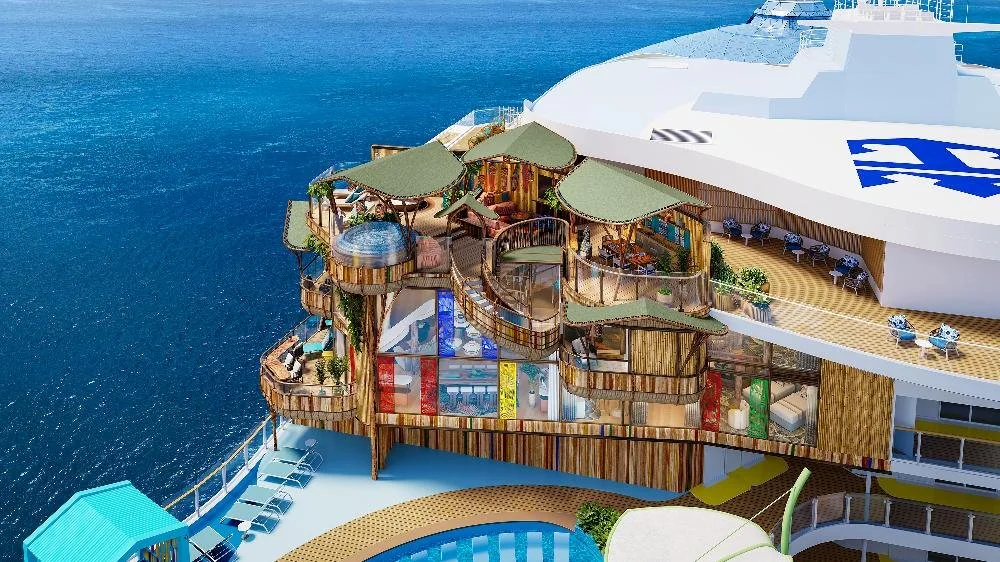
Family Accomodation Goals! Royal Caribbean’s Hero of the Seas features new accommodations for multi-generational families, including the first-of-its-kind Ultimate Family Treehouse.
Family Cruise Cabins: Why Balcony Cabins Work Best for Families
Balcony cabins are often considered the sweet spot for families, offering private outdoor space that becomes particularly valuable during nap times or early mornings.
For larger families, purpose-built family balcony cabins and suites are increasingly common. These can include multiple sleeping areas, extra bathrooms and separate living spaces, helping to reduce the feeling of being in a confined space.
Suites also often come with added benefits such as priority boarding, concierge services and access to exclusive areas of the ship.
Entertainment for All Ages
Modern cruise ships operate on a full-day entertainment cycle. Mornings may include sports activities and games, afternoons bring theatre rehearsals or poolside events, and evenings are reserved for large-scale productions.
Entertainment can range from West End-style shows and live music to outdoor cinema screenings and themed deck parties. Many ships now also include immersive experiences such as aqua shows, ice skating performances and interactive game shows.
The key point is that there is always something happening, but participation is entirely optional.
Are Family Cruises Good for Babies?
Cruising with babies is entirely possible, but requires some planning. Most cruise lines accept infants from around six months of age, although some longer itineraries may require children to be older.
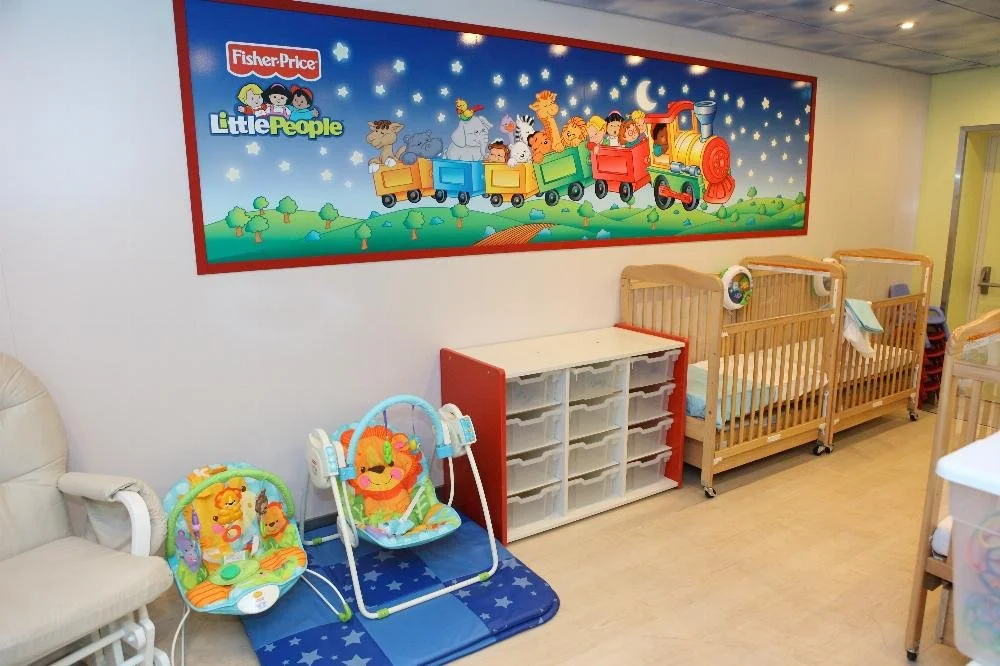
Royal Caribbean's Oasis of the Seas offers the Royal Babies and Tot's Nursery for kids ages 6 mths. to 3 years old. Image: Royal Caribbean
Facilities vary, but many ships now offer baby-changing areas, bottle warming services and nursery-style play spaces. Parents should always check policies before booking, particularly for shore excursions and childcare services.
Final Tips for Booking a Family Cruise
Successful family cruising often comes down to planning rather than complexity.
Booking early for school holidays is essential, as family cabins sell out quickly. Choosing the right ship for your children’s ages makes a significant difference to onboard enjoyment. It is also worth considering itinerary length carefully, especially for first-time cruisers with younger children.
Packing swimwear in hand luggage, downloading cruise apps before sailing and pre-booking kids clubs where possible can all help smooth the embarkation process.
Which Cruise Line Is Right For Your Family?
If you have toddlers or young children:
Disney Cruise Line or MSC Cruises (structured clubs + gentle entertainment)
If you have mixed-age children:
Royal Caribbean or P&O Cruises (balance of independence + family time)
If you have teenagers:
Norwegian Cruise Line (freedom + activity-driven ships)
If you are first-time cruisers:
Marella Cruises or P&O Cruises (simple, familiar, low stress)
Frequently Asked Questions
What is the best cruise line for children?
Royal Caribbean and Disney Cruise Line consistently rank among the best thanks to their huge range of onboard attractions and excellent kids clubs.
Are kids clubs free on cruises?
Most mainstream cruise lines include children’s clubs within the cruise fare, although nursery care may carry a charge.
What age is best for a family cruise?
Cruises suit almost every age, from babies through to teenagers, with age-specific activities available onboard.
Are cruises cheaper than all-inclusive holidays?
They can be, particularly when meals, accommodation, entertainment and transport between destinations are considered together.
Is food available all day?
Most ships have food available from early morning until late at night, with buffets, cafés and casual dining venues open throughout the day.
The Lowdown
Family cruising works because it solves one of the biggest challenges in travel: keeping multiple generations happy at the same time. With the right cruise line and ship, it becomes less about compromise and more about shared experience — with enough space for everyone to enjoy the holiday in their own way.
For many families, it is not just an easy holiday option. It becomes the one they return to again and again.