
How to Behave on a Cruise-The Unspoken Rules First-Time Cruisers Are Never Told
Cruise Behaviour Explained: What’s Expected on Board - How to Navigate Social Etiquette on Your Cruise
Many first-time cruisers are unsure about what behaviour is considered normal onboard. This guide explains the unspoken cruise social norms, from dining and dress codes to pool deck etiquette, so you can relax, enjoy your holiday, and avoid common first-time mistakes.

Cruise Etiquette - What you need to know before you board. Image: Canva AI
Cruises come with dress codes, daily programmes and very clear rules about what you can and can’t bring onboard. What they don’t give you is a guide to the social norms – the things everyone seems to understand instinctively once they’ve done a few sailings.
If you’ve ever wondered “Is this normal on a cruise?” or worried about standing out for the wrong reasons, you’re not alone. Many first-time cruisers feel quietly anxious about doing the wrong thing, breaking an unwritten rule, or simply not knowing how things work socially at sea.
The good news is that cruise ships are far more relaxed than people expect. But there are a few unspoken cruise social norms worth knowing – not because anyone is policing them, but because understanding them makes the whole experience smoother, easier and far more enjoyable.
This is the stuff people usually only learn after their first cruise.
Cruise Social Norms Explained (What Actually Matters Onboard)
Cruises bring together thousands of people from different countries, age groups and travel styles, all sharing the same floating space for days or weeks at a time.
Because of that, cruise culture tends to value:
courtesy over formality
flexibility over rigid rules
not making life harder for other passengers
Most unspoken cruise rules fall into one of those categories.
You Don’t Have to Be Social – But You Do Have to Be Polite

Passengers strolling along the cruise ship deck. Image: Canva AI
One of the biggest misconceptions is that cruising is intensely social, or that you’re expected to mingle constantly.
In reality, it’s perfectly normal to:
dine alone
sit quietly with a book
skip activities entirely
keep to yourself for days at a time
What is noticed is how people treat crew and fellow passengers.
Simple cruise etiquette that genuinely matters:
acknowledging staff when they greet you
being patient during embarkation, tender ports and busy sea days
not taking frustrations out on the nearest crew member
You don’t need to be chatty. You just need to be decent.
Pool Deck Behaviour Has Its Own Unwritten Rules
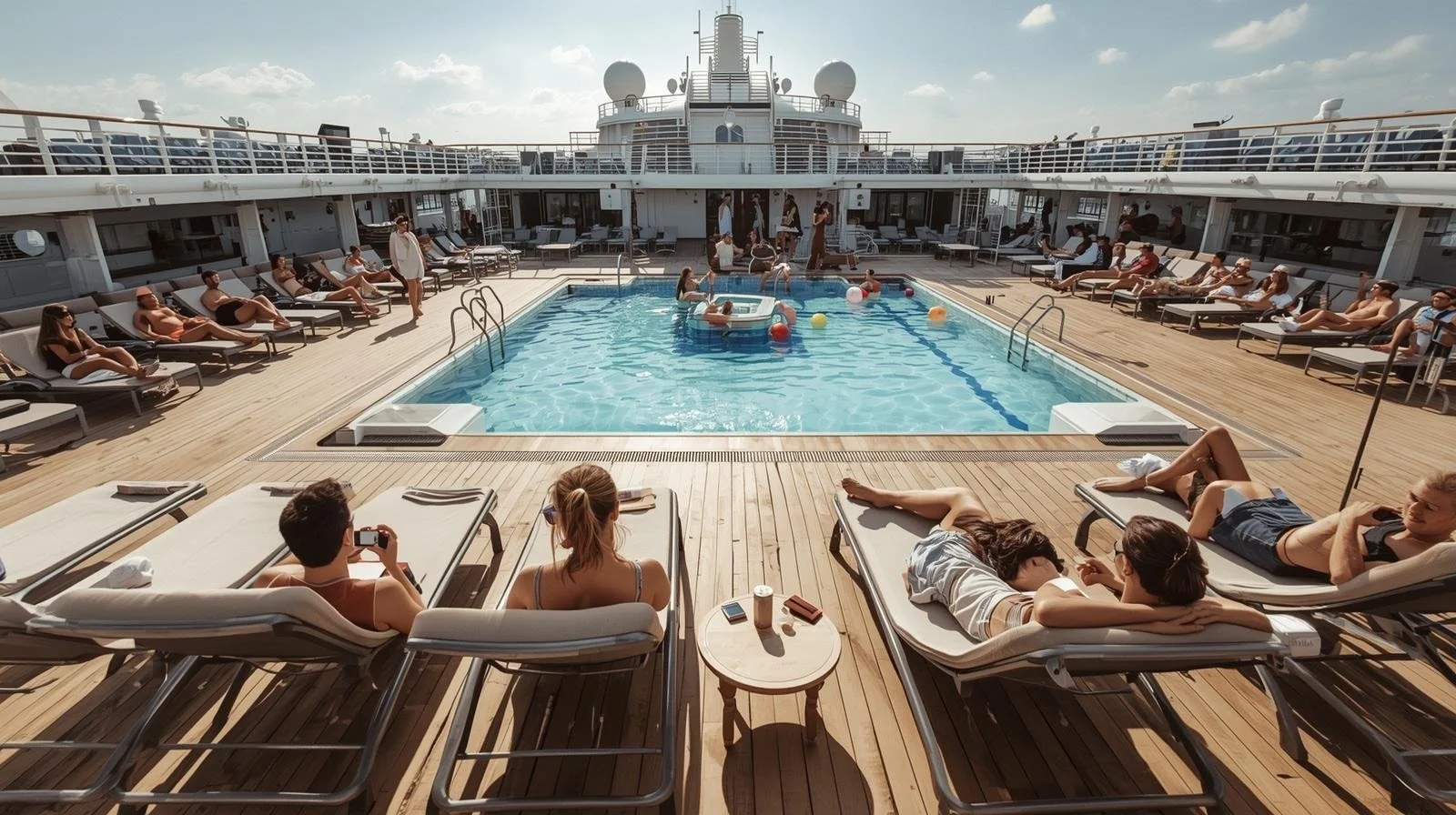
Passengers enjoying a cruise pool deck expect certain niceties. Image: Canva AI
The pool deck is where cruise social norms are most quietly enforced – not by staff, but by side-eye.
Things that are technically allowed, but socially frowned upon:
reserving sunbeds for hours and disappearing
loud speakerphone calls or personal music
spreading across multiple loungers when space is limited
Things that are completely normal:
chatting with strangers
being asked by crew to move towels
leaving when it’s busy and returning later
Cruise ships are shared spaces. Most people understand that instinctively.
Dress Codes Are Looser Than You Think – But Context Matters

Whether you prefer to dress formally or relaxed casual you will find dress codes are generally flexible
Cruise dress codes cause more anxiety than almost anything else, yet most ships are far more relaxed than their reputation suggests.
That said, there are social expectations tied to time and place.
Generally accepted cruise norms:
swimwear is fine by the pool, not in dining rooms
casual clothing works during the day
evenings are usually a little smarter, even without formal nights
No one is checking labels or policing outfits. But turning up to lunch straight from the pool, dripping wet or to dinner in a football kit, will attract attention – and not the kind most people want.
If you’re unsure, look around. Cruise ships are very good at providing visual cues.
Formal Night Is Optional – But Skipping It Quietly Is the Norm
A common first-time cruiser worry is whether skipping formal night is rude.
It isn’t.
Many passengers:
dress up and enjoy it
dress smart-casual instead
avoid the main dining room altogether
The unspoken rule here is simple: do your thing without making it someone else’s problem. If you’re opting out, there are usually alternative venues designed for exactly that.
Crew See Everything – How You Treat Them Shapes Your Experience

Respect the crew - they work hard to make your cruise unforgettable. Image: Canva. AI
Crew members are unfailingly professional, but they also notice patterns.
Passengers who are remembered fondly tend to:
say thank you
use names when possible
make reasonable requests
Those who treat crew as invisible service providers often find service becomes strictly functional.
This isn’t about tipping more. It’s about basic human interaction, and it influences your cruise more than many people realise.
Shore Excursions Have Their Own Social Rhythm
On excursions, cruise social norms shift slightly.
What’s generally expected:
being on time
listening during safety briefings
not dominating guides with unrelated questions
It’s also completely normal to:
chat briefly, then drift back into your own space
stick with your partner rather than the wider group
No one expects forced bonding.
Cruise Dining Is More Flexible Than It Looks
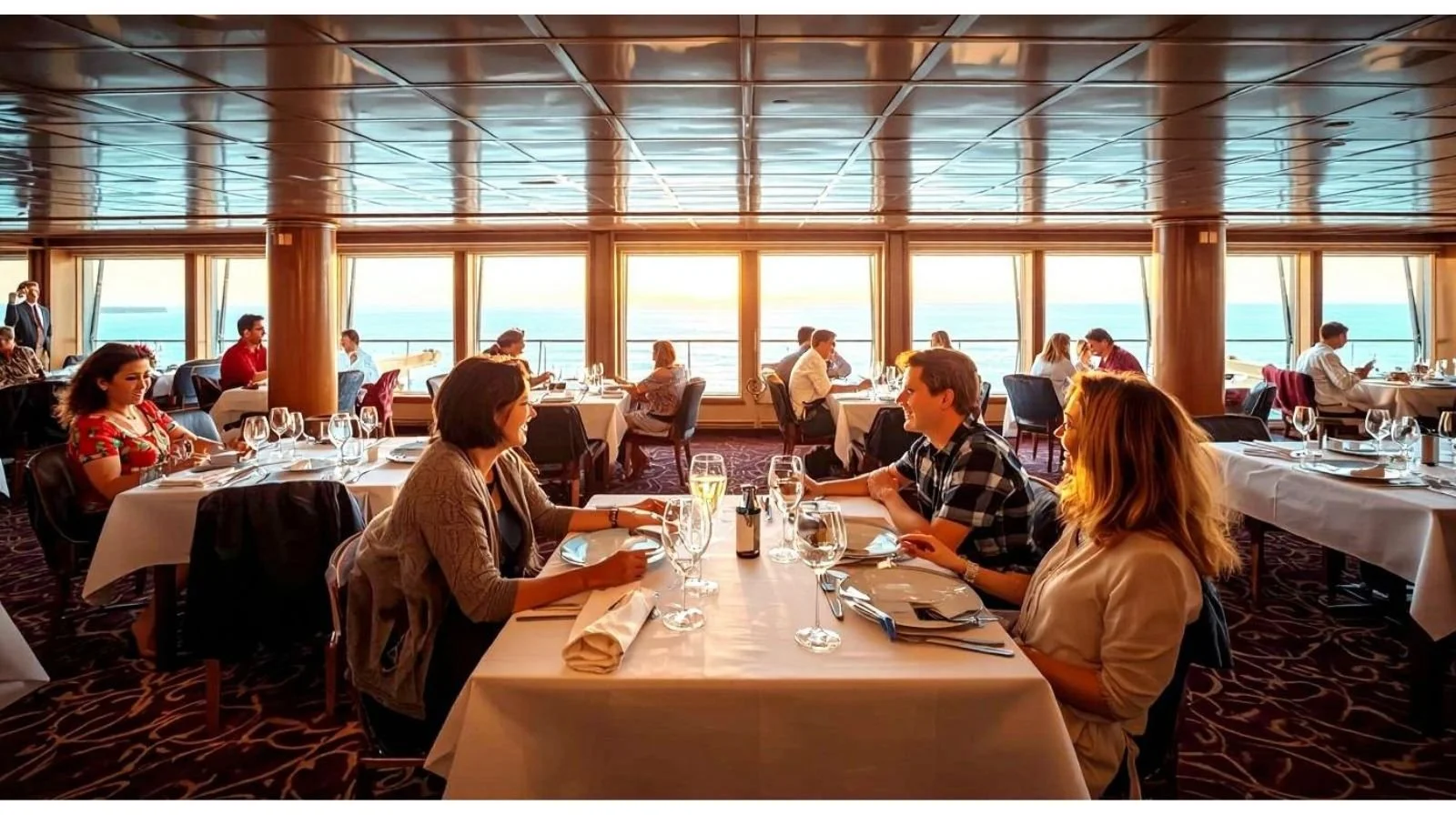
Dining on a cruise ship is just like eating out on shore with same social norms
Dining rooms may look formal, but behaviour is usually relaxed.
Socially normal cruise dining habits include:
lingering over meals
chatting with nearby tables
declining courses without explanation (and indeed, asking for additional courses/dishes)
What tends to stand out:
snapping fingers or whistling for service
loudly complaining within earshot of staff
ignoring dress guidance entirely
Again, tone matters more than rules.
You’re Allowed to Opt Out of Almost Everything
This is one of the most reassuring unspoken cruise rules.
It’s completely normal to:
skip shows
avoid parties
leave events early
ignore announcements
Cruise ships are built around choice, not obligation. Anyone judging your activity level is far more invested than they need to be.
Exceptions
It is compulsory to participate in the Muster drill (whether in person or more usually now, by watching it on TV.
You must adhere to direct instructions from crew members and officers as this will usually be for your safety.
What People Actually Judge (Quietly)

Cruise ships are built around choice so do your own thing - you won’t be judged
Let’s be honest. There are things people notice. Passengers tend to judge behaviour, not lifestyles.
Common triggers:
rudeness
entitlement
lack of spatial awareness
treating crew poorly
Things that barely register:
cruising solo
age
how dressed up you are
whether or not you drink alcohol
Most people are far too busy enjoying their own holiday.
The Big Unspoken Rule: Don’t Make Life Harder for Others
If there’s one cruise social norm that underpins all the others, it’s this.
Cruise ships work best when everyone:
shares space
shows patience
accepts small inconveniences
Those who struggle onboard often expect the ship to bend entirely around them. Those who thrive understand it’s a collective experience with personal freedom built in.
The Lowdown
Cruise social norms aren’t about fitting in or following invisible rules. They’re about easing yourself into a floating community where courtesy carries far more weight than conformity.
If you’re kind to crew, aware of shared spaces and relaxed about doing things your own way, you’ll already be ahead of the curve – even on your very first cruise.
And if you ever find yourself wondering “Is this normal on a cruise?”, the answer is usually yes.
FAQ: Cruise Social Norms
Is it rude to keep to yourself on a cruise?
No. It’s completely normal to dine alone, skip activities or spend time quietly on a cruise. Politeness matters far more than being sociable.
Is it acceptable to skip formal night on a cruise?
Yes. Many passengers choose not to dress up or attend formal night. Most ships offer alternative dining options for those who prefer a more casual evening.
What behaviour is considered rude on a cruise ship?
Rudeness is usually about behaviour, not appearance. Being impatient with crew, reserving sunbeds for hours or ignoring shared space etiquette are more noticeable than what you wear.
Do people judge what you wear on a cruise?
Generally no, as long as outfits are appropriate for the setting. Context matters more than fashion, especially in dining areas.
Are cruise ships socially strict?
Not at all. Cruise ships are typically relaxed environments where courtesy and awareness of others matter more than formal rules.