
Cruise Questions Answered: The Ultimate First-Time Cruiser Guide
Cruise FAQs: 150+ Questions First-Time Cruisers Asks
Planning your first cruise can feel overwhelming, but it’s actually one of the easiest and most enjoyable ways to travel. This guide answers the most frequently asked cruise questions in one place, with links to more detailed guides where you want deeper information.
Whether you’re wondering about seasickness, cabins, dress codes or what actually happens onboard, you’ll find everything here.
QUICK ANSWERS (MOST ASKED QUESTIONS)
These are the most common cruise questions people search for. Answers are intentionally short and direct.
Find fast answers to the questions almost every first-time cruiser asks.
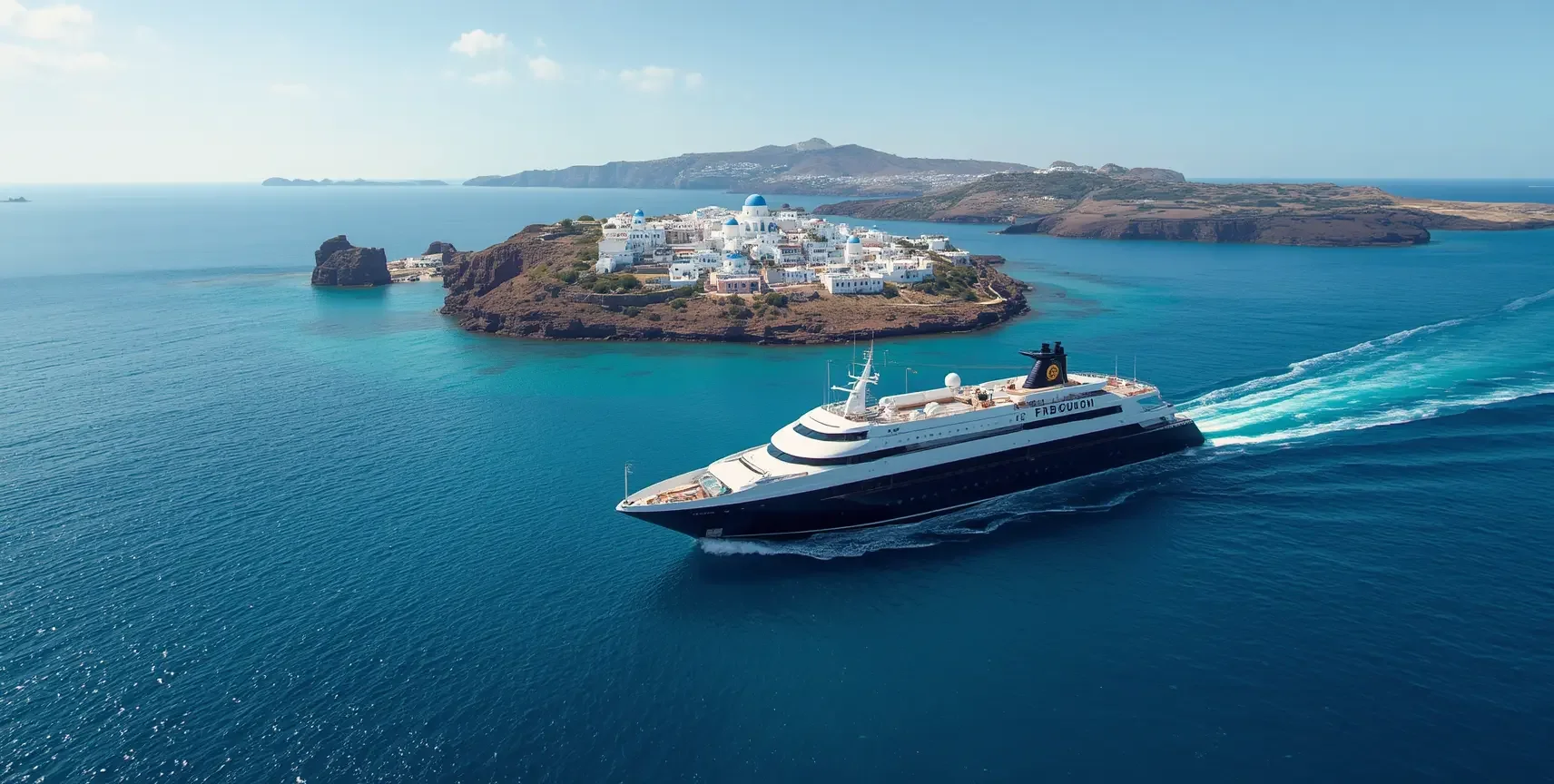
Will I get seasick on a cruise?
Most people don’t. Modern cruise ships use stabilisers and advanced navigation systems to reduce movement and avoid rough weather where possible. If you’re prone to motion sickness, choose a midship cabin on a lower deck and bring medication just in case.
Read more → Seasickness on Cruises Guide
Is everything included on a cruise?
Accommodation, main dining, entertainment and most onboard activities are included. Extras usually include drinks, speciality dining, Wi-Fi, shore excursions, spa treatments and gratuities, depending on the cruise line.
Are cruises good for first-time travellers?
Yes. Cruises are one of the simplest holidays you can take because transport, accommodation and meals are all included in one package, with no need to constantly unpack or plan logistics.
Are cruises expensive?
Not necessarily. When you factor in accommodation, transport between destinations, meals and entertainment, cruises can offer strong value. Prices vary widely depending on cruise line, ship and cabin type.
Do I have to dress up for dinner?
Most cruise lines now follow a smart casual dress code, with optional formal or gala nights. You can usually choose how dressed up you want to be.
Read more → Cruise Dress Codes Guide
What happens on sea days?
Sea days are days at sea with no port visits. They are filled with entertainment, activities, dining, relaxation and onboard experiences, or you can simply do nothing at all.
Read more → What to Expect on Sea Days
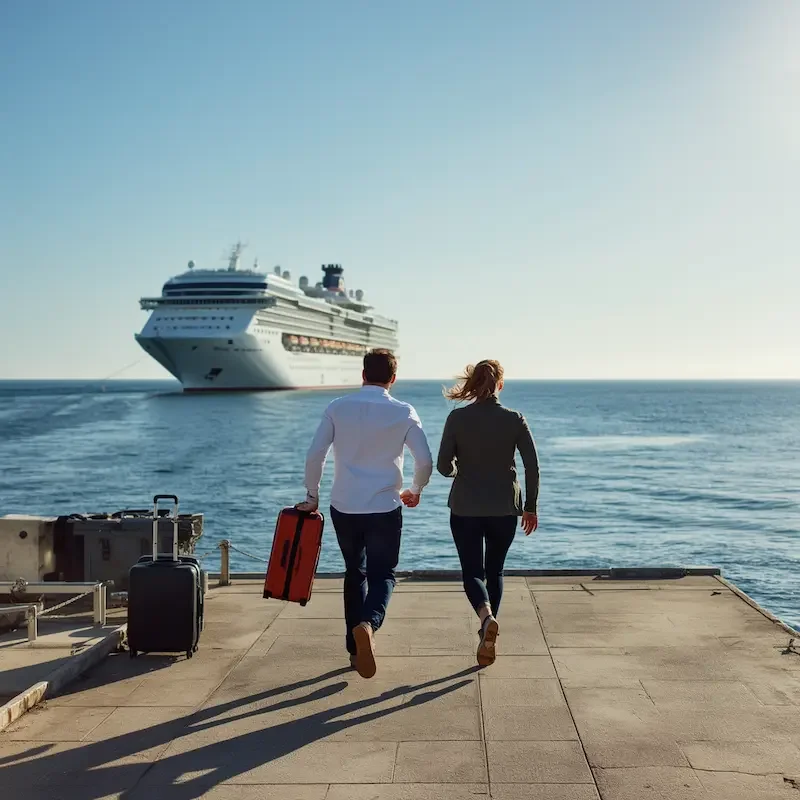
What happens if you miss the ship?
What happens if I miss the ship?
If you miss departure from the home port, travel insurance and whether you booked with the cruise line will determine your cover. If you miss the ship in port, it depends on whether you were on an organised excursion or travelling independently.
Read more → Missing the Ship Guide
Are cruises suitable for families?
Yes. Most cruise lines offer children’s clubs, family cabins and dedicated entertainment for all age groups. Some ships are designed specifically for families, while others are adults-only.
Can I use my phone on a cruise?
Yes, but roaming charges at sea can be very expensive. Most guests use onboard Wi-Fi packages or switch to airplane mode while onboard.
BOOKING & PLANNING YOUR CRUISE
This section covers the key decisions you’ll make before you sail, from when to book and whether to use a travel agent, to choosing cabins and understanding what onboard credit actually means. These are the most common early-stage questions for first-time cruisers.
Read next: First-Time Cruisers Guide - All You Need to Know
Here’s everything you need to know before you book and before you sail.
When is the best time to book a cruise?
Booking early often gives the best choice of cabins and prices, especially for peak season sailings. However, last-minute deals can sometimes offer significant savings if you’re flexible.
Should I book flights with the cruise line?
Booking flights through the cruise line can offer extra protection if delays occur, especially for long-haul sailings or tight embarkation schedules.
Can I choose my cabin?
Yes, most cruise lines allow you to select a specific cabin for a higher fare. Cheaper “guarantee” fares mean the cruise line allocates your cabin.
What is the best cabin on a cruise ship?
There’s no single “best” cabin. Midship cabins on lower decks are the most stable, balconies offer outdoor space, and suites provide extra comfort and perks.
What is a guarantee cabin?
This is when you book a cabin type but not a specific number. The cruise line assigns your exact cabin (or sometimes higher grade) closer to departure.
Do I need travel insurance for a cruise?
Yes. Cruise travel insurance is strongly recommended and often required. It should include medical cover, cancellation protection and cover for missed departures. You should purchase it immediately you book your cruise to provide cover for any unforeseen circumstances leading up to your departure.

Check passport and visa requirements before you book.
Do I need a passport or visa?
Yes, you will need a valid passport - issued within the last 10 years. It must remain valid for at least 3 months after your planned departure date. Visa requirements depend on your itinerary and nationality, so always check before booking. ESTA required for any US ports and if you are a non-EU/non-Schengen National visiting an EU country, you must register for the ETIAS prior to travel.
Are last-minute cruises cheaper?
Last-minute cruises can sometimes be cheaper, particularly if cruise lines are trying to fill remaining cabins close to departure. However, this is not guaranteed. Availability is often limited, and the best cabins or preferred sailings may already be sold out. Booking last-minute works best if you are flexible on dates, destination and cabin type.
Should I book directly or use a travel agent?
Both options have advantages. Booking directly with a cruise line can sometimes give access to special offers or loyalty benefits, while travel agents often secure additional discounts, onboard credit or package deals. Cruise-specific travel agents can also be helpful for first-time cruisers as they can advise on ships, itineraries and cabin selection. The best option depends on whether you prefer convenience, expert support or the lowest possible price.
What is the best deck on a cruise ship?
There is no single “best” deck, as it depends on what you prioritise. Lower and midship decks are generally the most stable and experience less movement, making them ideal for guests prone to seasickness. Higher decks are closer to pools, sun decks and entertainment venues but may feel more movement at sea. The best choice is usually a midship cabin on a lower-to-middle deck for a balance of stability and convenience.
Can I cruise while pregnant?
Yes, most cruise lines allow pregnant passengers to sail, but restrictions apply depending on how far along the pregnancy is. Many cruise lines will not permit travel beyond 24–28 weeks, and a medical certificate may be required for those further along. It is important to check the specific cruise line’s policy before booking and ensure your travel insurance covers pregnancy-related care and any potential complications.
LIFE ONBOARD
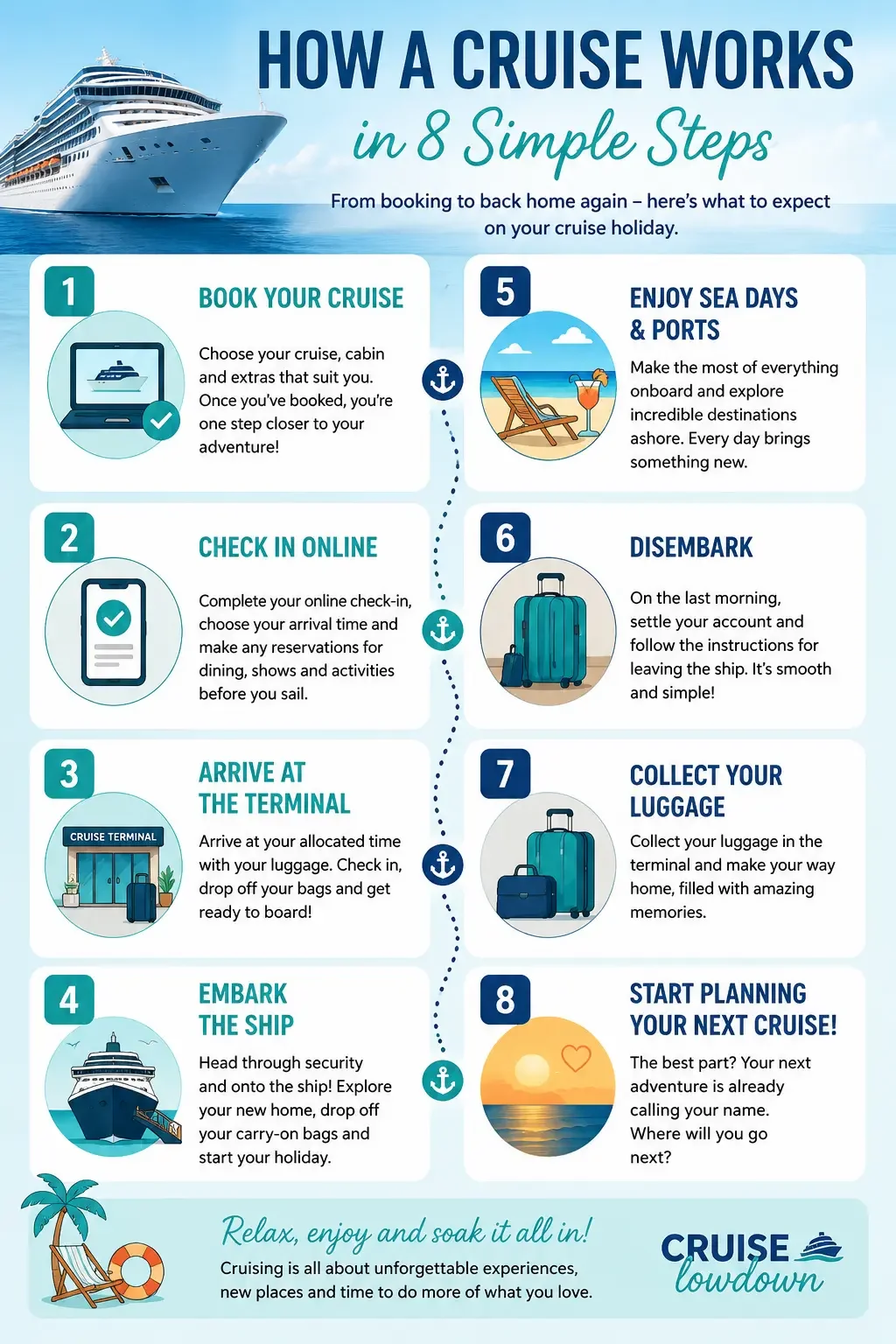
Life onboard a cruise ship is often what surprises first-time guests the most, as it combines elements of a floating resort, hotel and entertainment venue all in one place. This section explains what daily life is really like at sea, from routines and relaxation to onboard atmosphere, facilities and what you can expect from morning to night.
Find out what everyday life on a cruise ship is really like, both at sea and in port.
Can I drink the tap water on a cruise ship?
Yes, tap water on cruise ships is generally safe to drink. It is filtered and treated onboard to meet strict health and safety standards. Many passengers drink it throughout their cruise without issue. In some regions, bottled water may be offered or recommended, but in most cases, cabin and restaurant tap water is perfectly safe.
Can I take alcohol onboard a cruise?
This depends on the cruise line. Some allow passengers to bring a limited amount of alcohol onboard at embarkation, while others prohibit it entirely or charge a corkage fee if consumed in public areas. Most cruise lines allow duty-free alcohol purchases to be stored and returned to you at the end of the cruise. Always check your specific cruise line policy before travelling.
Can I smoke or vape on a cruise ship?
Smoking and vaping are allowed only in designated areas onboard cruise ships. These are usually clearly signposted and may include specific outdoor decks and sometimes a designated section of the casino. Smoking is not permitted in cabins or on balconies, and breaking these rules can result in penalties. Policies vary slightly by cruise line, so it’s important to check in advance.
Can I bring snacks on a cruise?
Yes, most cruise lines allow passengers to bring sealed, pre-packaged snacks onboard for personal consumption. Items such as crisps, biscuits and sweets are usually fine, although fresh food, perishables and items requiring refrigeration are often restricted due to biosecurity rules. Regulations vary depending on the cruise line and itinerary, particularly for international sailings.
Can I take a hairdryer on a cruise?
Yes, you can bring your own hairdryer on a cruise, although most cabins already provide one as standard. If you do bring your own, it must be used safely within cabin electrical limits. High-powered styling tools such as straighteners or curling irons are usually permitted, but cruise lines may restrict the use of items that pose a fire risk if left unattended.
CABINS & ACCOMMODATION
Your cabin is your home at sea, and understanding the differences between cabin types, locations and facilities can make a big difference to your cruise experience. This section answers the most common questions about comfort, space, amenities and practicality onboard.
Discover how to choose the right cabin and make the most of your home at sea.
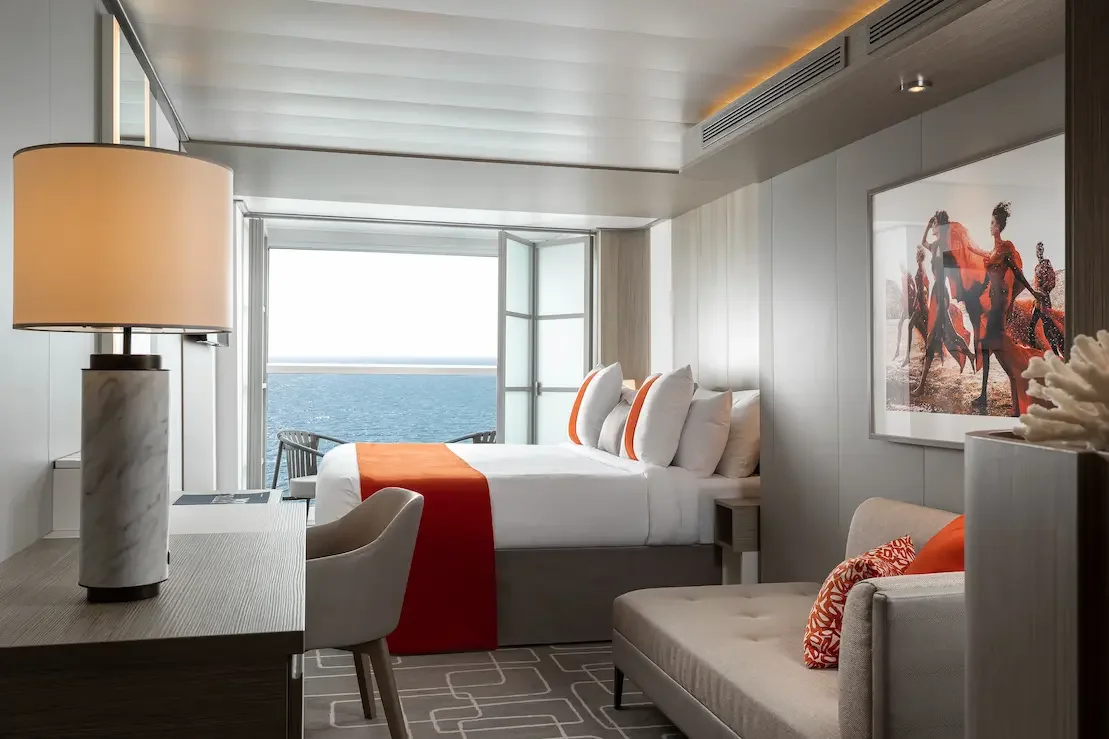
Edge Balcony Cabin on Celebrity Beyond
What’s the difference between inside, ocean view, balcony and suite cabins
Inside cabins have no windows and are the most budget-friendly option. Ocean view cabins include a window or porthole but no access to fresh air. Balcony cabins offer a private outdoor space, allowing you to enjoy sea views from your own room. Suites are the largest and most luxurious option, often including extra space, priority services, enhanced amenities and additional onboard perks depending on the cruise line.
Are cruise cabins small?
Cabins are generally compact but cleverly designed with storage space and multifunctional layouts. Balcony cabins feel significantly more spacious.
Do cabins have fridges?
Most cruise cabins have a small fridge or mini-bar, although the contents and whether it is stocked varies by cruise line. Some mini-bars are filled with chargeable drinks and snacks, while others are left empty for guests to use. If you need refrigeration for medication, contact your cruise line before you travel.
Can you remove the mini-bar Items to use fridge?
Yes - just make sure your cabin steward is aware and put them somewhere safe or ask for them to take them away. You can then use the fridge for your own items such as bottled water.
Are toiletries provided?
Yes, all cruise cabins provide basic toiletries such as hand soap, shampoo and shower gel. Higher-grade cabins and suites often include premium branded products, conditioner, body lotion and other extras. If you have favourite brands or specific skincare needs, it’s worth bringing your own.
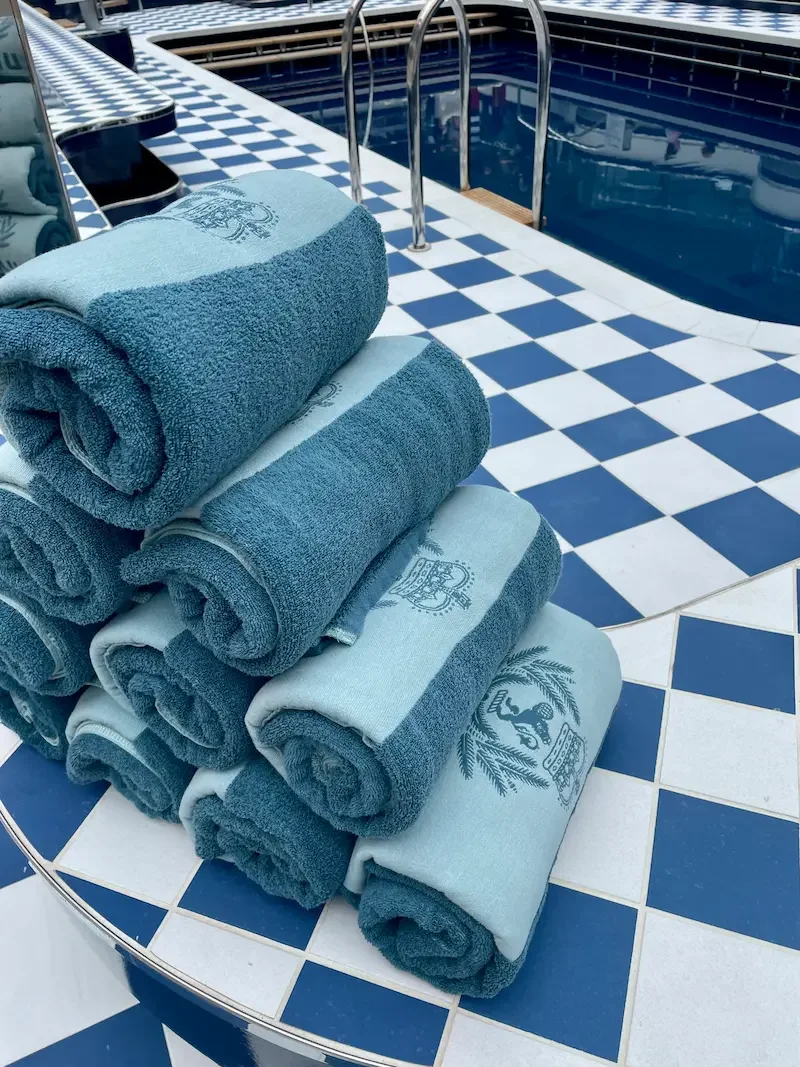
Pool and Beach towels are provided free of charge. Image: Kathy Taylor, Cruise Lowdown
Are beach towels provided?
Yes, most cruise lines provide beach towels for use both onboard and ashore. These are usually available in your cabin or can be collected from the pool deck. Remember to return them at the end of the day, as some cruise lines charge for towels that are lost or not returned.
Is there air conditioning in cruise cabins?
Yes, virtually all cruise cabins have individually controlled air conditioning, allowing you to adjust the temperature to your comfort. If you experience any problems, your cabin steward or Guest Services can usually arrange for maintenance to check the system.
How many plug sockets are there?
The number of plug sockets varies depending on the ship and cabin. Most cabins have at least two power outlets, although newer ships often provide more. Some ships have UK sockets, others have European or US sockets, and many have a combination, so it’s worth checking before you travel and packing a suitable adaptor if necessary.
Are there USB charging ports?
Many newer cruise ships have USB charging ports built into bedside tables, desks or power outlets. Older ships may have few or none, so bringing a USB charging plug or adaptor is often a good idea.
Can I use an extension lead?
This depends on the cruise line. Simple extension leads without surge protection are permitted by some cruise lines, while others prohibit them altogether. Surge-protected extension leads are almost always banned because they are incompatible with a ship’s electrical system and may be confiscated during boarding. Always check your cruise line’s policy before packing one.
Is there room to store luggage under the bed?
Yes, beds are typically raised to allow suitcase storage underneath.under the bed for luggage?
Yes, on most cruise ships there is enough space under the bed to store suitcases, helping to keep your cabin tidy and maximise the available floor space.
Can you open the balcony door?
Yes, if you have a balcony cabin you can open the balcony door and enjoy your private outdoor space. However, for safety reasons the door may automatically lock or become difficult to open if the ship is moving quickly or if the cabin door is open, due to changes in air pressure.if you are in a forward-facing cabin and winds are high you may be required to keep the doors locked.
Are cabins cleaned every day?
Yes, cruise cabins are usually serviced at least once a day by your cabin steward. They will make the bed, empty bins, replenish towels and toiletries where needed, and generally keep your cabin clean and tidy. Some cruise lines also offer an optional evening turndown service.
Are towels provided?
Yes, towels are provided and changed regularly, often daily or on request.
How often are towels changed?
Bath towels are usually changed daily, although many cruise lines now encourage guests to reuse towels as part of their environmental policies. If you would like fresh towels, simply leave the used ones on the bathroom floor or follow the instructions provided in your cabin.
Can you order room service?
Yes, most cruise lines offer room service, allowing you to enjoy meals, snacks or drinks in your cabin. The menu and hours vary by cruise line, with many offering continental breakfast, sandwiches, pizzas or light meals throughout the day and evening.
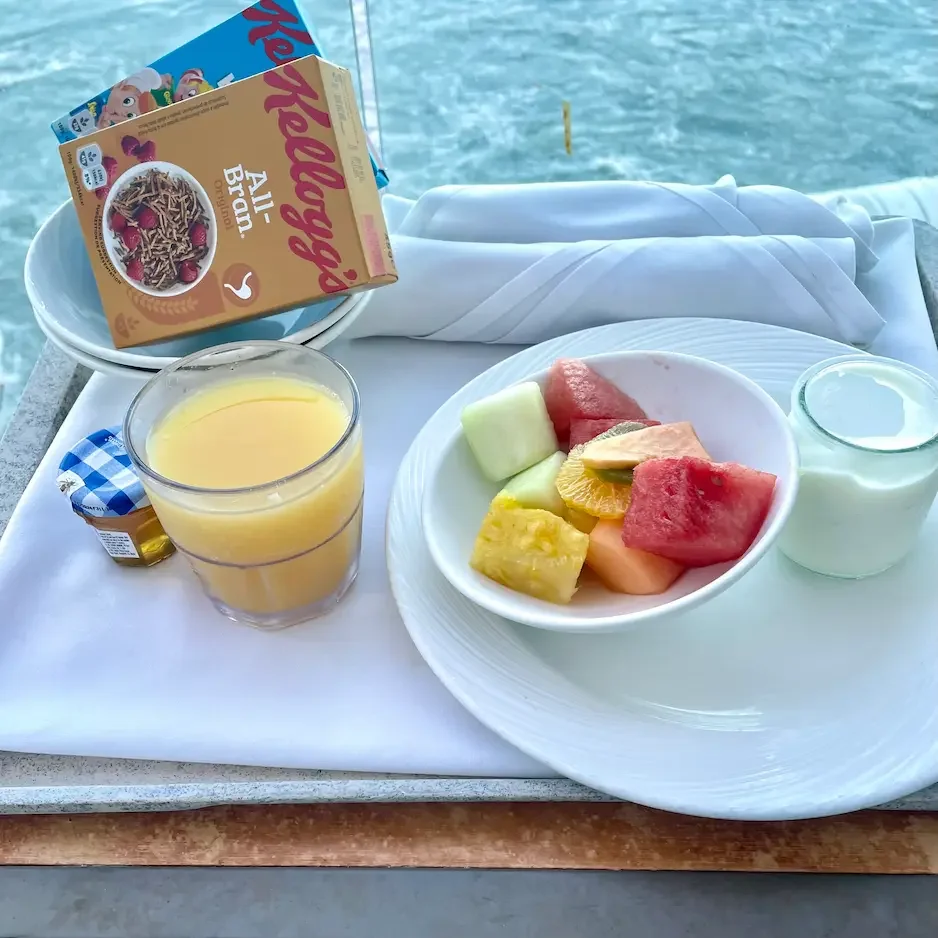
Room service breakfast on your balcony is wonderful but comes with a price tag.
Is room service free?
It depends on the cruise line. Many still offer complimentary continental breakfast via room service, while some also include a selection of free meals and snacks. Others charge a small delivery fee or service charge, particularly for late-night orders or hot meals. Always check your cruise line’s policy before ordering.
Do cruise cabins have bathrooms?
Yes, all cabins have private en-suite bathrooms with showers. Suites may include baths.
Do cabins have hairdryers?
Yes, most cruise cabins include a basic hairdryer, usually stored in a drawer or bathroom. If you need something more powerful you may bring your own onboard.
Do cruise cabins have kettles?
Most UK-based cruise lines provide kettles and teabags in cabins, but this varies by cruise line and ship.
Do Cruise Cabins have Coffee Makers?
Some new ships, particularly in more deluxe cabins, provide a Nespresso machine or similar. Most cabins on UK-based ships providing a kettle will provide instant coffee sachets.
Is there air conditioning in cabins?
Yes, all cabins have individual climate control.your cabin attendant will be happy to show you how it works.
Can I charge my phone easily?
Yes, but plug sockets can be limited. Many modern ships also include USB charging points.
Can I get an iron in my cabin?
Usually not due to fire safety. Most ships offer laundry or ironing services instead.
DINING & DRINKS
Dining onboard is one of the biggest highlights of any cruise, but it can also feel confusing at first. This section explains how cruise dining works, from fixed and flexible dining times to drinks packages, dietary needs and what is included in your fare.

Food onboard is included but the wine will cost extra
Everything you need to know about eating, drinking and dining onboard with confidence.
Food & Restaurants Onboard
Is food included?
Yes, your cruise fare usually includes meals in the main dining room, buffet restaurant and selected casual dining venues. Some ships also include cafés and snack bars. Speciality restaurants, premium snacks and certain beverages may incur an additional charge, depending on the cruise line.
Can I eat whenever I want?
Most cruise ships offer a variety of dining options throughout the day, so you’ll rarely go hungry. Buffets and casual eateries usually have flexible opening hours, while main dining rooms may operate either fixed dining times or flexible ‘Anytime Dining’. Late-night snacks are also available on many ships.
Can I order more than one main course?
Yes, in most main dining rooms you can order more than one starter, main course or dessert if you wish. Cruise lines want guests to enjoy the dining experience, and additional portions are usually included at no extra cost. If you’re unsure, simply ask your server.
Can I Really eat as much as I want at the buffet?
Yes. Cruise ship buffets operate on an all-you-can-eat basis, allowing guests to return as often as they like during opening hours. Buffets typically offer a wide variety of international dishes, salads, desserts and snacks throughout the day.
Is there a dress code for restaurants?
Usually, yes. Buffet restaurants tend to be more relaxed, while main dining rooms and speciality restaurants often require smart casual attire in the evenings. Swimwear, bare feet and very casual clothing are generally not permitted in dining venues.
Can I get food 24 hours a day?
On many cruise ships, yes. While not every restaurant operates around the clock, most ships have at least one venue offering food late into the evening or throughout the night. Options vary by cruise line and may include pizza, sandwiches, snacks or room service.
Drinks & Drinks Packages
Are drinks included?
Tap water, tea, coffee (from self-service stations), squash or juice at breakfast are usually included. Alcoholic drinks, premium coffees, soft drinks and bottled water are often charged separately unless your cruise fare includes them or you have purchased a drinks package.
Can I bring my own wine into the restaurant?
Policies vary by cruise line. Some allow passengers to bring their own wine into dining venues but charge a corkage fee, while others only permit wine purchased onboard. Always check your cruise line’s alcohol policy before travelling.
Can I take drinks back to my cabin?
Yes, drinks purchased onboard can usually be taken back to your cabin. If you have a drinks package, check the terms and conditions, as some cruise lines require drinks to be consumed by the person who ordered them and may restrict sharing.
What is a cruise drinks package?
A cruise drinks package is a prepaid bundle that allows you to enjoy selected drinks onboard for a fixed daily price. Packages vary by cruise line but can include soft drinks, tea and coffee, alcoholic drinks, cocktails and bottled water. Some premium packages also include speciality coffees, branded spirits and wine. The idea is to give you predictable spending and convenience throughout your cruise.
Are cruise drinks packages worth it?
Drinks packages can be good value, but it depends on your drinking habits and the cruise line’s pricing. If you enjoy several alcoholic drinks per day or like premium beverages, a package may save money and simplify budgeting. However, if you only drink occasionally or prefer tap water, tea and coffee, paying as you go may be more cost-effective. It’s important to compare package prices with typical onboard drink costs before deciding.
Read Next: Cruise Drinks Packages Guide
What drinks are included in a cruise drinks package?
This varies by cruise line and package level. Most basic packages include soft drinks, juices, tea and coffee, while mid-range and premium packages may include beer, wine by the glass, cocktails and spirits up to a certain price limit. Some cruise lines also include bottled water and speciality coffees. Higher-tier packages usually offer a wider selection and fewer restrictions.
Can everyone in the cabin get a drinks package?
Most cruise lines require all adults sharing the same cabin to purchase the same drinks package if one person chooses it. This policy is designed to prevent sharing between guests. Some cruise lines also require packages to be purchased for the entire duration of the cruise rather than selected days.

Champagne flute with a sea view will need a drinks package upgrade
Can I upgrade my drinks package onboard?
Yes, many cruise lines allow you to upgrade your drinks package once onboard if you decide you want more choice. You can usually pay the difference between packages and move to a higher tier. However, upgrades are subject to availability and must typically be done early in the cruise.
Do drinks packages include gratuities?
This depends on the cruise line. Some drinks packages include gratuities in the upfront price, while others add a service charge automatically to each drink or to the package itself. It’s important to check the terms carefully, as this can affect the overall value of the package.
Can I use my drinks package in all venues?
In most cases, drinks packages can be used across most onboard bars, restaurants and lounges. However, there may be exclusions such as speciality restaurants, premium venues or certain high-end drinks. Some cruise lines also limit where bottled drinks or minibar items can be used under a package.
Can I share a drinks package?
No. Drinks packages are strictly for individual use and cannot be shared between guests. Cruise lines monitor usage, and misuse can result in the package being cancelled or additional charges being applied. The exception to this is the Virgin Voyages Bar Tab
Food & Dietary Requirements
Can I request vegetarian meals?
Yes, all major cruise lines offer vegetarian options at every meal. Menus usually include at least one vegetarian choice, and additional options may be available on request.
Are vegan meals available?
Yes, vegan dining has improved significantly in recent years. Most cruise lines now offer clearly labelled vegan dishes and can provide additional options if notified in advance of your sailing.
Can cruise ships cater for gluten-free diets?
Yes, gluten-free meals are widely available on most cruise lines. It is best to notify the cruise line before you travel so they can prepare suitable options throughout your cruise.
Read next: Best Cruise Lines for Gluten Free Dining Guide
What if I have food allergies?
Cruise lines take food allergies seriously and can cater for most dietary requirements, including nut, dairy and shellfish allergies. Inform the cruise line before your cruise and remind restaurant staff when ordering to ensure appropriate precautions are taken.
Can I take food ashore?
This depends on the destination - it’s less about cruise rules than port regulations. While you can usually take packaged snacks ashore, many countries prohibit passengers from bringing fresh fruit, meat, dairy products or other food through customs. Always check local regulations before leaving the ship with food.
Are there children’s menus?
Yes, most cruise lines provide children’s menus in the main dining rooms, offering familiar favourites such as pasta, pizza, burgers and chicken dishes. Buffets also provide plenty of child-friendly choices.
Do I have to sit with strangers?
Not usually. Most cruise lines now offer tables for two or flexible seating options. If you choose fixed dining, you may be assigned a shared table, but you can often request a private table before your cruise or once onboard, subject to availability.
What is Anytime Dining?
Anytime Dining allows you to eat in the main dining room whenever it suits you during the restaurant’s opening hours. You can often request a table size and may be able to reserve dining times through the cruise line’s app.
What is Fixed Dining?
Fixed Dining means you’ll eat at the same time each evening, usually at the same table with the same waiting staff. Many experienced cruisers enjoy this option because it offers consistency and the opportunity to get to know fellow diners.
Will I be assigned a dining time?
It depends on the cruise line and the dining option you choose when booking. Many cruise lines allow you to select either a fixed dining time or a flexible dining option. If you choose fixed dining, you’ll normally eat at the same time each evening at the same table. If you choose flexible dining, you can dine at different times each day, subject to availability.
What are first and second sitting?
Some cruise lines still offer traditional dining with two evening sittings. The first sitting is usually between 5.30 pm and 6.30 pm, while the second sitting is typically between 7.45 pm and 8.30 pm, although times vary by ship. You’ll usually choose your preferred sitting when you book, but changes may be possible once onboard if space allows.
Which dining time is best?
There’s no right or wrong choice. Earlier dining is popular with families and guests who like to watch the evening show afterwards (although there are usually two show times), while later dining allows more time ashore in port and offers a more relaxed evening. Flexible dining is ideal if you prefer not to stick to a set schedule.
Will I have the same waiter every evening?
If you choose fixed dining, you’ll usually have the same waiting team throughout your cruise, allowing them to get to know your preferences and dietary requirements. With flexible dining, your waiting staff may vary from one meal to the next.
Can I change my dining time?
Often, yes. If your preferred dining time isn’t available before you sail, you can ask the restaurant manager once onboard whether a change is possible. Requests are subject to availability, particularly on busy sailings. If you want to change, go to the restaurant as soon as possible to make your request.
Can I reserve dining times before my cruise?
Many cruise lines now allow guests to reserve flexible dining times and speciality restaurants before boarding using their website or mobile app. Popular restaurants and peak dining times can book up quickly, so it’s worth making reservations as early as possible.
Can I eat in a different restaurant every night?
Yes. Most modern cruise ships offer a choice of complimentary and speciality restaurants, allowing you to enjoy different cuisines throughout your cruise. Some venues are included in your fare, while others charge a cover fee or à la carte prices.
What happens if I miss my dining time?
If you have fixed dining and think you’ll be late, it’s courteous to let the restaurant know if possible. If you miss your sitting altogether, you can usually eat in the buffet or another casual dining venue instead.
Do I need to book speciality restaurants?
It’s highly recommended, particularly on popular ships or longer cruises. Reservations can often be made before you sail or once onboard, and the most sought-after restaurants tend to fill up quickly.
Can I celebrate a birthday or anniversary onboard?
Absolutely. Cruise lines are excellent at celebrating special occasions. Many restaurants can provide cakes, decorations or special menus, and some offer celebration packages that can be booked in advance.
Are speciality restaurants worth paying for?
Many passengers think so. Speciality restaurants usually offer a more intimate atmosphere, higher-end menus and enhanced service compared with the included dining venues. They’re particularly popular for celebrating birthdays, anniversaries or simply enjoying a different culinary experience during your cruise.Is food included on a cruise?
ALCOHOL POLICIES AND BRINING DRINKS ONBOARD
Can I bring alcohol onboard a cruise ship?
Policies vary by cruise line, but most allow passengers to bring a limited amount of alcohol onboard at embarkation. This is usually restricted to wine or champagne, while spirits and larger quantities are often prohibited. Some cruise lines may allow alcohol but charge a corkage fee if it is consumed in public areas. Always check your cruise line’s specific policy before travelling, as rules differ significantly between operators.
Is there a limit on alcohol I can bring onboard or buy duty-free?
Yes, most cruise lines and ports impose limits on how much alcohol you can bring onboard or purchase in duty-free shops during your cruise. Duty-free alcohol bought onboard or in port is typically stored by the cruise line and returned to you at the end of the voyage. Consumption rules vary, but in many cases alcohol is not released for use during the cruise unless purchased and consumed onboard under the cruise line’s bar service.
Can I drink alcohol I bought in port on the ship?
In most cases, alcohol purchased ashore is not permitted to be consumed immediately onboard. It is usually collected when you reboard the ship and returned to you at the end of the cruise. Some cruise lines allow limited exceptions or charge a corkage fee if you wish to drink it in a restaurant or cabin, but this depends entirely on the cruise line’s policy.
DRESS CODES & WHAT TO WEAR
Cruise dress codes vary by cruise line, time of day and restaurant type. This section breaks down what is expected onboard, including formal nights, smart casual evenings and relaxed daytime wear, so you know exactly what to pack.
Take the guesswork out of packing with simple advice on what to wear from day to night.

Photo by Quan Nguyen on Unsplash
Do I have to dress up on a cruise?
Not usually. Most cruise lines have a relaxed approach to dress codes during the day, with casual clothing such as shorts, T-shirts, sundresses and swimwear (away from restaurants) perfectly acceptable. Evenings are generally smart casual, although some cruise lines still hold optional formal or gala nights for guests who enjoy dressing up.
What is Formal Night?
Formal Night (sometimes called Gala Night, Dress to Impress or Evening Chic, depending on the cruise line) is a special evening when guests are encouraged to dress more formally. It’s an opportunity to enjoy a glamorous evening, have professional photographs taken and celebrate with special menus or entertainment. Participation is optional on many cruise lines, although some luxury lines have stricter dress codes.
What should men wear on a cruise?
During the day, comfortable holiday clothing such as shorts, polo shirts, T-shirts and trainers is ideal. For smart casual evenings, chinos or trousers with a collared shirt or polo shirt are suitable. On Formal Night, some men choose a suit or dinner jacket, while others simply wear a smart shirt and trousers, depending on the cruise line’s dress code.
What should women wear on a cruise?
Light, comfortable clothing is ideal during the day, including dresses, skirts, shorts, trousers or casual tops. For evening meals, smart casual dresses, jumpsuits, skirts or tailored trousers with a blouse are all appropriate. On Formal Night, many women choose cocktail dresses, evening gowns or elegant separates, although smart day-to-evening wear is perfectly acceptable on many ships.
Can I wear jeans on a cruise?
Yes. Smart, clean jeans are accepted on most cruise lines, particularly in casual dining venues and on smart casual evenings. Ripped, distressed or overly casual jeans may not be appropriate in some main dining rooms or speciality restaurants, especially on formal evenings.
Can I wear shorts to dinner?
Shorts are usually acceptable in buffet restaurants and casual dining venues, particularly during the day. In the evenings, most cruise lines ask guests dining in the main dining room or speciality restaurants to wear long trousers, dresses or other smart casual clothing. Tailored smart shorts may be accepted on some ships, but it’s always worth checking the cruise line’s policy.
Can I wear flip-flops onboard?
Yes, flip-flops are perfectly suitable around the pool, on open decks and at the beach. However, they are generally discouraged or not permitted in main dining rooms and speciality restaurants during the evening, where closed shoes, sandals or smarter footwear are preferred.
Do children have to dress formally?
Children are not usually expected to wear formal clothing, although they should follow the general dress code in the main dining room. Smart trousers, dresses, skirts or polo shirts are usually sufficient, even on Formal Night. Many families choose to dress up together for photographs, but participation is entirely optional on most cruise lines.
What should I pack for Formal Night?
If you plan to take part, pack one or two smarter outfits depending on the length of your cruise. For men, this could be a suit, blazer or smart shirt with trousers. For women, a cocktail dress, evening dress, jumpsuit or elegant separates are all popular choices. Don’t forget suitable shoes and accessories if you enjoy dressing up.
Are there dress codes during the day?
Daytime dress is generally very relaxed. Swimwear is welcome around the pool, while shorts, T-shirts, sundresses and comfortable walking clothes are suitable elsewhere on the ship. Most cruise lines ask guests to wear a cover-up and footwear when entering indoor public areas or buffet restaurants.
Can I wear swimwear in restaurants?
No. Swimwear is not permitted in restaurants or indoor dining venues. Guests are expected to wear a cover-up, T-shirt, dress or other suitable clothing, together with footwear, before entering.
Do dress codes vary between cruise lines?
Yes. Dress codes differ considerably depending on the cruise line. Family-focused and contemporary cruise lines are generally more relaxed, while premium and luxury cruise lines may have more formal expectations, particularly in the evenings. It’s always worth checking your cruise line’s guidance before you pack.What do people wear on cruises?
Daytime is casual. Evenings are usually smart casual, with optional formal nights depending on the cruise line.
CRUISE ENTERTAINMENT & ACTIVITIES
Cruise ships are designed to offer entertainment around the clock, from live shows and music to casinos, quizzes and daytime activities. This section explains what is included, what needs booking and what to expect in different weather conditions.

A production show on Marella Cruises
Discover what’s included, what needs booking and how to make the most of your time onboard.
Are shows free on a cruise ship?
Yes, most cruise ship shows are included in your cruise fare. This typically includes theatre productions, musicals, comedy acts, live performances and headline entertainment. Some premium experiences or speciality shows (such as immersive dining or ticketed events) may carry an additional charge depending on the cruise line.
Do I need to reserve shows in advance?
It depends on the cruise line and ship. On many modern ships, especially larger ones, you may need to reserve theatre shows in advance using the cruise line’s app or onboard system. Smaller or traditional ships often operate a first-come, first-served system. It’s best to book early for popular evening performances.
Is live music included on a cruise?
Yes, live music is included on almost all cruise ships. You’ll usually find a mix of options including piano bars, acoustic sets, classical music, pop bands, jazz lounges and themed performances throughout the ship. These are generally free to enjoy and do not require reservations.
Is there a casino on board cruise ships?
Most cruise ships have a casino, although availability depends on the cruise line and itinerary. Casinos are typically located indoors and offer slot machines, table games and poker. They are generally open only when the ship is at sea and are not available while docked in certain ports due to local regulations.
Are cruise ship casinos open all day?
No, cruise casinos are not usually open all day. They typically open in the evening once the ship is at sea and close when the ship is in port (depending on local laws). Opening hours vary, but most operate late into the night on sea days.
Is there bingo on cruise ships?
Yes, bingo is a popular onboard activity on many cruise lines. Games are usually held on sea days and are often ticketed, meaning there is a small charge to participate. Prizes can range from small cash rewards to larger jackpot games depending on the cruise line.
Are there cinemas onboard cruise ships?
Some cruise ships have dedicated cinemas showing films throughout the day and evening. Others show movies in the theatre or on large outdoor screens by the pool. Film selections often include recent releases, family films and classic favourites.
Is there an adults-only area on cruise ships?
Yes, most cruise ships have adults-only spaces. These may include sun decks, pools, bars, spas or quiet lounges reserved for guests aged 16–18 and over (depending on the cruise line). Some cruise lines also operate fully adults-only ships for a more child-free environment.
What happens onboard during bad weather?
Cruise ships are designed for all-weather operation, so most entertainment continues as normal. If outdoor activities are affected, they are usually moved indoors or replaced with alternative entertainment such as shows, quizzes, live music or workshops. Captains may also adjust itineraries to avoid rough weather where possible.
Are there fitness and activity programmes onboard?
Yes, most cruise ships offer a wide range of included activities such as fitness classes, dance lessons, sports tournaments, deck games and enrichment talks. Larger ships may also feature climbing walls, surf simulators, water parks and other attractions depending on the cruise line.
Can I join activities without booking?
Many onboard activities are open and do not require booking, such as live music, pool games and casual fitness classes. However, some activities like speciality fitness sessions, escape rooms or virtual reality experiences may require reservations or carry an additional fee.
Is there entertainment during the day as well as night?
Yes, cruise ships offer entertainment throughout the day. This can include quizzes, lectures, cooking demonstrations, poolside games, fitness classes and workshops. Evenings typically feature larger-scale shows and live performances.
Are cruise shows suitable for children?
Most cruise shows are family-friendly, especially early evening performances and main theatre productions. Some late-night comedy or adult-themed entertainment may have age restrictions, so families are usually advised to check daily schedules.
FAMILY CRUISE QUESTIONS
Cruising is increasingly popular with families of all ages, but facilities and policies vary between cruise lines. This section covers everything from babies and toddlers to teenagers, including childcare, kids clubs and family-friendly facilities.
Everything families need to know before cruising with babies, children or teenagers.
Are kids allowed on cruises?
Yes, unless the cruise line or ship is adults-only.
Are cruises good for babies?
Yes, cruises can be a good holiday option for families with babies, but suitability depends on the cruise line and ship. Many cruise lines allow infants from around six months old on most sailings, although longer or more complex itineraries may have higher age restrictions. Parents should also consider onboard facilities such as access to baby food, changing areas and medical support when choosing a cruise.
Are there nurseries on cruise ships?
Some cruise ships, particularly larger family-focused vessels, offer nursery or crèche facilities for younger children. These are usually available for babies and toddlers below kids club age and may operate for limited hours or require advance booking. Not all cruise lines offer nursery services, so it is important to check before booking.
Are kids clubs free on cruises?
Yes, kids clubs are generally included in the cruise fare and are free of charge. These supervised spaces are divided by age groups and offer activities such as games, crafts, movies, sports and themed events. Some cruise lines also offer extended evening sessions or late-night group babysitting for an additional fee.
What age can children cruise?
Minimum age requirements vary by cruise line, but most allow babies from around six months old on standard itineraries. Some longer voyages, such as transatlantic or world cruises, may require children to be at least 12 months old. Each cruise line sets its own policy, so it is essential to check before booking.
Can teenagers entertain themselves on a cruise?
Yes, most cruise ships offer dedicated teen spaces and programmes designed specifically for older children. These may include teen lounges, gaming areas, sports activities, parties and social events. Many teenagers enjoy the independence onboard, as cruise ships are self-contained and generally considered very safe environments.
Are there babysitting services on cruise ships?
Some cruise lines offer babysitting or evening childcare services, although availability varies. This may include group babysitting sessions or private in-cabin babysitting for an additional fee. Not all ships provide this service, so it is important to check in advance if this is a requirement for your cruise.
Can children use cruise ship pools?
Yes, children are usually allowed to use cruise ship pools, although supervision rules apply. Some cruise lines have dedicated family pools or splash zones, while others may have age or height restrictions for certain areas such as hot tubs or adults-only pools.
Are there family cabins on cruise ships?
Yes, many cruise ships offer family-friendly accommodation options, including interconnecting cabins, larger family cabins or suites that sleep three or more guests. Some newer ships also feature specially designed family rooms with extra space, sofa beds or bunk beds to accommodate children comfortably.
Are cruises suitable for toddlers and young children?
Yes, many cruise lines cater well to toddlers with soft play areas, splash zones, family-friendly dining options and flexible routines. However, parents should consider nap schedules, childcare availability and port-intensive itineraries when choosing a cruise with very young children.
Do cruise ships have family-friendly entertainment?
Yes, most cruise ships offer family-friendly entertainment including shows, character experiences, game shows, outdoor movie nights and themed parties. Larger ships often schedule activities specifically designed for families to enjoy together.
Can families sit together in restaurants?
Yes, families are always accommodated together in dining venues. Cruise ships are very flexible with seating arrangements and can usually provide larger tables or highchairs when needed., cruises can be a good holiday option for families with babies, but suitability depends on the cruise line and ship. Many cruise lines allow infants from around six months old on most sailings, although longer or more complex itineraries may have higher age restrictions. Parents should also consider onboard facilities such as access to baby food, changing areas and medical support when choosing a cruise.
Read next: Family Cruise Guide
MONEY & ONBOARD SPENDING
Understanding what is included in your cruise fare — and what is not — helps you budget effectively. This section explains onboard payments, gratuities, onboard credit and typical extra costs you may encounter during your cruise.
Understand what’s included, what costs extra and how to budget for your cruise.
How much does a cruise really cost?
The cost of a cruise varies widely depending on the cruise line, itinerary, cabin type and time of year. Budget cruises can start from relatively low prices per person, while premium and luxury cruises can be significantly more expensive. It’s important to consider what is included, such as meals, accommodation and entertainment, when comparing prices.
What is included in the price of a cruise?
Most cruise fares include your cabin, main dining, buffet meals, onboard entertainment and access to basic facilities such as pools and gyms. Extras such as drinks, speciality dining, Wi-Fi, shore excursions, spa treatments and gratuities may be additional depending on the cruise line.
Are cruises all-inclusive?
Some cruise lines are fully or partially all-inclusive, including drinks, Wi-Fi and gratuities in the fare (Marella Cruises for example). Others operate a pay-as-you-go model. It is important to check exactly what is included before booking, as “all-inclusive” can vary significantly between cruise lines.
How do I pay for things onboard a cruise?
Cruise ships are cashless environments. All onboard purchases are charged to a cruise card linked to your onboard account. At the end of the cruise, your balance is settled using a registered credit or debit card.
Are gratuities included in cruise prices?
This depends on the cruise line. Some include gratuities in the upfront fare, while others automatically add a daily service charge to your onboard account. In some cases, gratuities are optional and can be adjusted onboard.
Can I use cash onboard a cruise ship?
Most cruise ships operate without cash for purchases. However, cash may still be used in casinos or for tipping in certain situations. It is generally recommended to rely on your onboard account rather than carrying large amounts of cash.
Do I need to budget extra for a cruise?
Yes, it is advisable to budget for extras such as drinks, excursions, speciality dining, Wi-Fi, tips and souvenirs. While cruises can offer excellent value, onboard spending can add up depending on your preferences.
What is onboard credit on a cruise?
Onboard credit (often abbreviated to OBC) is a monetary allowance added to your cruise account that you can spend while onboard the ship. It can usually be used towards extras such as drinks, speciality dining, spa treatments, shore excursions, Wi-Fi or onboard shopping. Onboard credit is often included as part of a cruise promotion, loyalty benefit or booking incentive. It is non-refundable in most cases, so it is important to use it during your cruise before the final day.
SHORE EXCURSIONS & PORT DAYS
Every port offers a different experience, and passengers can choose between organised excursions or independent exploration. This section explains how shore days work, including safety, timing and what happens if plans change.
Learn how to get the most from every destination, whether you book an excursion or explore independently.
Do I have to book cruise excursions?
No, you are not required to book excursions through the cruise line. Many passengers choose to explore ports independently, while others prefer the convenience and reassurance of organised excursions.
What happens if my excursion is late?
If you book a cruise line excursion and it runs late, the ship will wait or make arrangements for your return. If you book independently, you are responsible for getting back to the ship on time, as it will not wait for independent tours.
Are cruise excursions worth it?
Cruise excursions are convenient and offer peace of mind, especially in unfamiliar destinations. However, they can be more expensive than exploring independently. The best option depends on your confidence, budget and the complexity of the port.
Can I explore ports on my own?
Yes, many cruise ports are easy to explore independently on foot, by taxi or using public transport. This can be a more flexible and cost-effective way to see destinations, especially in well-connected cities.
Can I stay on the ship during port days?
Yes, you are not required to leave the ship in port. Many passengers choose to stay onboard to enjoy quieter facilities such as pools, spa areas and restaurants.
Is it safe to explore cruise ports independently?
In most destinations, yes, but safety varies by location. It is important to research ports in advance, stay aware of your surroundings and allow plenty of time to return to the ship before departure.
HEALTH, SAFETY & WELLBEING
Cruise ships operate under strict safety regulations and offer onboard medical facilities, but it’s still important to understand health requirements, insurance and what happens if you become unwell at sea.
Travel with confidence by understanding the health, safety and medical services available onboard.
Are cruise ships safe?
Yes, cruise ships are highly regulated and operate under strict international safety standards. They are designed with advanced navigation systems, safety drills and emergency procedures to ensure passenger wellbeing.
Read next:
What medical facilities are available on a cruise ship?
Most cruise ships have onboard medical centres staffed by qualified doctors and nurses. These can treat minor illnesses and emergencies, although services are limited compared with a land-based hospital.
Do I need vaccinations for a cruise?
This depends on your itinerary. Some destinations may require specific vaccinations or health precautions. Always check travel advice for each port before sailing.
What happens if I get sick on a cruise?
If you feel unwell, you should visit the onboard medical centre. Treatment may be chargeable, so comprehensive travel insurance is strongly recommended to cover medical costs.
Can I exercise on a cruise ship?
Yes, most ships have gyms, fitness classes, walking tracks and sports facilities. Many also offer wellness programmes such as yoga, Pilates and spa treatments.
CRUISE MYTHS & FIRST-TIME QUESTIONS
Many first-time cruisers have misconceptions about cruising being restrictive, expensive or only suitable for older travellers. This section addresses common myths and sets realistic expectations about modern cruising.
Separate fact from fiction with honest answers to the most common cruise misconceptions.
Are cruises just for older people?
No. Cruises are no longer just associated with older travellers. Modern cruise ships attract a wide range of guests including families, couples, solo travellers and younger adults. Different cruise lines cater to different styles, from relaxed and traditional to lively, activity-focused ships.
Are cruises boring?
No. Cruise ships are designed as floating resorts with constant entertainment, dining and activities. Whether you want relaxation or a packed schedule, there is usually far more to do than time allows.
Are cruises crowded?
Cruise ships can feel busy in popular areas such as buffets, pools and embarkation days, but spaces are designed to spread guests across multiple venues. At sea, ships often feel much quieter than expected, especially on larger vessels.
Will I feel trapped on a cruise ship?
Most people do not. Cruise ships are large with multiple decks, open spaces and daily port stops. You can move freely around the ship and leave in port, which helps avoid any feeling of confinement.
Will I gain weight on a cruise?
It is possible due to the abundance of food and drinks available, but not inevitable. Many cruise ships also offer gyms, sports activities and healthier dining options, so guests can balance indulgence with activity if they choose.
Are cruise ships safe?
Yes. Cruise ships operate under strict international safety regulations and are designed with advanced navigation systems, trained crew and emergency procedures. Safety drills are carried out at the start of every cruise.
Do cruise ships rock a lot?
Modern cruise ships are highly stabilised, so movement is usually minimal. Some motion may be felt in rough seas, but most passengers are not significantly affected. Larger ships and midship cabins tend to reduce movement further.
Are cruises bad for the environment?
Cruising does have an environmental impact, but the industry is increasingly investing in cleaner fuels, waste reduction systems and energy-efficient technologies. Sustainability varies by cruise line, with ongoing improvements across the sector.
PRACTICAL QUESTIONS
This section covers the everyday logistics of cruising, from boarding and luggage to weather, cancellations and onboard routines. These are the practical details that help first-time cruisers understand how life at sea actually works, so you can travel with confidence and know what to expect from embarkation to disembarkation.
Get the practical information that makes your cruise smoother from embarkation to disembarkation.
What time can I board a cruise ship?
Boarding times are usually staggered and assigned in advance to manage embarkation flow. Most passengers board in the afternoon, but your exact time will depend on your cruise line and terminal.
What happens to my luggage on a cruise?
Your luggage is collected at the cruise terminal and delivered directly to your cabin. It may take a few hours to arrive, so it is advisable to keep essential items in a hand luggage bag.
How much luggage can I take on a cruise?
This varies by cruise line, but most allow generous luggage allowances compared to flights. There is usually no strict weight limit, but you should be able to handle your own bags.
Can I do laundry on a cruise ship?
Yes. Most cruise ships offer laundry and ironing services for an additional charge. Some ships also have self-service laundrettes, although these are not available on all vessels.
Is there a self-service laundry onboard?
Some cruise lines do provide self-service laundry rooms, but many modern ships only offer full-service laundry where staff handle washing, drying and ironing for you.
What happens if it rains on a cruise?
Rain usually does not affect onboard activities, as most facilities are indoors. Outdoor events may be moved inside or rescheduled, and the ship continues operating normally.
Can cruises be cancelled?
Yes, cruises can be cancelled due to operational reasons, weather, or unforeseen circumstances. In such cases, cruise lines typically offer refunds, credit or alternative sailings depending on the situation.
What happens in rough seas?
Ships may adjust their route or speed to avoid severe weather where possible. Entertainment and services continue onboard, although some outdoor areas may be restricted for safety.
What happens in an emergency on a cruise ship?
Cruise ships have strict emergency procedures, trained crew and safety equipment. Passengers are briefed during the muster drill at the start of the cruise so everyone knows what to do in an emergency.
CRUISE TERMINOLOGY
Cruise ships come with their own language, and many first-time passengers find the terminology confusing at first. This section explains the most common cruise terms in simple, straightforward language - no cruise jargon - so you can easily understand announcements, signage and onboard information without any uncertainty.
Learn the cruise language so you’ll understand everything from your first day onboard.
What is embarkation?
Embarkation is the process of boarding the ship at the start of your cruise, including check-in, security and accessing your cabin.
Read more: What to expect on embarkation day
What is disembarkation?
Disembarkation is the process of leaving the ship at the end of your cruise and collecting luggage before exiting the terminal.
What is a muster drill?
A muster drill is a mandatory safety briefing that explains emergency procedures and evacuation routes. It is usually held on the first day of the cruise.
What is a sea day?
A sea day is a day when the ship is sailing between ports with no scheduled stops, giving guests time to enjoy onboard facilities.
What is a port day?
A port day is when the ship is docked in a destination, allowing passengers to go ashore for excursions or independent exploration.
What is tendering?
Tendering is when a ship anchors offshore and passengers are transported to land using smaller boats called tenders.
What is a cabin steward?
A cabin steward or attendant is the crew member responsible for cleaning and maintaining your cabin, often providing daily housekeeping and assistance.
What is the bridge on a cruise ship?
The bridge is the command centre of the ship where the captain and officers navigate and control the vessel.
What is the promenade deck?
The promenade deck (colloquially known as “Prom Deck” is an outdoor walkway around the ship, often used for walking, relaxing and sea views.
What is aft on a cruise ship?
Aft refers to the rear (back) of the ship.
What is midship?
Midship refers to the middle section of the ship, which is often the most stable area in rough seas.
What is starboard?
Starboard is the right-hand side of the ship when facing forward.
What is port side?
Port side is the left-hand side of the ship when facing forward.
TECHNOLOGY & APPS ON CRUISES
Modern cruising is increasingly digital, with cruise line apps, onboard Wi-Fi and mobile services now playing a key role in the guest experience. This section explains how connectivity works at sea, what apps can do onboard, and what to expect when using your phone or accessing the internet during your cruise.
Stay connected by understanding how cruise apps, Wi-Fi and onboard technology work.
Is there a cruise app onboard?
Yes, most modern cruise lines offer mobile apps that help you view daily schedules, book dining, reserve entertainment, track expenses and communicate onboard.
Can I use Wi-Fi on a cruise ship?
Yes, Wi-Fi is available at extra cost on most cruise ships for an additional charge. Speed varies depending on satellite coverage and location.
Can I use my phone onboard?
Yes, but roaming at sea can be expensive. Many guests switch to airplane mode and use ship Wi-Fi instead.
Can I message other passengers onboard?
Many cruise apps allow onboard messaging between passengers without needing internet packages, depending on the cruise line.
THE LOWDOWN
Cruising is one of the most straightforward and rewarding ways to travel, but it’s completely normal to have questions
before you step onboard. From seasickness concerns and dress codes to dining, cabins and shore excursions, most worries disappear as soon as you settle into life at sea.
The best advice is to choose the right ship for your travel style, read up on what’s included, and plan just enough to feel confident — then relax and enjoy the experience.
Still Have a Question?
Cruising should be exciting, not confusing. If you can’t find the answer you’re looking for, explore our growing library of cruise guides or get in touch with Cruise Lowdown. We’re continually adding new articles based on readers’ questions, so whether you’re planning your very first cruise or your fiftieth, we’re here to help you sail with confidence.
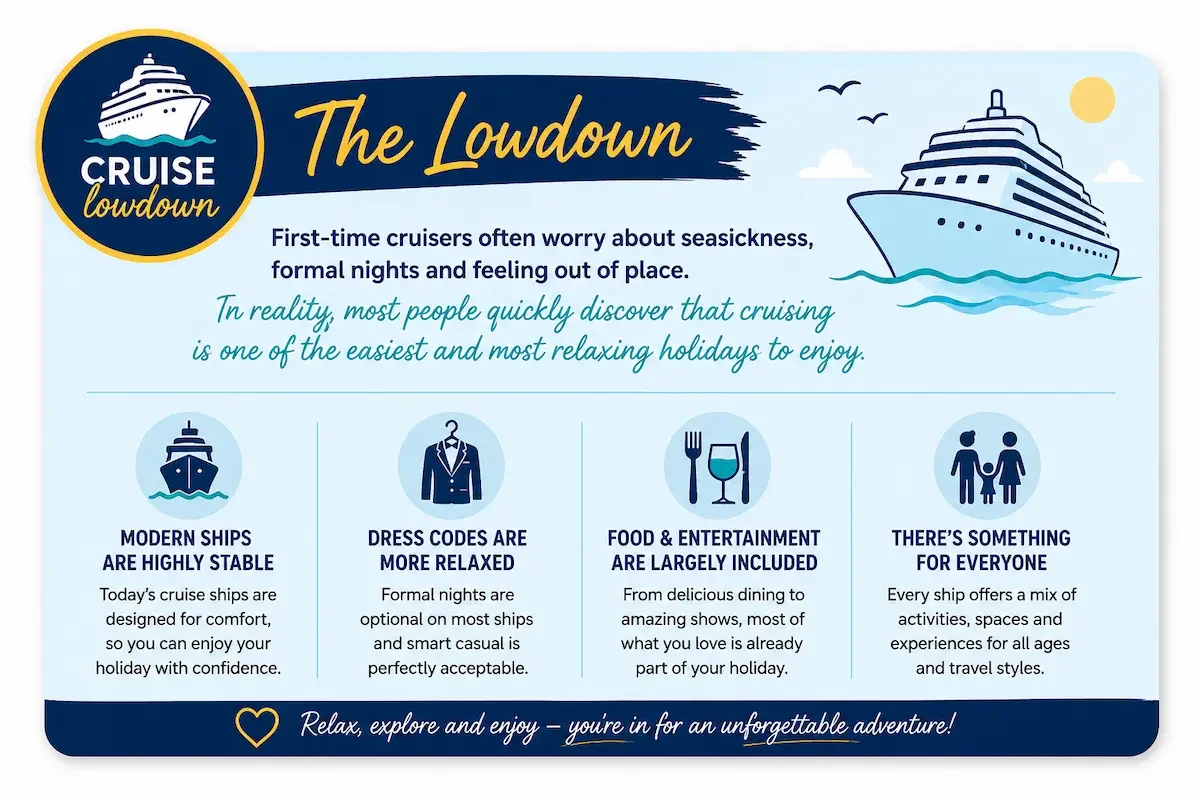
Explore our in-depth cruise guides or get in touch if you can’t find the answer you’re looking for.