
Norway Cruise Guide: Fjords, Ports & Excursions
Planning a Norway cruise? The Norwegian Fjords are the classic starting point, with dramatic mountains, waterfalls, glaciers and picturesque villages providing some of the most spectacular scenery you can experience from a cruise ship.
But cruising in Norway extends well beyond the famous western Fjords. Depending on your itinerary, you can also explore historic coastal cities, Arctic Norway, the Northern Lights and the Midnight Sun. This Norway cruise guide brings together the key ports, excursions, things to do and practical information you need to plan your trip.
Norway Cruise Guide: At a Glance
Best known for: The spectacular Norwegian Fjords, dramatic mountains, waterfalls, glaciers and scenic coastal cruising.
Main cruise regions: Norwegian Fjords, coastal Norway and Arctic Norway, including destinations north of the Arctic Circle.
Popular ports: Bergen, Stavanger, Flåm, Geiranger, Ålesund, Olden, Eidfjord, Trondheim, Bodø, Tromsø and Honningsvåg.
Best time to visit: Summer is popular for Norwegian Fjords cruises and long daylight hours. Autumn, winter and early spring offer opportunities for Northern Lights cruises in northern Norway.
Top experiences: Fjord scenery, scenic rail journeys, waterfalls, hiking, city sightseeing, Arctic adventures, the Midnight Sun and Northern Lights.
Excursions: Choose from cruise line excursions, independent tours and activities that can be arranged independently in port.
Good to know: A traditional Norwegian Fjords cruise is very different from an itinerary travelling into Arctic Norway. Check the ports and sailing dates carefully when choosing your cruise.
Planning Your Route: The Big Questions First
Before we dive into a port-by-port breakdown of the breathtaking Norwegian coastline, it helps to address the macro-questions that every cruiser asks when planning this bucket-list voyage.
What is the Best Time of Year to Cruise Norwegian Fjords?
Choosing when to sail completely transforms the type of holiday you will experience. The peak summer months of June, July, and August offer long daylight hours, lush green landscapes, and the warmest weather for exploring on foot. However, May and September are highly rewarding shoulder seasons that offer fewer crowds at popular berths and the stunning sight of snow-capped peaks.
If your goal is to experience a winter wonderland or witness the aurora borealis along the deep Arctic coast, you will want to target a dedicated Norway cruise northern lights 2026 2027 itinerary, which typically runs between October and March.
Which are the Best Cruise Ships for Scenic Cruising in Norway?
In Norway, the ship itself acts as a moving viewing platform. Because of this, ship design matters far more here than it does on a standard Caribbean cruise. The best cruise ships for scenic cruising in Norway are those designed with forward-facing observation lounges, expansive open deck space, and wrap-around promenades that allow you to quickly cross from port to starboard when a waterfall or dramatic cliff face appears.
Mega-ships offer incredible onboard entertainment, but smaller, mid-sized vessels can often navigate deeper into the narrowest reaches of the trickier fjords. And for the adventurous it has to be an expedition ship
Is a Balcony Cabin Worth It on a Norway Cruise?
This is perhaps the most debated topic among first-time visitors. While a balcony adds a premium to your holiday fare, the consensus for a destination like Norway is a resounding yes. Having your own private viewing space means you can enjoy the dramatic sail-ins at 5:00 AM in your dressing gown without fighting for rail space on the top deck.
If you do opt for a balcony, a common logistical headache is figuring out the best side of the ship to stay on for a Norway cruise. Because the ships turn around at the end of the fjords and sail back out the same way they came, you will get a spectacular view from either side of the ship at some point during the day - meaning you can confidently book either port or starboard!
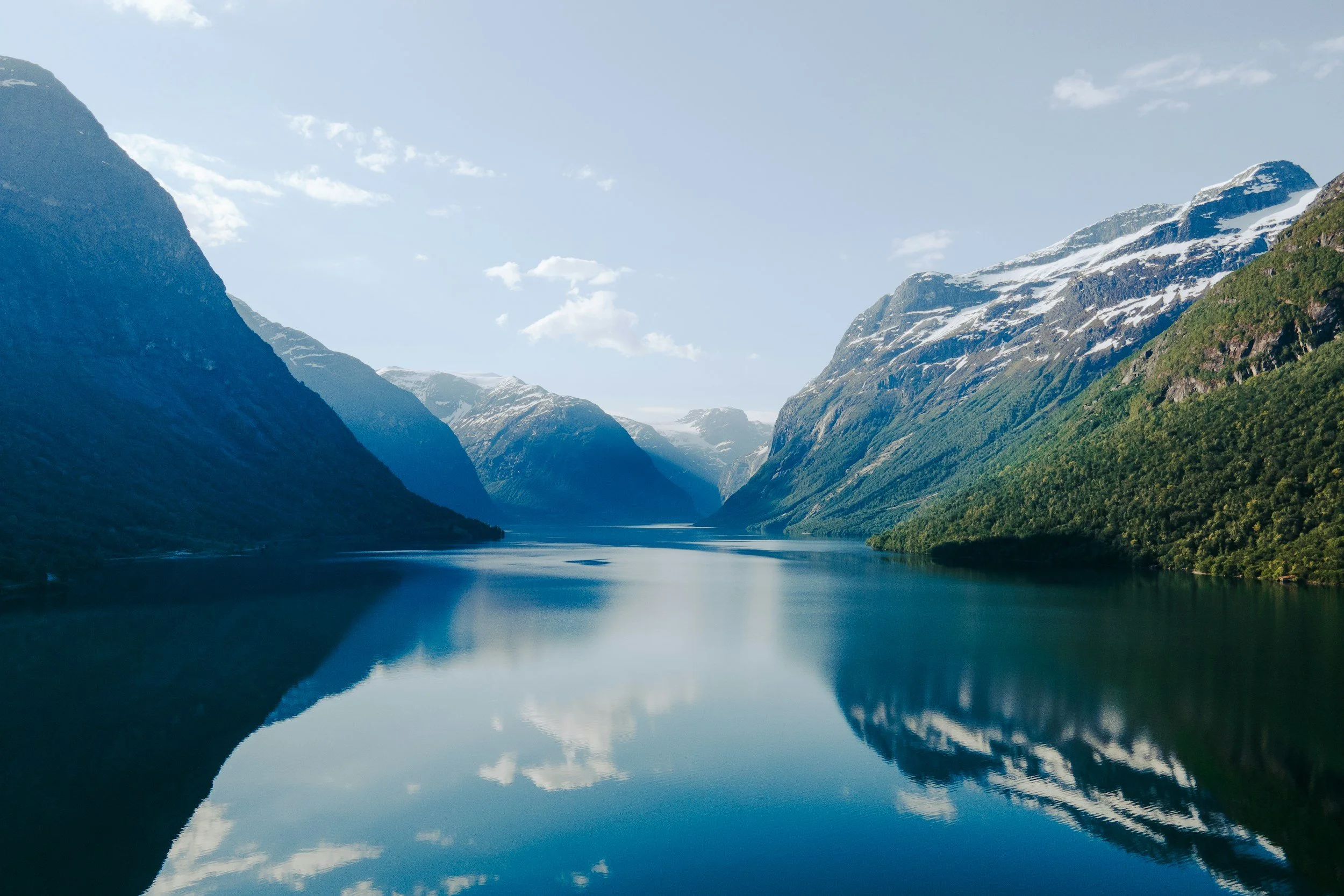
Cruises to Norway Including Fjords and Coastal Cruising
A Norwegian Fjords cruise is one of the easiest ways to experience some of Norway’s most spectacular scenery, with towering mountains, waterfalls, glaciers and tiny villages appearing almost directly from the sea. But choosing what to do when you arrive can be less straightforward. Some ports are small enough to explore on foot, while others are gateways to attractions several miles inland, and a number of the most popular excursions need to be booked well before you sail.
This comprehensive Norwegian Fjords cruise guide covers the ports you are most likely to visit, whether ships dock or tender, the best things to see and do, popular cruise excursions and how to arrange them independently. It also explains when to go, what to pack, which cruise lines sail the Norwegian Fjords and how to make the most of the spectacular scenery from the ship.
Practical Information
Norwegian krone (NOK)
Norwegian, although English is widely spoken
GMT+1, with daylight saving time in summer
Changeable. Rain, cloud, sunshine and cooler temperatures can all occur during the same day.
Norwegian Fjords cruise, coastal Norway cruise or Arctic Norway Expedition?
Norway cruises can offer very different experiences depending on how far north your itinerary travels. A classic Norwegian Fjords cruise focuses on the dramatic scenery of western Norway, while coastal and Arctic itineraries venture further north and offer different landscapes, ports and seasonal experiences.
Norwegian Fjords cruises
A traditional Norwegian Fjords itinerary usually concentrates on the western and southern coast, with ships sailing deep into fjords and calling at ports such as Bergen, Stavanger, Flåm, Geiranger, Olden, Ålesund and Eidfjord.
These cruises are primarily about spectacular scenery. You can expect steep-sided mountains, waterfalls, glaciers, small villages and scenic sailing through narrow waterways.
Many seven-night cruises from Southampton follow a route around western Norway, although the exact ports vary between cruise lines and ships.
Look at cruise lines such as P&O Cruises, Princess Cruises, MSC Cruises and Fred.Olsen Cruies who all have Norwegian Fjords itineraries.
Coastal Norway cruises
A coastal Norway itinerary travels much further north and follows more of Norway’s coastline. Some cruise lines combine southern fjord ports with destinations such as Trondheim, Bodø and Tromsø, while longer itineraries can continue towards the North Cape and beyond.
These cruises offer a much broader view of Norway and can include dramatic coastal scenery, islands, fishing communities and Arctic landscapes as well as fjords.
They are also the itineraries to look at if the Midnight Sun or Northern Lights are high on your wish list.
Consider Hurtigruten, Havila Voyages, Ambassador Cruise Line or Explora Journeys who are amongst those cruise lines sailing the Norwegian coastal routes. From Summer 2028 Celebrity Beyond will also be sailing into Arctic Norway.
Expedition Cruising in Arctic Norway
Arctic Norway can also be explored by expedition ship, offering a very different experience from the conventional seven-night Norwegian Fjords cruise. Expedition itineraries may travel much further north and place greater emphasis on remote scenery, wildlife and smaller communities rather than the classic cruise ports.
This quick comparison shows how the three types of Norway cruise differ.
| Cruise region | Scenery | Typical ports | Best season | Standout experiences |
|---|---|---|---|---|
| Norwegian Fjords | Dramatic fjords, mountains, waterfalls and glaciers | Bergen, Flåm, Geiranger, Olden, Ålesund | May to September | Scenic cruising, fjord viewpoints, rail journeys and waterfalls |
| Coastal Norway | Rugged coastline, islands, mountains and fishing communities | Ålesund, Trondheim, Bodø, Tromsø | May to September | Longer coastal journeys, local culture and scenic sailing |
| Arctic Norway | Arctic landscapes, mountains, islands and winter scenery | Tromsø, Alta, Bodø, Honningsvåg | September to April for Northern Lights; June to July for Midnight Sun | Northern Lights, Midnight Sun, Arctic wildlife and North Cape |
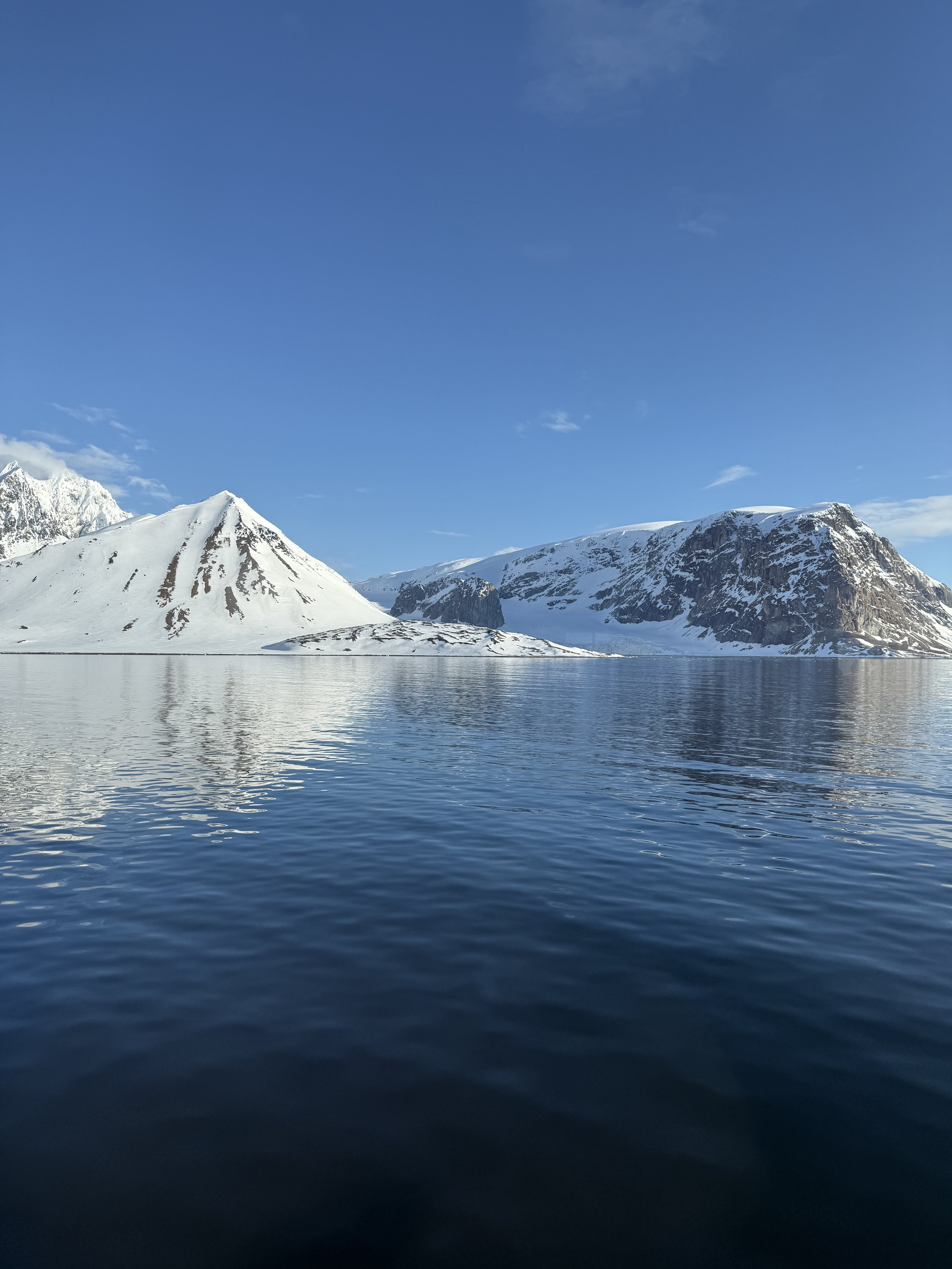
Depending on the itinerary and season, expedition voyages can include destinations such as Tromsø, Lofoten, the North Cape, Svalbard and Bear Island, with some voyages concentrating on the Arctic rather than the western fjords.
These cruises are particularly relevant if your priorities are wildlife, remote landscapes, photography, Arctic history or getting further north. Zodiac landings, small-boat exploration and shore excursions are also more likely to form part of the experience, although exactly what is offered depends on the ship, itinerary and conditions.
It is worth checking the itinerary carefully before booking. An expedition cruise marketed as a Norway or Arctic voyage may have very little in common with a traditional Norwegian Fjords cruise from Southampton. If your priority is seeing Flåm, Geiranger, Olden and the classic western fjords, a conventional cruise is likely to be the more relevant category. If you want to travel beyond the usual cruise circuit and explore Arctic Norway, expedition cruising opens up a different side of the country.
For readers considering the Arctic route, read my guide to Expedition Cruising and Arctic Packing Guide.
What about Tromsø?
Tromsø is a good example of why it is important to look at the complete itinerary rather than simply the cruise title.
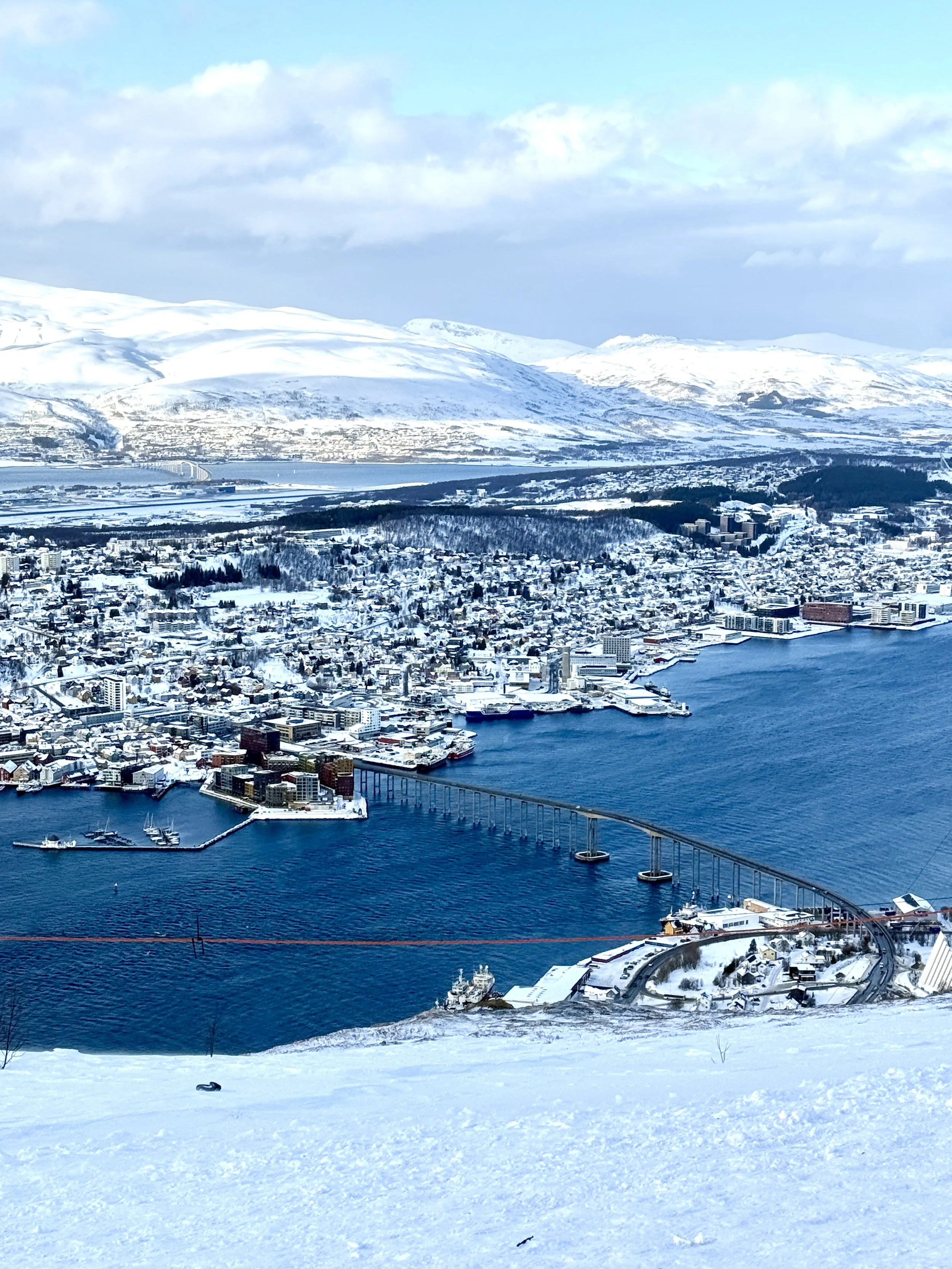
Cruise Lowdown sailed to Arctic Norway with HX Expeditions from Tromso February 2026
Tromsø is well north of the Arctic Circle, so it can offer the Midnight Sun in summer and the possibility of seeing the Northern Lights during the darker months. A cruise that calls at Tromsø may therefore provide a very different Norwegian experience from a seven-night western Fjords cruise visiting Flåm and Geiranger.
It does not mean that the cruise is necessarily a better or worse way to see Norway. It simply means that the focus is different.
If your priority is classic fjord scenery, look for an itinerary featuring ports such as Flåm, Geiranger, Olden, Eidfjord and Stavanger.
If your priority is Arctic Norway, the Midnight Sun or Northern Lights, look for an itinerary travelling north to destinations such as Tromsø, Bodø or the North Cape.
And if you want both, there are longer itineraries that combine the two.
Fjords v Coastal Norway At a glance
Norwegian Fjords cruise:
Best for spectacular fjord scenery, waterfalls, mountain viewpoints, glaciers and picturesque villages. Typical ports include Bergen, Flåm, Geiranger, Olden, Ålesund and Stavanger.
Coastal Norway cruise:
Best for experiencing a wider section of Norway, including the Arctic north. Itineraries may include Trondheim, Bodø, Tromsø and the North Cape alongside southern ports.
Midnight Sun:
Look for itineraries travelling north of the Arctic Circle during summer.
Northern Lights:
Look for northern Norway itineraries during the darker months, particularly those visiting destinations such as Tromsø.
Want the classic Norwegian Fjords experience?
Check the itinerary for Flåm, Geiranger, Olden, Eidfjord or similar western fjord ports rather than relying on the cruise title alone.
At a glance: Norwegian Fjords cruises
Why cruise the Norwegian Fjords?
The Norwegian Fjords are different from many cruise destinations because the scenery begins long before you reach the port.
A fjord is a long, narrow inlet created by glacial activity, often with exceptionally steep mountains rising directly from the water. Some are hundreds of metres deep, allowing large cruise ships to sail surprisingly far inland. The Sognefjord, Norway’s longest and deepest fjord, reaches 1,308 metres below sea level.
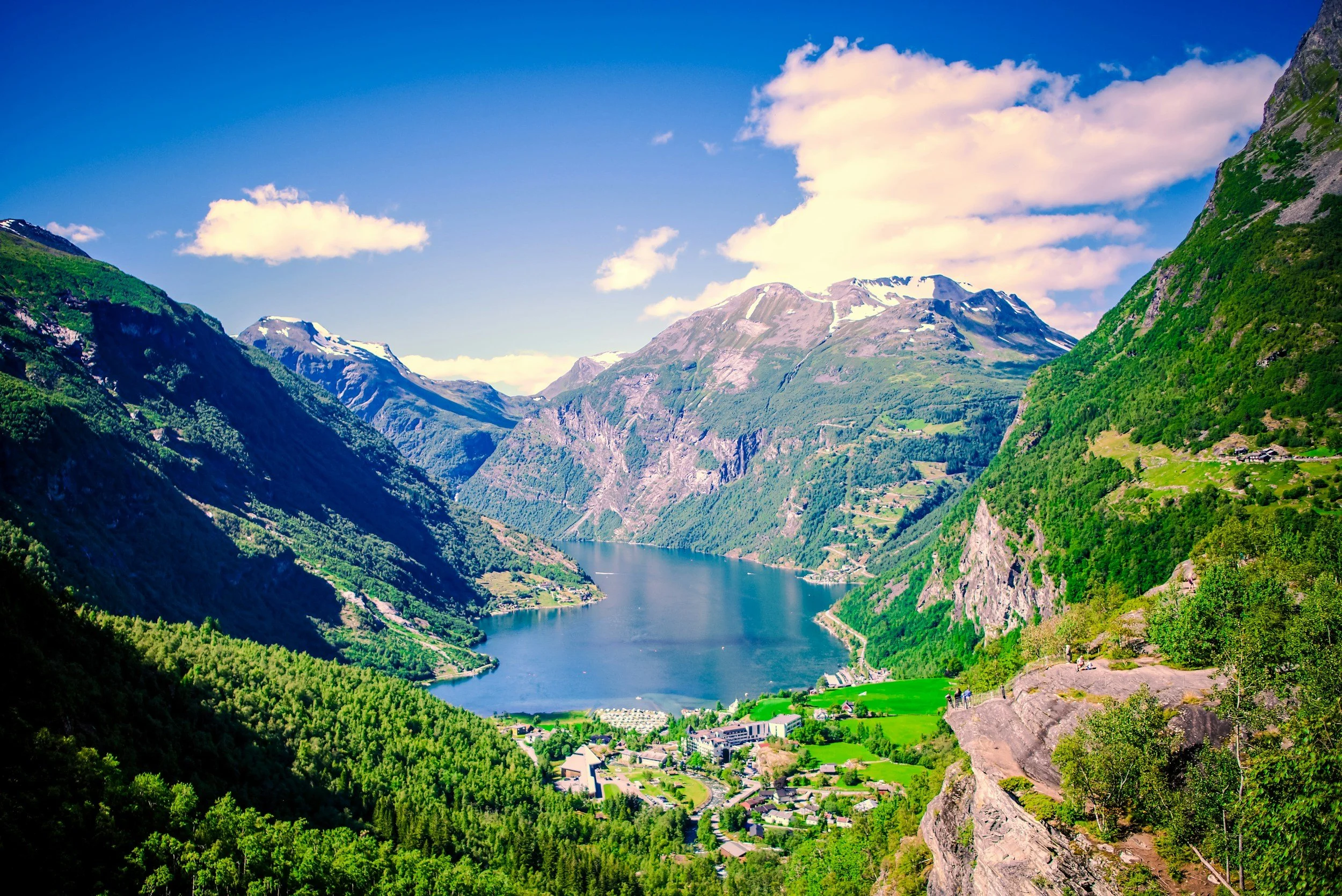
For a cruise passenger, that means the journey between ports is part of the destination. You can spend the morning watching waterfalls tumble down cliffs from your balcony, then arrive at a tiny village where the main challenge is deciding which spectacular viewpoint to visit.
The scenery also changes dramatically depending on the itinerary. Bergen provides a historic city experience, Stavanger combines a lively town with access to Lysefjord and Pulpit Rock, while Flåm, Geiranger and Olden are primarily about mountains, waterfalls, glaciers and spectacular viewpoints.
When is the best time to cruise the Norwegian Fjords?
The main cruise season runs from spring through autumn.
May
May can be an excellent month for scenery, with snow still visible on the mountains and waterfalls fed by melting snow. Days are already becoming very long, although temperatures can be cool and conditions change quickly.
June
June brings long daylight hours, greener landscapes and generally pleasant conditions for sightseeing. It is also a popular month for fjord cruises.
July and August
These are the busiest months and usually offer the best chance of warmer weather. They are also when popular attractions can be busiest, particularly at ports such as Flåm, Geiranger and Olden.
September and October
Autumn brings changing colours and fewer summer crowds, although the days become noticeably shorter and weather can be more unpredictable.
If your priority is scenery rather than sunshine, do not dismiss May or September. A cloudy day can actually make the waterfalls and mountains look remarkably dramatic.
Can you see the midnight sun on a Norwegian Fjords cruise?
The long summer days are one of the pleasures of cruising Norway, but there is an important distinction between very long daylight hours and the midnight sun.
The true midnight sun occurs when the sun remains above the horizon at midnight. It is only experienced north of the Arctic Circle, so a typical Norwegian Fjords itinerary covering places such as Bergen, Flåm, Geiranger and Stavanger does not experience the midnight sun in the strict sense.
What you will get in these southern fjord destinations during June and early July is exceptionally long daylight. In Bergen, for example, there is still plenty of natural light late into the evening and again very early in the morning. Further north, the hours of daylight become even more extreme.
If your cruise travels above the Arctic Circle, the situation changes. In places such as Bodø and Tromsø, the midnight sun can be experienced for part of the summer, with the exact dates depending on latitude.
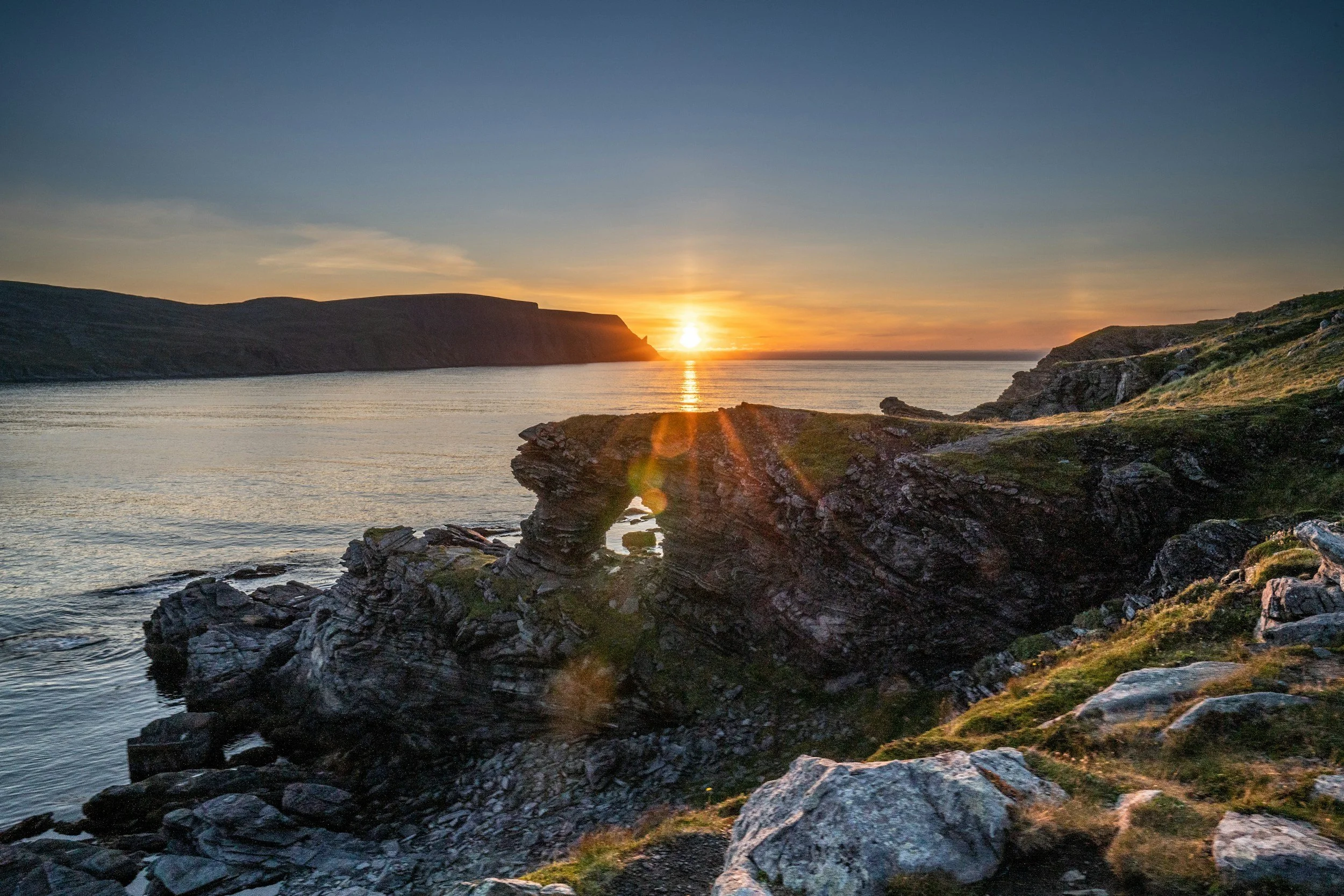
The midnight sun is a fabulous yet surreal experience
When is the midnight sun?
The further north you travel, the longer the period of continuous daylight.
At the Arctic Circle, the midnight sun occurs around the summer solstice in June. In Tromsø, it lasts from late May until late July, while further north the period becomes considerably longer.
This makes northern Norway cruises particularly appealing if experiencing the midnight sun is one of your reasons for visiting Norway.
What does it mean for a cruise?
It can be slightly disorientating at first.
You may return to your cabin after an evening excursion and find that it still looks like daytime outside. If you have a balcony cabin, blackout curtains are useful if you prefer to sleep in darkness.
The extended daylight is also wonderful for scenic cruising. On a summer itinerary, you may still have good visibility when the ship is sailing late in the evening, giving you more opportunities to see mountains, waterfalls and small coastal communities.
Just remember that a standard Norwegian Fjords cruise is not automatically a midnight-sun cruise. Check the itinerary carefully to see how far north the ship travels.
Does a Norwegian Fjords cruise have 24 hours of daylight?
Not necessarily. This depends on where the ship is sailing and the time of year.
On a conventional southern Norwegian Fjords itinerary, you will experience very long summer days but the sun will still set. On itineraries travelling north of the Arctic Circle around midsummer, you can experience continuous daylight.
If seeing the midnight sun is important to you, look for an itinerary that specifically includes destinations north of the Arctic Circle rather than assuming that any Norwegian cruise will provide it.
Can you see the Northern Lights on a Norway cruise?
Northern Lights cruises in Norway
Seeing the Northern Lights is a major reason to consider a cruise into northern Norway, but the itinerary and time of year matter. A traditional summer Norwegian Fjords cruise is not the right choice if the aurora is your main objective because the nights are too light and most Fjords itineraries do not travel far enough north.
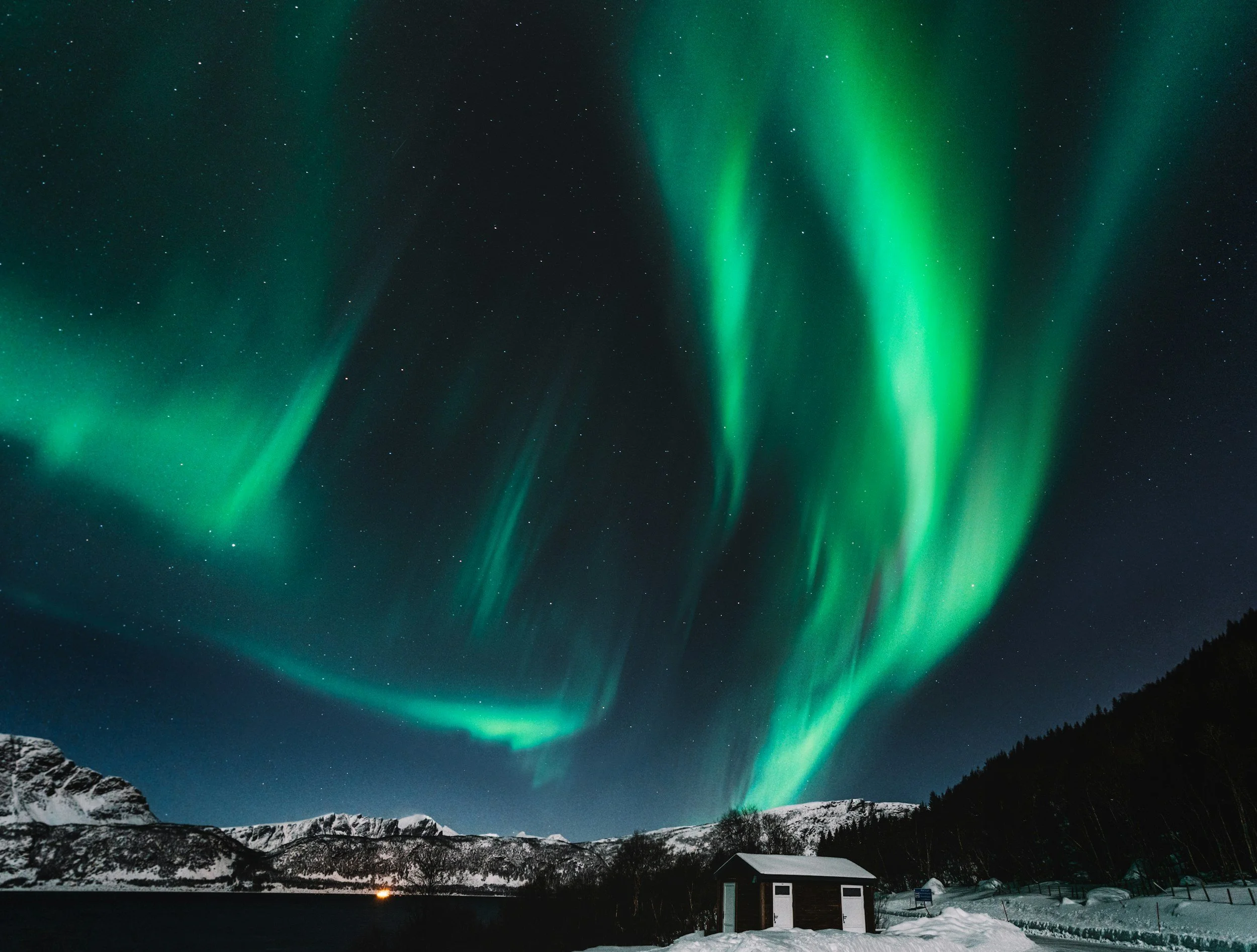
For the best opportunity, look for an itinerary that travels into Arctic Norway and includes destinations such as Tromsø, Alta or Honningsvåg. The Northern Lights season generally runs from late summer into early spring, when the longer hours of darkness provide the conditions needed to see the aurora.
There is never a guarantee that the lights will appear. Clear skies and suitable auroral activity are both needed, and cloud can prevent even an active display from being visible. If seeing the Northern Lights is particularly important to you, an itinerary with several nights in northern Norway gives you more opportunities than a cruise with a single short Arctic port call.
A Northern Lights excursion can take you away from city lights and may be able to travel towards clearer skies, but you can also watch for the aurora from the ship when conditions are suitable. For cruise passengers, remember that an independently booked tour must return in good time for the ship’s departure.
Planning a dedicated Northern Lights trip? See our Northern Lights cruise guide for more on when to go, where to cruise and what to expect.
Norwegian Fjords Cruise Ports
One of the best things about a Norwegian Fjords cruise is the variety of ports. Some are substantial towns where you can simply walk off the ship and explore independently, while others are tiny villages that act as gateways to mountains, glaciers, waterfalls and viewpoints further inland.
The ports included on your itinerary will depend on the cruise line, ship and length of the cruise. A seven-night sailing from Southampton might visit three or four Norwegian ports, while a longer itinerary can combine the classic western fjords with destinations further north.
Below, we look at the ports you are most likely to encounter on a Norwegian cruise, what each is best known for, whether you can expect to dock or tender, and the most practical ways to explore them. Port arrangements can change, so always check the details for your particular sailing before booking an independent excursion.
Bergen
What it is: Norway’s second-largest city and one of the principal gateways to the fjords
Getting ashore: Docked
Best for: Bryggen, Mount Fløyen, city sightseeing and fjord excursions
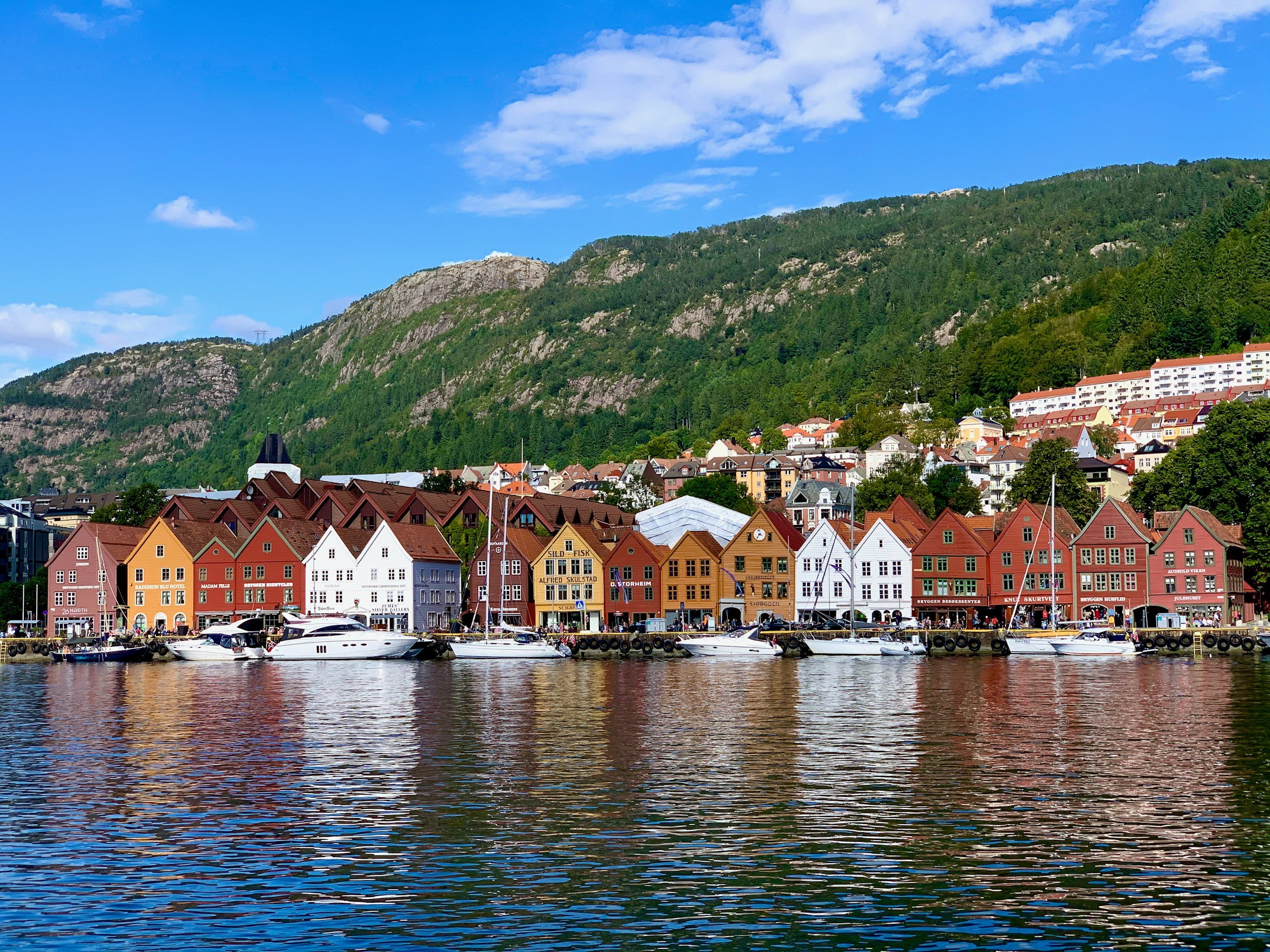
Bergen is one of the easiest Norwegian cruise ports to explore independently. Cruise ships use several berths, but the city centre and its main attractions are readily accessible from the cruise docks.
The city’s most famous sight is Bryggen, the historic Hanseatic wharf on the harbourfront. Its colourful wooden buildings and narrow passages are now a UNESCO World Heritage Site.
From here it is an easy walk to the Fish Market and the lower station of the Fløibanen funicular. The funicular takes just a few minutes to climb Mount Fløyen, where there are panoramic views over Bergen, the surrounding mountains and the fjord.
Popular Bergen excursions
Mount Fløyen and city tour
This is probably the easiest excursion to reproduce independently. Walk from the ship to Bryggen, explore the waterfront and continue to the Fløibanen. Buy your own funicular ticket and allow plenty of time for the return journey.
Mostraumen fjord cruise
A popular alternative is a local fjord cruise from central Bergen through the Osterfjord towards the narrow Mostraumen strait. These cruises operate independently of the cruise lines and depart from the city centre. Allow plenty of time between the excursion and your ship’s all-aboard time.
Bergen walking tour
Bergen’s compact centre makes a self-guided walking tour very practical. Bryggen, Bergenhus Fortress, the Fish Market and Fløyen can all be combined into one day.
Doing Bergen independently
This is one of the Norwegian ports where I would be very reluctant to pay for a ship excursion simply to see the city. The main attractions are close together and easy to reach.
If you want a fjord cruise, however, check the local departure time carefully against your ship’s schedule. A cruise excursion removes some of the risk of a delay, whereas an independently booked tour does not.
Stavanger
What it is: Historic Norwegian city and gateway to Lysefjord
Getting ashore: Docked
Best for: Old Stavanger, street art, Lysefjord and Pulpit Rock
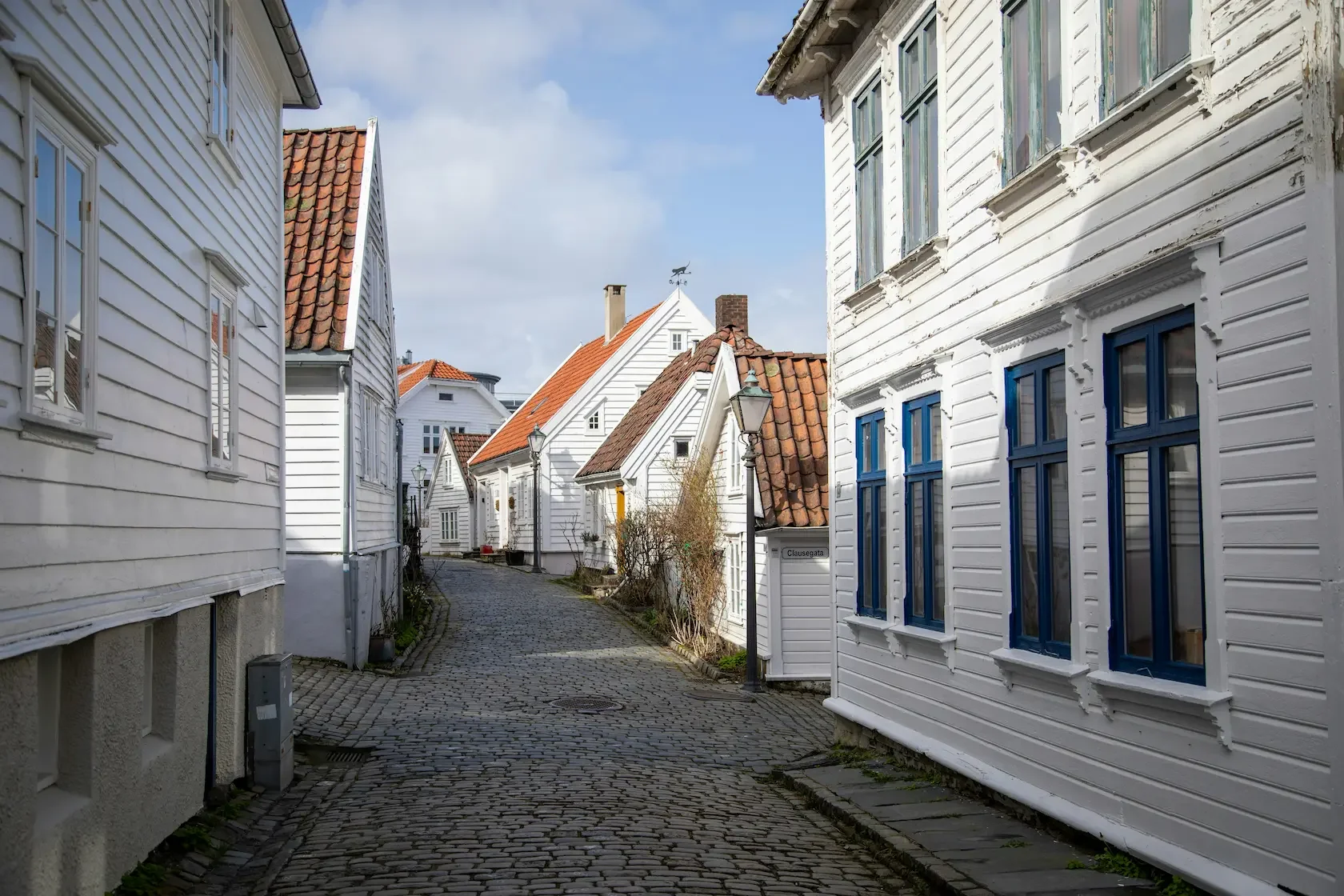
Stavanger is another particularly good port for independent exploration. The cruise berth is close to the city centre, making it possible to walk straight into town.
The historic centre includes Gamle Stavanger, with its white wooden houses, while the colourful Øvre Holmegate provides a very different backdrop.
The big attraction outside the city is Preikestolen, better known as Pulpit Rock. The dramatic cliff rises 604 metres above Lysefjord and is one of Norway’s best-known viewpoints.
Popular Stavanger excursions
Pulpit Rock
The full hike is not suitable for everyone. It involves uneven terrain and significant uphill walking, so check the current conditions and allow plenty of time.
A ship excursion is the straightforward option if you want to hike Pulpit Rock without worrying about transport connections.
Independent travellers can arrange transport to the trailhead, but this requires careful timing.
Lysefjord cruise
If you want the scenery without the strenuous hike, a boat trip into Lysefjord is a popular alternative. This is particularly attractive for cruise passengers who want to see Pulpit Rock from below.
Old Stavanger
For a much easier day, simply walk into the city and explore the old wooden quarter, harbour and shops.
Doing Stavanger independents
Stavanger is one of the ports where you can easily have a good day without booking anything in advance.
For Pulpit Rock, however, I would plan the transport before leaving home rather than simply turning up and hoping everything works with your ship’s timetable.
Flåm
What it is: Small village at the end of Aurlandsfjord and gateway to the Flåm Railway
Getting ashore: Ships can dock at the pier; tendering is also possible
Best for: Flåm Railway, fjord scenery, viewpoints and cycling
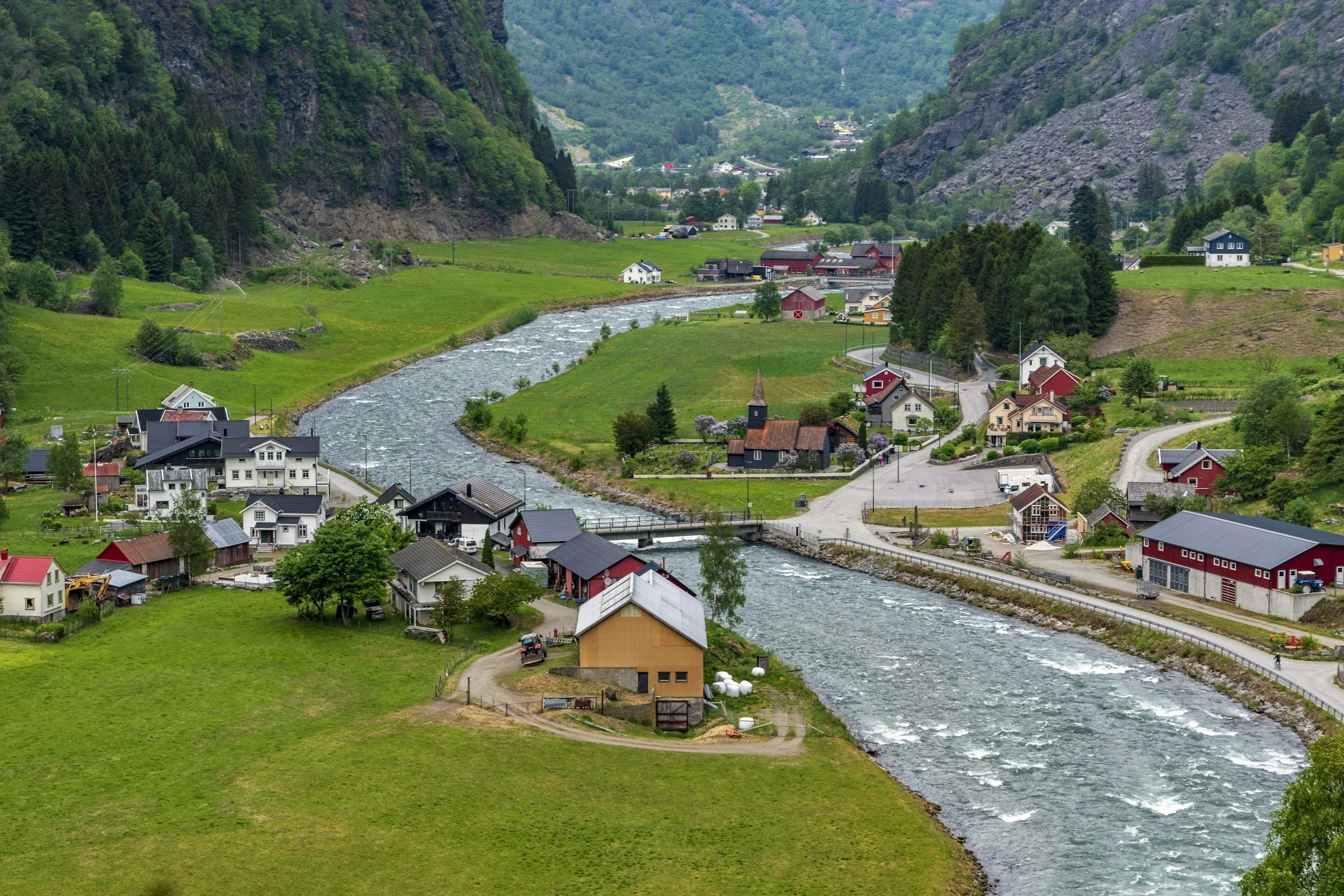
Flåm is tiny, but its location at the head of Aurlandsfjord makes it one of the most popular cruise stops in Norway.
The attraction most cruise passengers know is the Flåm Railway, or Flåmsbana. The railway climbs from Flåm through the spectacular Flåmsdalen valley to Myrdal, passing waterfalls, steep mountains and dramatic scenery along the way.
The railway station is only about 200 metres from the port, making this one of the easiest major cruise excursions to arrange independently.
Popular Flåm excursions
Flåm Railway
This is the classic excursion. The train journey can be booked independently rather than through the cruise line.
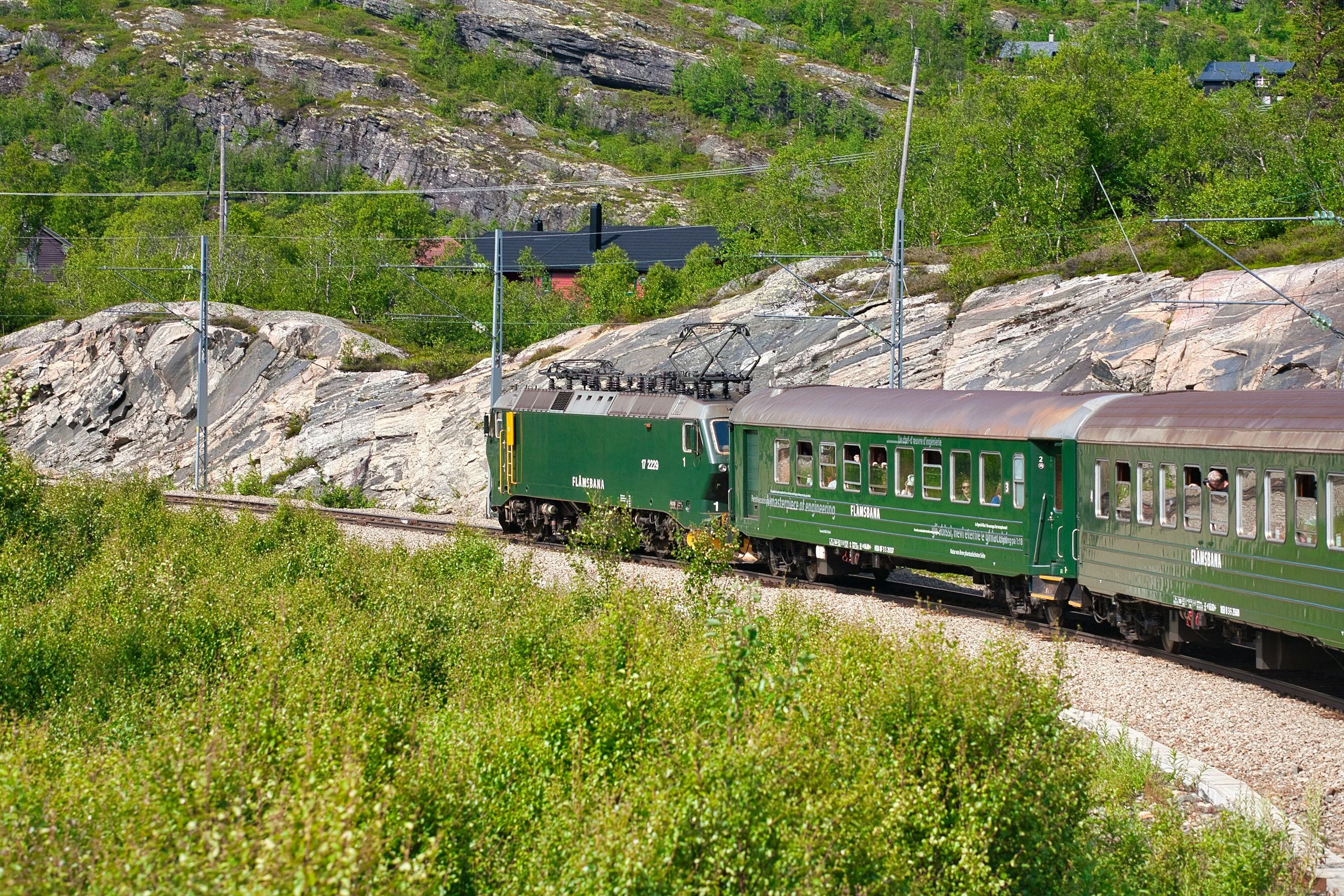
The major advantage is price and flexibility. The disadvantage is that you are responsible for making sure you are back at the ship on time.
Do not assume that because the station is close to the ship you can leave booking until the last minute. Trains are popular and availability can be limited when several cruise ships are visiting.
Nærøyfjord
Another popular option is a boat trip between Flåm and Gudvangen through the narrow Nærøyfjord, one of Norway’s UNESCO-listed fjord areas.
This is a particularly good choice if you want to experience the scenery from the water rather than simply travelling inland by train.
Stegastein viewpoint
The spectacular Stegastein viewing platform overlooks Aurlandsfjord from high above Aurland. It requires transport from Flåm, so this is one occasion when a local excursion or organised tour can make sense.
Doing Flåm independently
Flåm is one of the easiest ports for DIY excursions, but book the railway or fjord cruise in advance.
The biggest mistake is to look only at the excursion duration. Always work backwards from your ship’s departure time and allow a generous margin.
Geiranger
What it is: Village at the head of the UNESCO-listed Geirangerfjord
Getting ashore: Tender or floating SeaWalk, depending on the call
Best for: Fjord scenery, viewpoints, waterfalls and mountain roads
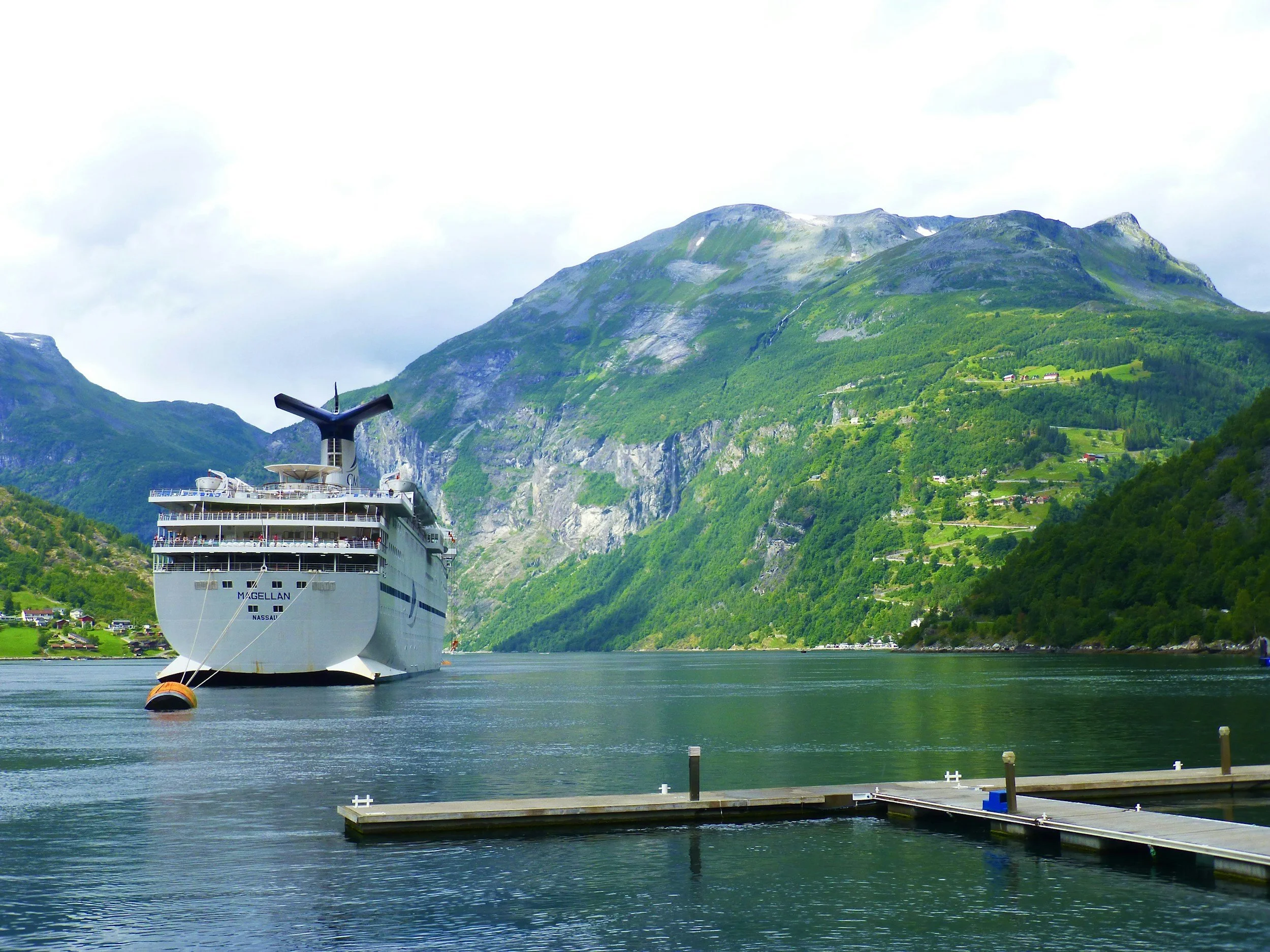
Geiranger is probably the port that most people picture when they think about a Norwegian Fjords cruise.
The ship sails deep into the Geirangerfjord, surrounded by steep mountains and waterfalls. The scenery begins long before you reach the village, so make sure you are on deck for the approach.
There has been an important change to how passengers reach Geiranger. Historically, it was predominantly a tender port. During 2026, many calls are using the floating SeaWalk, allowing passengers to walk ashore, although tendering still occurs depending on the ship and port arrangements.
Popular Geiranger excursions
Dalsnibba viewpoint
Dalsnibba is one of the most famous viewpoints in the area, high above Geiranger. The journey is as much a part of the excursion as the viewpoint itself.
Flydalsjuvet
Flydalsjuvet provides one of the classic elevated views towards Geiranger and the fjord. It is closer to the village than Dalsnibba.
Eagle Road
The winding Ørnevegen, or Eagle Road, climbs dramatically from the fjord towards Eidsdal and provides another spectacular perspective.
Fjord sightseeing
A local boat or organised excursion can provide a different view of the waterfalls and mountains.
Doing Geiranger independently
This is a port where independent planning requires more thought than simply walking off the ship.
The village itself is easy to explore, but the best viewpoints are high above it and require transport. Local taxis and sightseeing services may be available, but demand is high when cruise ships arrive.
If there is a particular viewpoint you absolutely want to visit, booking transport in advance is sensible.
Olden
What it is: Village on Nordfjord and gateway to glaciers and mountain scenery
Getting ashore: Usually docked; tendering can be used when berth capacity is occupied
Best for: Briksdal Glacier and Loen Skylift
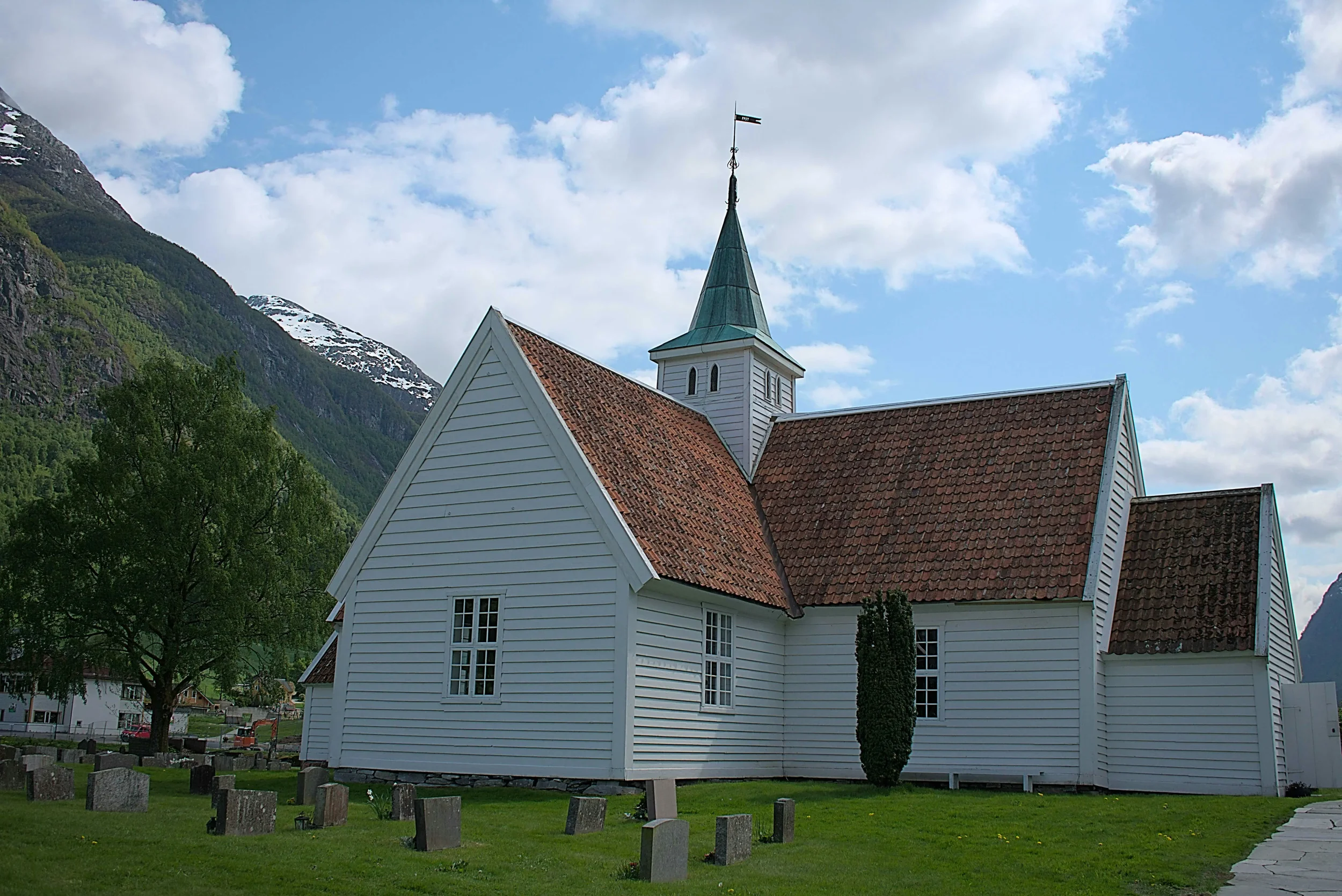
Olden Church Photo by Rob Barber on Unsplash
Olden is another small Norwegian village where the scenery is much more important than the settlement itself.
Two attractions dominate most cruise visits: Briksdal Glacier and the Loen Skylift.
Briksdal Glacier
The journey through Oldedalen to Briksdal is spectacular, with mountains, waterfalls and valleys surrounding the road.
At the end, visitors can walk towards the glacier or use one of the open Troll Cars for part of the journey.
This is a relatively long excursion, so check your ship’s port times carefully.
Loen Skylift
The Loen Skylift climbs from the fjord to Mount Hoven, providing enormous views across Nordfjord and the surrounding mountains.
It is a particularly attractive option for anyone who wants spectacular scenery without a long hike.
Doing Olden independently
Olden is a good candidate for arranging a local excursion rather than automatically booking the cruise line’s version.
The important point is to choose one major attraction rather than trying to squeeze Briksdal Glacier and Loen Skylift into the same short port call.
The two attractions are in different directions and trying to do both can leave you spending much of your day in transport.
Ålesund
What it is: Art Nouveau city spread across several islands
Getting ashore: Docked
Best for: Art Nouveau architecture, Mount Aksla and independent exploration
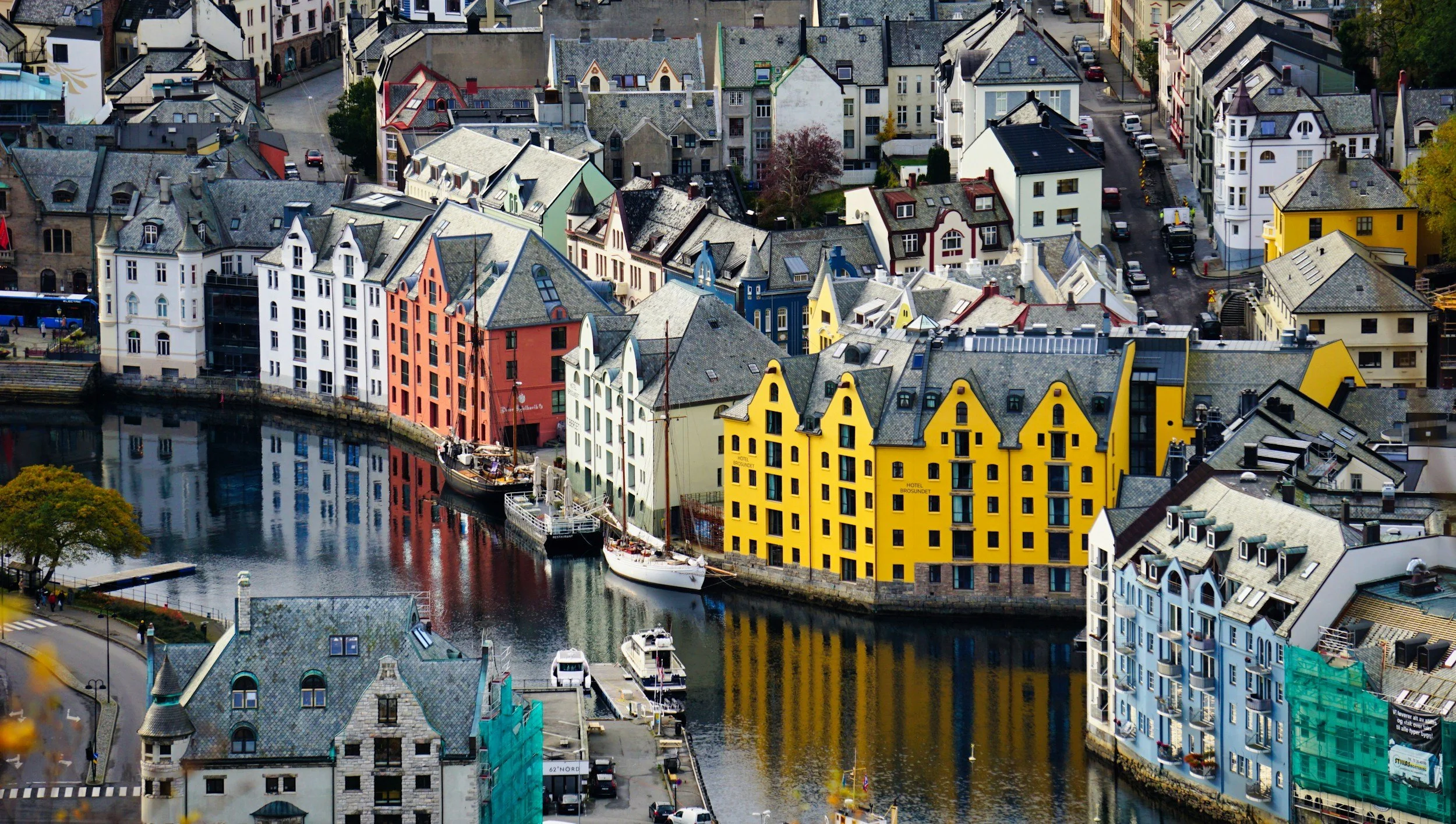
Ålesund is one of the easiest ports to explore without an excursion.
The city was largely rebuilt in the distinctive Art Nouveau style after a devastating fire in 1904, giving it an architectural character unlike the other major Norwegian cruise ports.
The cruise berths are close to the centre, so you can simply walk ashore.
Popular Ålesund excursions
Mount Aksla
The viewpoint above the city is reached by a long flight of steps. At the top there are panoramic views across Ålesund, the surrounding islands and mountains.
If the steps are not suitable for you, look for an excursion or taxi option that provides transport to the viewpoint.
Art Nouveau walking tour
You can explore much of the centre independently, although a guided walking tour adds useful historical context.
Atlantic Sea-Park
Ålesund’s aquarium is another option, particularly for families.
Doing Ålesund independently
This is one of my favourite ports for DIY exploration because there is no need to spend the morning travelling away from the ship.
Walk around the centre, see the architecture, visit the waterfront and decide whether you want to tackle Aksla.
Eidfjord
What it is: Small village on Hardangerfjord
Getting ashore: Usually docked, although arrangements can vary
Best for: Vøringsfossen waterfall, Hardangervidda and fjord scenery
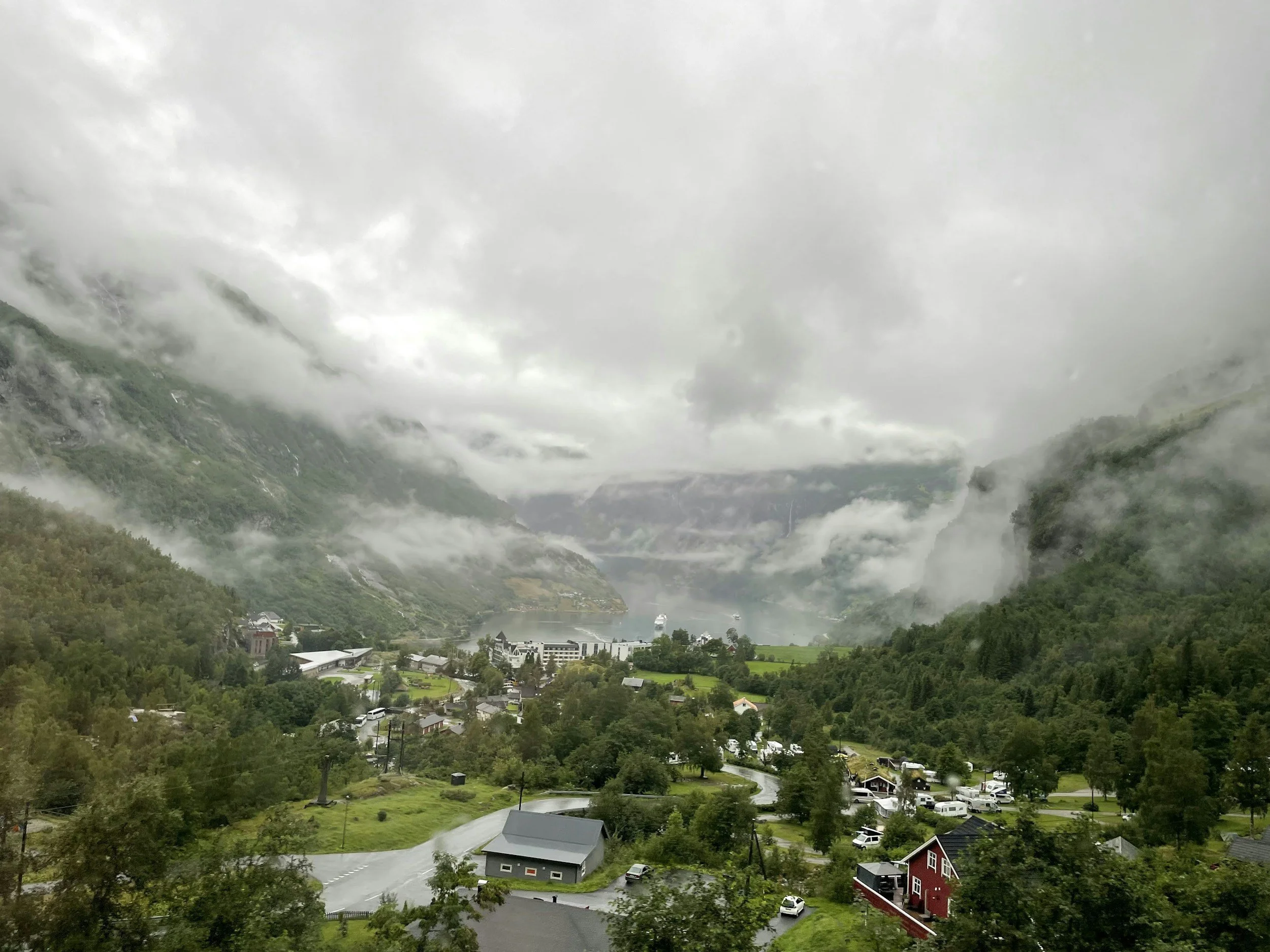
Eidfjord is smaller than Bergen or Stavanger but has access to some impressive scenery.
The headline attraction is Vøringsfossen, one of Norway’s best-known waterfalls. The waterfall drops dramatically from the Hardangervidda mountain plateau towards the Måbødalen valley.
Popular Eidfjord excursions
Vøringsfossen
This is the obvious choice for a first visit.
Hardangervidda
The mountain plateau provides a very different landscape from the deep fjord below.
Village and fjord walk
If your call is short or you do not want a full excursion, Eidfjord itself can be explored at a much slower pace.
Doing Eidfjord independently
The village is easy to explore, but the major sights require transport. A local excursion can therefore be more practical than trying to piece together several public transport connections during a cruise call.
Other Norwegian Fjords ports
Not every itinerary follows the same route. Your cruise may substitute one of the major ports for a smaller destination.
Haugesund
A working coastal town with Viking connections and easy access to local attractions. It is often included on Southampton itineraries and can be a pleasant alternative to the better-known fjord villages.
Skjolden
Located at the innermost end of Lustrafjord, Skjolden is particularly scenic. It is a good port for walking, kayaking and excursions into the surrounding mountains.
Nordfjordeid
A small settlement on Nordfjord with access to mountain scenery and glacier excursions. Some itineraries use Nordfjordeid as an alternative to Olden.
Hellesylt
Hellesylt is particularly famous for its waterfall and its position at the entrance to Sunnylvsfjorden. Some cruises call here before continuing towards Geiranger.
Molde
Known as the City of Roses, Molde provides access to viewpoints and the famous Atlantic Road.
Trondheim
If your itinerary extends further north, Trondheim adds a substantial city visit, including Nidaros Cathedral and the historic Bakklandet district.
Northern and coastal Norway cruise ports
Longer Norwegian itineraries can travel well beyond the western fjords, following the coast towards the Arctic Circle and northern Norway. These cruises offer a different experience from a traditional seven-night Fjords sailing, with larger towns, fishing communities, Arctic landscapes and, depending on the season and itinerary, the chance to experience the Midnight Sun or Northern Lights.
Some cruise lines also combine southern fjord ports with northern destinations, so it is worth checking the complete itinerary rather than assuming that a cruise advertised as a Norwegian Fjords cruise will stay in western Norway.
Trondheim
What it is: Norway’s historic former capital and a major city on the Trondheimsfjord
Getting ashore: Docked, although several berths are used
Best for: Nidaros Cathedral, Bakklandet, the Old Town Bridge and independent city sightseeing
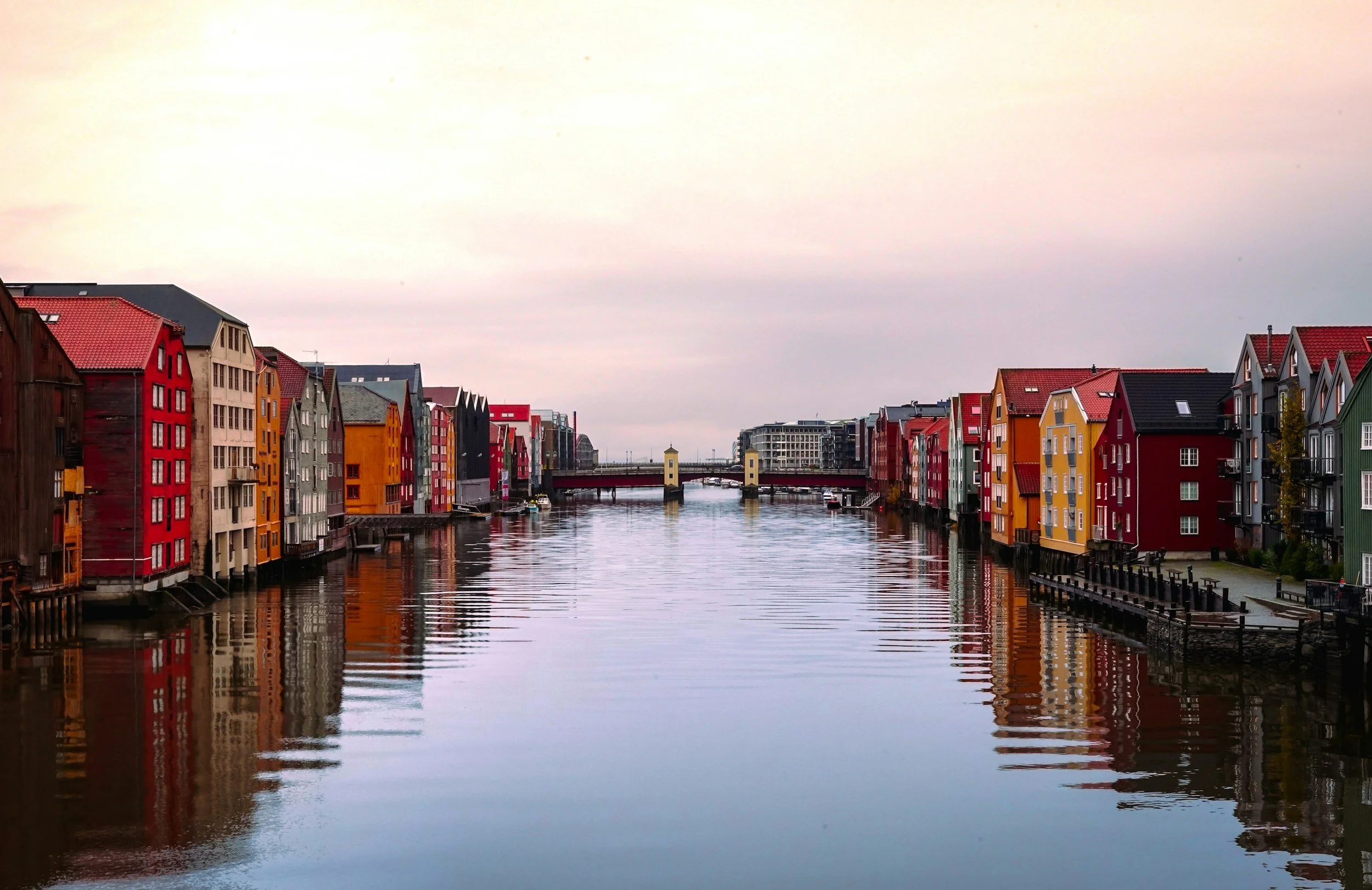
Trondheim is a very different experience from the tiny fjord villages. It is a substantial city with a long history, and its compact centre makes it particularly practical for cruise passengers who prefer to explore independently.
The port has several cruise berths. The main cruise quay at Brattøra is north of the city centre, while ships can also be allocated other quays depending on port operations. The Port of Trondheim confirms that several cruise berths are available and that tendering facilities exist, although alongside berths are used for cruise calls. Check the berth for your particular sailing before setting off.
Popular Trondheim excursions
Nidaros Cathedral
The enormous medieval cathedral is Trondheim’s headline attraction and the obvious starting point for a first visit.
Bakklandet and the Old Town Bridge
The colourful wooden buildings of Bakklandet and the historic bridge make a pleasant addition to a cathedral visit.
Kristiansten Fortress
The fortress provides views over Trondheim and the surrounding area and can be reached independently, although it involves some uphill walking.
Ringve Museum
The national museum of music and musical instruments is another option for a longer port call.
Doing Trondheim independently
Trondheim is one of the northern ports where I would seriously consider simply walking into the city rather than booking a coach excursion.
The exact walking time depends on which quay your ship uses, but the main attractions are concentrated in and around the centre. If your ship is allocated a berth further from the historic centre, check whether a shuttle is provided.
If you want to travel further afield, such as to Stiklestad or Røros, an organised excursion becomes more practical because of the additional transport involved.
Bodø
What it is: Arctic Circle city and gateway to Salten
Getting ashore: Docked
Best for: Saltstraumen, coastal scenery, sea eagles, beaches and Svartisen Glacier
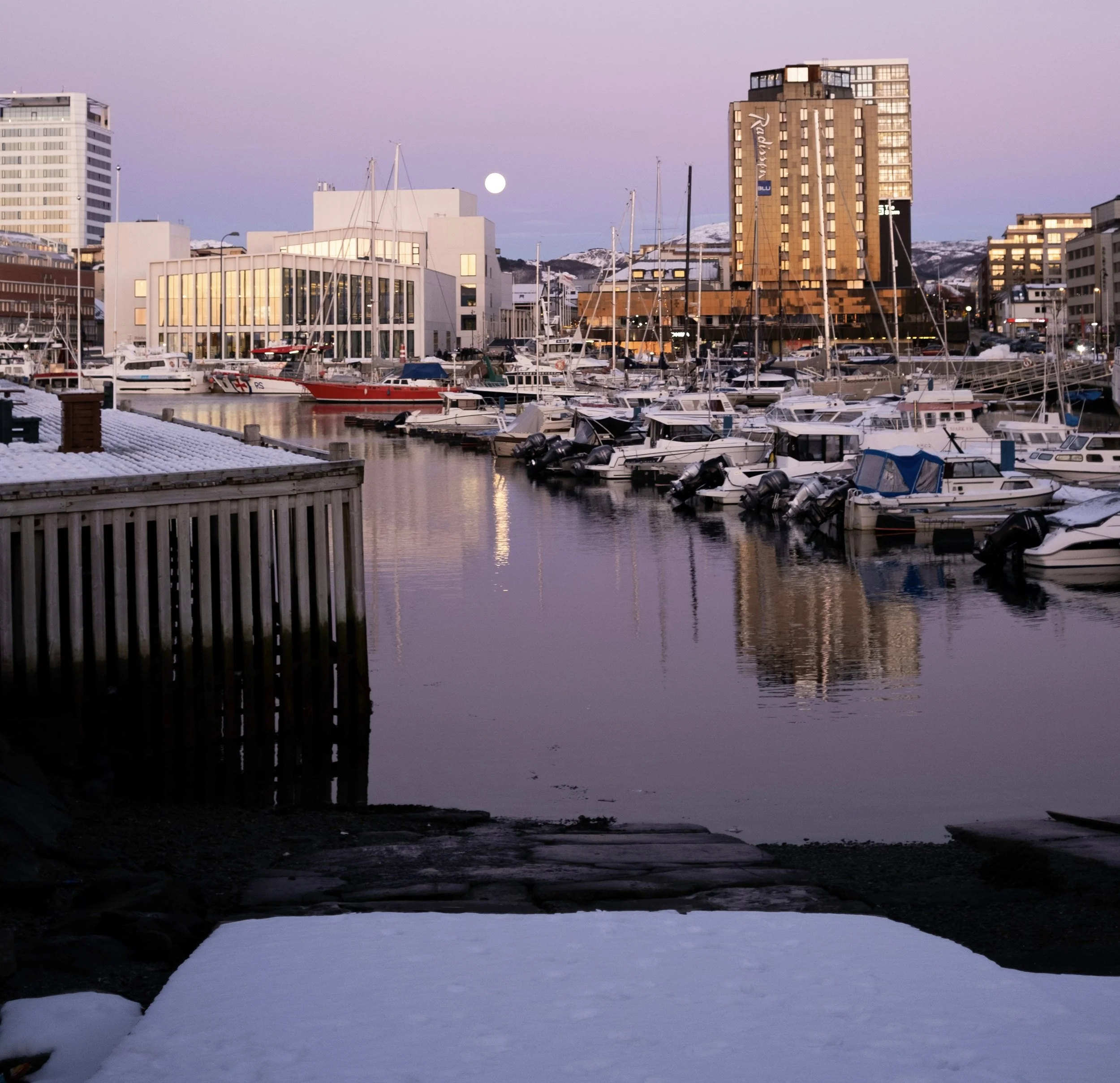
Bodø sits just north of the Arctic Circle and is a particularly interesting addition to a Norwegian itinerary because it combines a modern coastal city with access to some spectacular Arctic scenery.
The cruise port is next to the city centre, so you can walk ashore and reach shops, restaurants and attractions without needing a shuttle.
Popular Bodø excursions
Saltstraumen
Saltstraumen is one of Norway’s most famous tidal currents, where enormous volumes of water move through a narrow channel as the tide changes.
A RIB trip gives you the most dramatic experience, while sightseeing excursions can combine Saltstraumen with other local attractions. Local operators also offer boat trips and sea-eagle experiences.
Svartisen Glacier
Svartisen is Norway’s second-largest glacier and can be visited from Bodø on a long excursion involving road transport and a boat crossing.
This is a full-day option rather than something to attempt casually between breakfast and lunch. Cruise lines also offer organised excursions combining the glacier with Saltstraumen.
Kjerringøy
Kjerringøy is known for its historic trading post, beaches and coastal scenery. It makes a good choice if you want landscapes and local history rather than an adrenaline-filled excursion.
Doing Bodø independently
Bodø itself is straightforward because the cruise port is close to the city centre.
For Saltstraumen, you need to consider transport and tide times. Independent visitors can use local transport or arrange a local boat excursion, but check the return arrangements carefully against the ship’s departure.
For Svartisen, I would be much more cautious about independent arrangements. The journey involves several stages and takes much of the day, so an organised excursion provides considerably simpler logistics.
Tromsø
What it is: Arctic city north of the Arctic Circle
Getting ashore: Docked
Best for: Midnight Sun, Northern Lights, Arctic Cathedral, Fjellheisen cable car and Arctic experiences
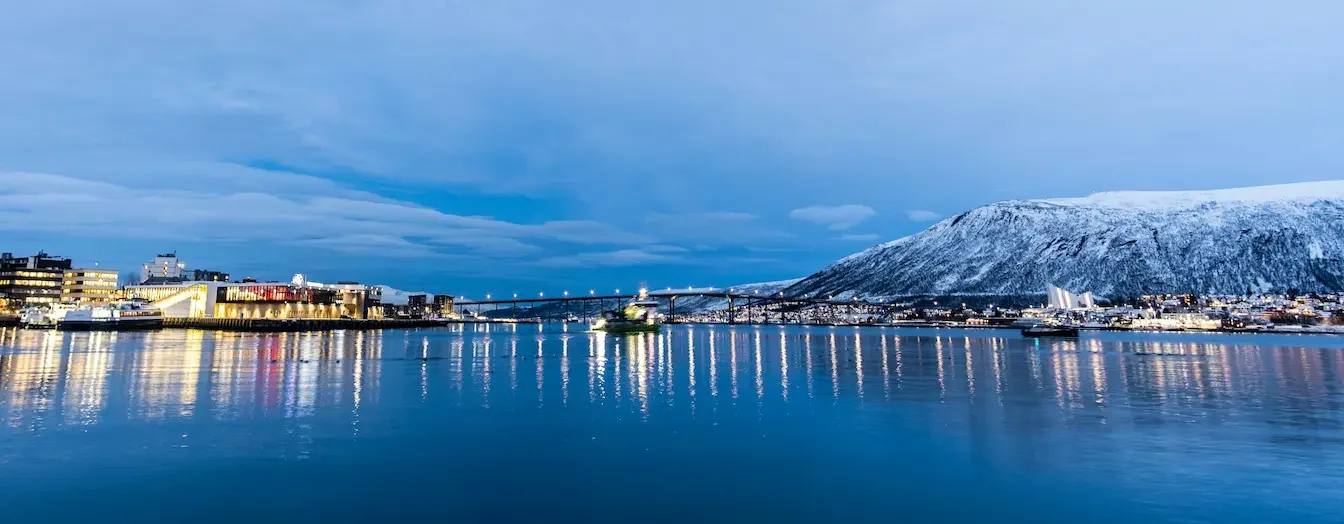
Photo by Dana Andreea Gheorghe on Unsplash
Tromsø is where a Norwegian cruise starts to feel distinctly Arctic.
At around 69 degrees north, it is well above the Arctic Circle and therefore offers the possibility of experiencing the Midnight Sun in summer and the Northern Lights during the darker months.
Tromsø has several cruise berths. Ships can use the central Prostneset area or the larger Breivika facilities further from the centre, so the amount of walking involved depends on where your ship is berthed. The port authority lists Quay 8 in the city centre and several cruise-capable berths at Breivika.
Popular Tromsø excursions
Fjellheisen cable car
The cable car climbs Mount Storsteinen to around 421 metres and provides panoramic views over Tromsø, the surrounding mountains and waterways.
It is one of the easiest ways to get a spectacular Arctic viewpoint without committing to a strenuous mountain hike. The cable car is also accessible independently, although queues can become an issue when cruise ships are in port.
Arctic Cathedral
The distinctive Arctic Cathedral is on the mainland side of Tromsøysundet and can be combined with the cable car.
You can walk there from the city centre, although the bridge makes it a fairly substantial walk. A local bus or taxi is easier if you want to conserve your energy for the cable car.
Polar Museum
The Polar Museum provides an introduction to Norway’s Arctic exploration, trapping and polar history and is close to the central waterfront.
Arctic wildlife and whale watching
Depending on the season, excursions can include whale watching, wildlife cruises, husky experiences and other Arctic activities. These are generally better booked in advance because they involve transport and fixed departure times.
Doing Tromsø independently
Tromsø is surprisingly easy to explore independently if you are berthed centrally.
The city centre, Polar Museum and many shops and restaurants are walkable. The Arctic Cathedral and cable car can also be visited independently using walking, public transport or a taxi.
For a whale-watching trip, however, check the exact departure point and duration carefully. Some tours leave very early and can take most of the day. Visit Tromsø currently lists whale excursions departing from the quay and warns that boats cannot wait for late passengers. (Visit Tromso | Norway)
Tromsø and the Midnight Sun
This is one of the major differences between Tromsø and a conventional western Fjords cruise.
Tromsø experiences the Midnight Sun from late May into late July, so a summer cruise calling here can offer genuine 24-hour daylight rather than simply very long summer evenings.
That makes the experience quite different from a cruise visiting only Bergen, Flåm and Geiranger.
Honningsvåg and the North Cape
What it is: Arctic port on Magerøya and gateway to North Cape
Getting ashore: Usually docked, but tendering can occur
Best for: North Cape, Arctic scenery, fishing heritage and Midnight Sun
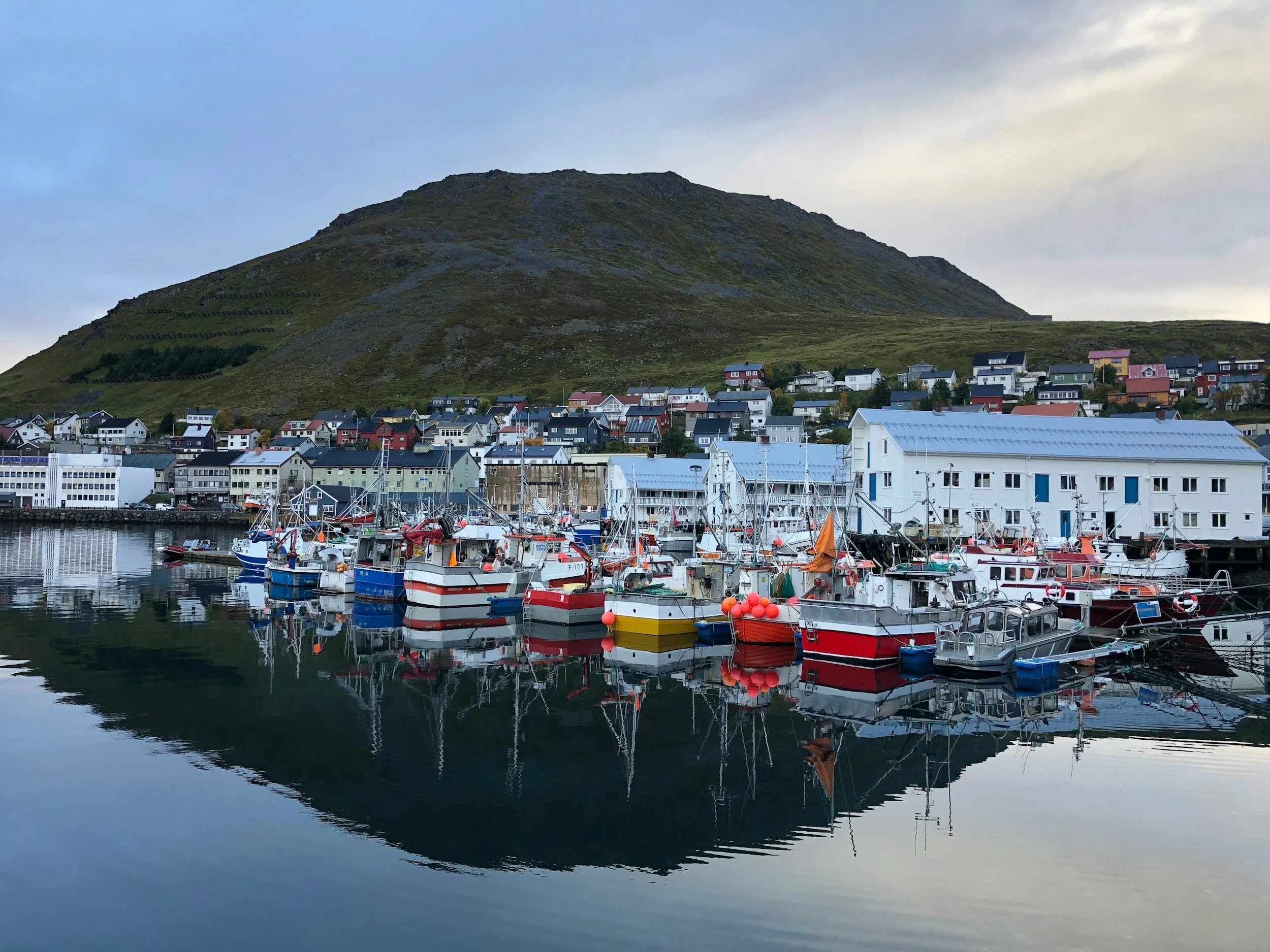
Honningsvåg is one of the most northerly cruise ports in Norway and the principal gateway to the North Cape.
The port is close to the town centre, with several berths available. The port authority lists three principal concrete berths, while additional tender facilities are available. Larger ships can therefore sometimes be handled alongside, but anchoring and tendering can occur.
Popular Honningsvåg excursions
North Cape
The North Cape plateau is the headline attraction. It is about 34 kilometres from Honningsvåg, so this is not a walk-from-the-ship excursion.
The journey takes you across open Arctic landscape to the dramatic cliff overlooking the Barents Sea.
North Cape independently
It is possible to arrange your own transport, including local bus services, taxi or car hire, but this needs careful planning.
The cruise excursion is the simplest option because of the distance and the importance of getting back to the ship on time. If you travel independently, pre-book your transport rather than assuming that a taxi or hire car will be waiting when you arrive.
Honningsvåg
If you do not want to travel to the North Cape, the town itself provides a much quieter port day. You can explore the waterfront, shops and local attractions or look for an Arctic wildlife or fishing excursion.
Doing Honningsvåg independently
The town is easy to explore on foot from the cruise port.
The North Cape is different. Because it is a considerable distance away and weather can affect the experience, I would only arrange it independently if you have confirmed transport and allowed a substantial margin before all-aboard time.
Honningsvåg also features on Hurtigruten’s coastal voyages, where passengers have substantially longer calls on some itineraries.
Kirkenes
What it is: Remote Arctic town close to the Russian border
Getting ashore: Docked on coastal voyages; arrangements depend on the vessel and itinerary
Best for: Arctic experiences, Sámi culture, snow activities and the Barents region
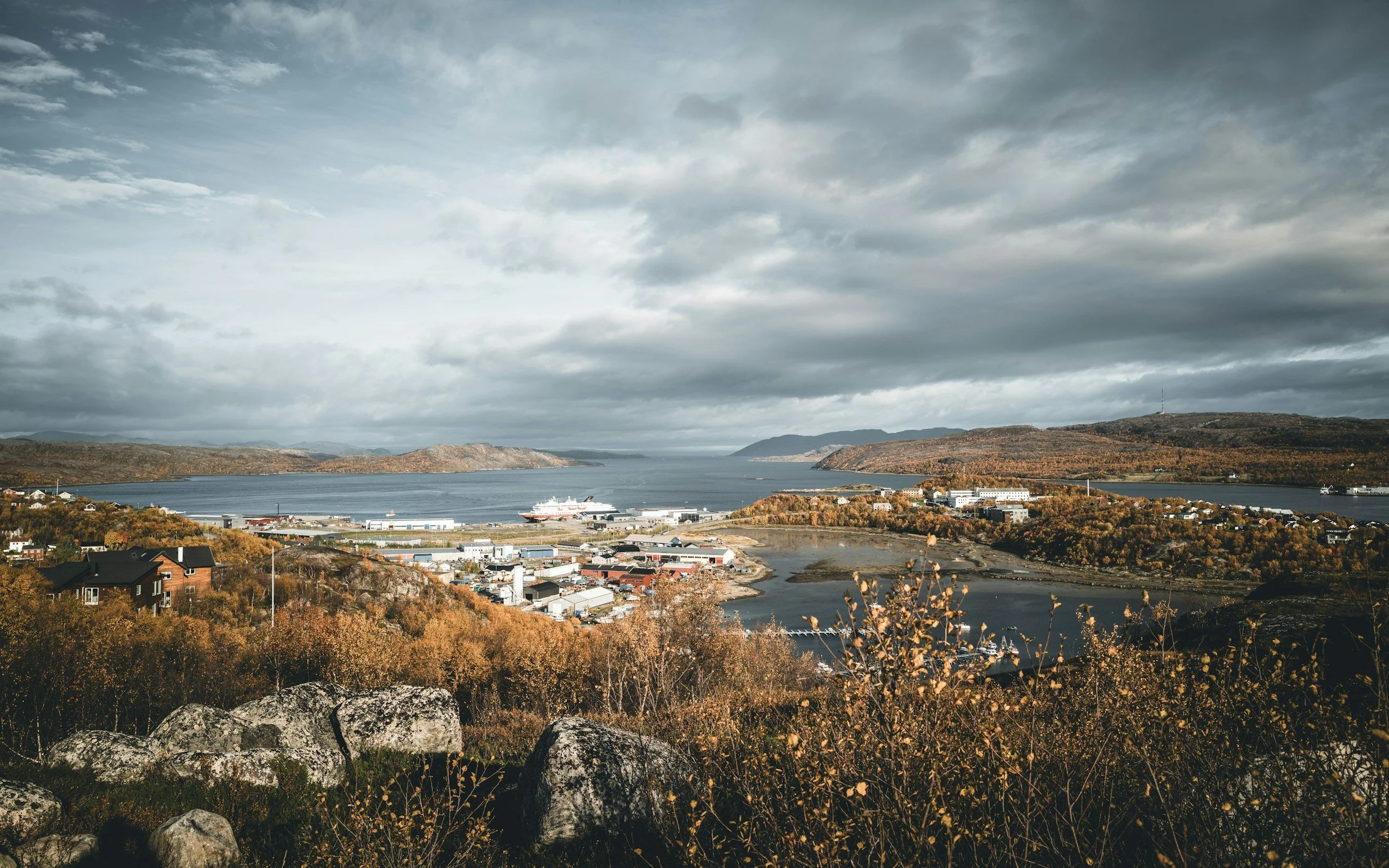
Kirkenes is considerably further east and north than the classic Norwegian Fjords ports. It is particularly associated with Norway’s coastal voyages rather than the standard seven-night western Fjords itinerary.
It is an important stop on the Hurtigruten Coastal Express, and it also features on longer Arctic itineraries. Hurtigruten currently offers excursions here including Arctic experiences, wildlife and cultural activities.
Popular Kirkenes excursions
Depending on the season, excursions can include:
Snowhotel visits
Husky experiences
King crab safaris
Sámi cultural experiences
Snowmobile trips
Arctic sightseeing
Barents region excursions
The choice changes considerably between summer and winter.
Doing Kirkenes independently
Kirkenes is not a port where I would plan to simply walk out and see the major attractions on foot. The town itself can be explored independently, but many of the experiences people travel this far north to enjoy require transport and advance booking.
If your cruise calls here as part of a coastal voyage, check the amount of time you have ashore and choose an excursion that fits the schedule rather than trying to cover several distant attractions.
Coastal Norway: which ports give you the Arctic experience?
If the main reason for choosing a northern itinerary is the Arctic, the ports to look for are Bodø, Tromsø and Honningsvåg, with Kirkenes appearing on longer coastal and Arctic voyages.
The further north you travel, the more the experience changes from the classic western fjords to Arctic landscapes, fishing communities and long periods of summer daylight.
For the Midnight Sun, look for ports north of the Arctic Circle and travel around the summer period.
For the Northern Lights, look for northern Norway itineraries operating during the darker months. Seeing the aurora is never guaranteed, however, because it depends on darkness, solar activity, cloud cover and local conditions.
A cruise calling at Tromsø in summer should not be described as a Northern Lights cruise simply because Tromsø is famous for the aurora. Conversely, a winter cruise to Tromsø can provide an opportunity to look for the Northern Lights but will not provide the Midnight Sun.
The itinerary and season matter as much as the destination name.
Docked or tendered? Why it matters
It is tempting to think that a tender port is simply one where you have to take a little boat to shore. In practice, it can affect your whole day.
When a ship is docked, you can normally walk off as soon as clearance is given. When tendering is required, passengers board smaller boats that shuttle between the ship and shore.
This can be particularly important if you have booked an independent excursion.
If your excursion starts at 9am but the ship arrives at 8am and is tendering, you have less certainty about exactly when you will be ashore.
For Norwegian Fjords cruises, always check the actual port arrangements for your sailing, rather than relying on a generic port guide. Berthing can change according to ship size, traffic and operational conditions.
Norwegian Fjords excursions: ship excursion or DIY?
There is no single right answer.
For some ports, independent exploration is extremely easy. Bergen and Ålesund are obvious examples because the main attractions are close to the cruise berth.
For other ports, the attractions that make the destination famous are considerably further away.
I would consider DIY for:
Bergen city sightseeing
Bryggen
Mount Fløyen
Ålesund
Stavanger old town
Flåm village
Flåm Railway, if independently booked with suitable time
Geiranger village
some local fjord cruises
I would think carefully before doing independently:
Pulpit Rock
Briksdal Glacier
Dalsnibba
Stegastein
Vøringsfossen
long-distance coach excursions
anything involving several separate public transport connections
The attraction of a ship excursion is not necessarily that the cruise line has discovered somewhere you cannot visit yourself. It is the logistics and, importantly, the protection if the excursion runs late.
If you book an independent excursion and it is delayed, the ship does not have the same obligation to wait for you.
Tip: We have met people that have brought fold up bikes onboard and just explored on two-wheels. If this appeals, check with the cruise line to see their policy.
Norwegian Fjords cruises from the UK
One of the biggest advantages for British cruisers is that you can experience the Norwegian Fjords without flying.
Southampton is the main UK departure point for many Norwegian Fjords itineraries, with cruises typically lasting seven nights, although longer voyages are available.
This makes Norway particularly attractive for people who prefer to avoid airports, baggage restrictions and flights.
The itinerary can also be part of the appeal. A seven-night sailing might include several of the major fjord ports, while longer voyages can combine Norway with Iceland, the Arctic Circle, the North Cape or other northern European destinations.
Which cruise lines sail the Norwegian Fjords?
There is a very broad choice.
P&O Cruises
P&O is particularly important for British cruisers because it offers regular Norwegian Fjords cruises from Southampton. Current itineraries include ships such as Iona, Britannia, Aurora, Arcadia and Arvia.
Cunard
Cunard operates Norwegian Fjords cruises from Southampton on its Queens, including Queen Anne and Queen Mary 2.
Celebrity Cruises
Celebrity offers Norwegian Fjords itineraries from Southampton, with current programmes including Celebrity Apex and other ships in the fleet.
Fred. Olsen Cruise Lines
Fred. Olsen has a particularly strong Norwegian programme, with smaller ships able to explore waterways and ports that are not always included on larger-ship itineraries.
Holland America Line
Holland America offers a range of Norway and Northern Europe itineraries, including calls at destinations such as Flåm, Eidfjord, Hellesylt, Ålesund and Bergen.
MSC Cruises
MSC also operates Norwegian Fjords cruises, including sailings from Southampton.
Royal Caribbean
Royal Caribbean offers selected Norwegian and Northern Europe itineraries, with the exact ports varying considerably between ships and seasons.
Norwegian Cruise Line
Norwegian Cruise Line includes Norway within its Northern Europe programme, with some itineraries concentrating on Norwegian ports and others combining Norway with Iceland, the Baltic or other destinations.
There are also Norwegian itineraries from Princess Cruises, Marella Cruises, AIDA, Costa and other European and international cruise lines, so it is worth checking the individual year’s schedules rather than assuming a particular ship will return to the same ports.
What should you pack for a Norwegian Fjords cruise?
The biggest mistake is packing for the average temperature rather than the conditions you might actually encounter.
Norway can be surprisingly warm in sunshine, but conditions can change rapidly, particularly around the mountains and higher viewpoints.
Essentials
Waterproof jacket
Warm fleece or jumper
Comfortable walking shoes
Waterproof footwear if you plan to hike
Layers rather than one heavy coattail
Hat and gloves for cooler days
Sunglasses
Sunscreen
Small backpack
Reusable water bottle
Portable phone charger
Camera or phone with plenty of storage
A lightweight waterproof jacket is probably more useful than a bulky winter coat during the main summer season.
If you are planning the Flåm Railway, glacier visits or mountain viewpoints, take another layer in your day bag rather than assuming the temperature at sea level will be representative.
Weather in the Norwegian Fjords
Norway is not a guaranteed sunshine destination.
Rain is part of the landscape, and the weather can change rapidly. Do not be disappointed if you wake up to cloud or drizzle. The waterfalls can look particularly impressive after rain, while low cloud can create an atmospheric backdrop around the mountains.
The best strategy is to dress for the weather and continue with your plans rather than trying to predict every hour.
Can you see the Northern Lights on a Norwegian Fjords cruise?
A conventional summer Norwegian Fjords cruise is not a Northern Lights cruise.
The summer season brings extremely long daylight hours, particularly further north, which makes it difficult or impossible to see the aurora.
If seeing the Northern Lights is your priority, look for a cruise travelling much further north and sailing during the darker months.
That is a different Norwegian cruise experience from the classic summer Fjords itinerary.
Which side of the ship is best?
There is no single best side.
The ship spends much of its time turning through fjords, and spectacular scenery can appear on either side. Sitting on a balcony and expecting the view to remain permanently on one particular side is therefore a recipe for disappointment.
For scenic cruising, the best advice is to move around the ship.
Use the outside decks, forward viewing areas and open public spaces as well as your balcony.
On a fjord sailing, some of the most memorable scenery may appear before breakfast or while you are approaching or leaving a port, so check the daily programme for scenic cruising times.
What happens if it rains?
You still go ashore. There is no such thing as bad weather, just inappropriate clothing!
Norwegian Fjords cruises operate in a climate where rain is normal, and the attractions do not disappear because the weather is poor.
The important thing is to have a realistic plan. A long mountain hike in heavy rain may not be particularly enjoyable, whereas a railway journey, fjord cruise or town visit can still be worthwhile.
This is another reason to pack waterproof clothing rather than relying on an umbrella.
Are Norwegian Fjords cruises suitable for people with limited mobility?
They can be, but the individual itinerary matters.
The major towns such as Bergen, Stavanger and Ålesund are generally easier to explore than the smaller fjord villages where attractions may involve steep roads, uneven paths, steps or coach journeys into the mountains.
Tendering can also be an issue for anyone who has difficulty boarding small boats. Ask the cruise line about its tendering policy and accessibility before booking.
A scenic railway or coach excursion can be an excellent way to see the landscape without a demanding hike, while attractions such as Pulpit Rock require considerably more physical effort.
Norwegian Fjords cruise FAQs
What are the most popular Norwegian Fjords cruise ports?
The ports most frequently associated with classic Norwegian Fjords cruises include Bergen, Stavanger, Flåm, Geiranger, Olden and Ålesund. Eidfjord, Haugesund, Skjolden, Nordfjordeid and Hellesylt also feature regularly on different itineraries.
Which Norwegian Fjords ports are tender ports?
Geiranger can use tender boats or the floating SeaWalk, depending on the ship and call. Flåm has both a cruise pier and tender facilities. Olden normally uses its pier but can use tendering when berth capacity is occupied. Port arrangements can change, so check your individual sailing.
Is Flåm Railway worth doing?
For a first Norwegian Fjords cruise, it is one of the most popular experiences in Flåm. It is also particularly easy to arrange independently because the railway station is close to the cruise pier.
Can I visit Pulpit Rock independently from Stavanger?
Yes, but it requires considerably more planning than exploring Stavanger itself. You need to allow time for transport to and from the trailhead and for the hike. Anyone attempting it independently should build in a substantial margin before the ship’s departure.
Can I visit Briksdal Glacier independently from Olden?
Yes, although you need transport from the port into Oldedalen. Because the excursion takes several hours, check the transport timetable carefully and allow plenty of time to return to the ship.
Is Bergen easy to explore independently?
Yes. Bergen is one of the easiest Norwegian cruise ports for independent visitors. Bryggen, the Fish Market and Fløibanen are all close to the city centre.
Is Norway expensive?
Yes, Norway can be noticeably more expensive than the UK, particularly for eating out, drinks, taxis and organised excursions. Cruise passengers can reduce costs by using local transport and arranging suitable attractions independently.
Do I need Norwegian currency?
You may not need much cash. Cards and contactless payments are widely used, but having a small amount of Norwegian kroner can still be useful.
Do I need to book Norwegian Fjords excursions in advance?
For the most popular experiences, I would. The Flåm Railway, some fjord cruises, glacier excursions and transport to major viewpoints can become busy when several cruise ships are in port.
Is a balcony cabin worth it on a Norwegian Fjords cruise?
A balcony can be particularly enjoyable because the scenery is such an important part of the holiday. However, you should not feel that you will miss everything without one. The ship’s open decks and public viewing areas provide much broader views, particularly when sailing through narrow fjords.
The Lowdown
A Norwegian Fjords cruise is one of those holidays where the journey really is part of the destination. The scenery starts before you reach the port, and some of the best moments can be watching waterfalls and mountains slide past from the deck while the ship makes its way deeper into a fjord.
Do not make the mistake of treating every port as another excursion day. Bergen and Ålesund are excellent places to explore independently, while Stavanger gives you the choice between a simple city visit and the much more ambitious Pulpit Rock experience. Flåm is all about choosing between the railway, the fjord and the mountains, while Olden and Geiranger are really gateways to scenery beyond the village.
I would also resist the temptation to book an expensive excursion simply because it is called a “fjord experience”. In several ports, you can reproduce the basic experience independently for considerably less. The trick is knowing which ones are straightforward and which involve enough transport and timing that the security of an organised excursion may be worth paying for.
Most importantly, leave yourself time to enjoy the scenery. A Norwegian Fjords cruise is not a holiday where you need to be ashore every minute. Some of the most spectacular sights are viewed from the ship itself, and there is nothing quite like sailing slowly through a fjord with mountains rising on both sides.