
National Geographic-Lindblad Expeditions Expands Arctic Science Programme for 2026
National Geographic-Lindblad Expeditions Unveils Six New Arctic Research Projects for 2026
Guests sailing to the Arctic with National Geographic-Lindblad Expeditions next year could find themselves travelling alongside scientists investigating everything from melting glaciers and ocean microbes to airborne microplastics.
The National Geographic Society and Lindblad Expeditions have announced six new research projects for the 2026 Arctic season as part of their Visiting Scientist Program. The initiative allows National Geographic Explorers and leading researchers to join expedition voyages, collecting valuable scientific data in some of the most remote regions on Earth while sharing their work with guests on board.
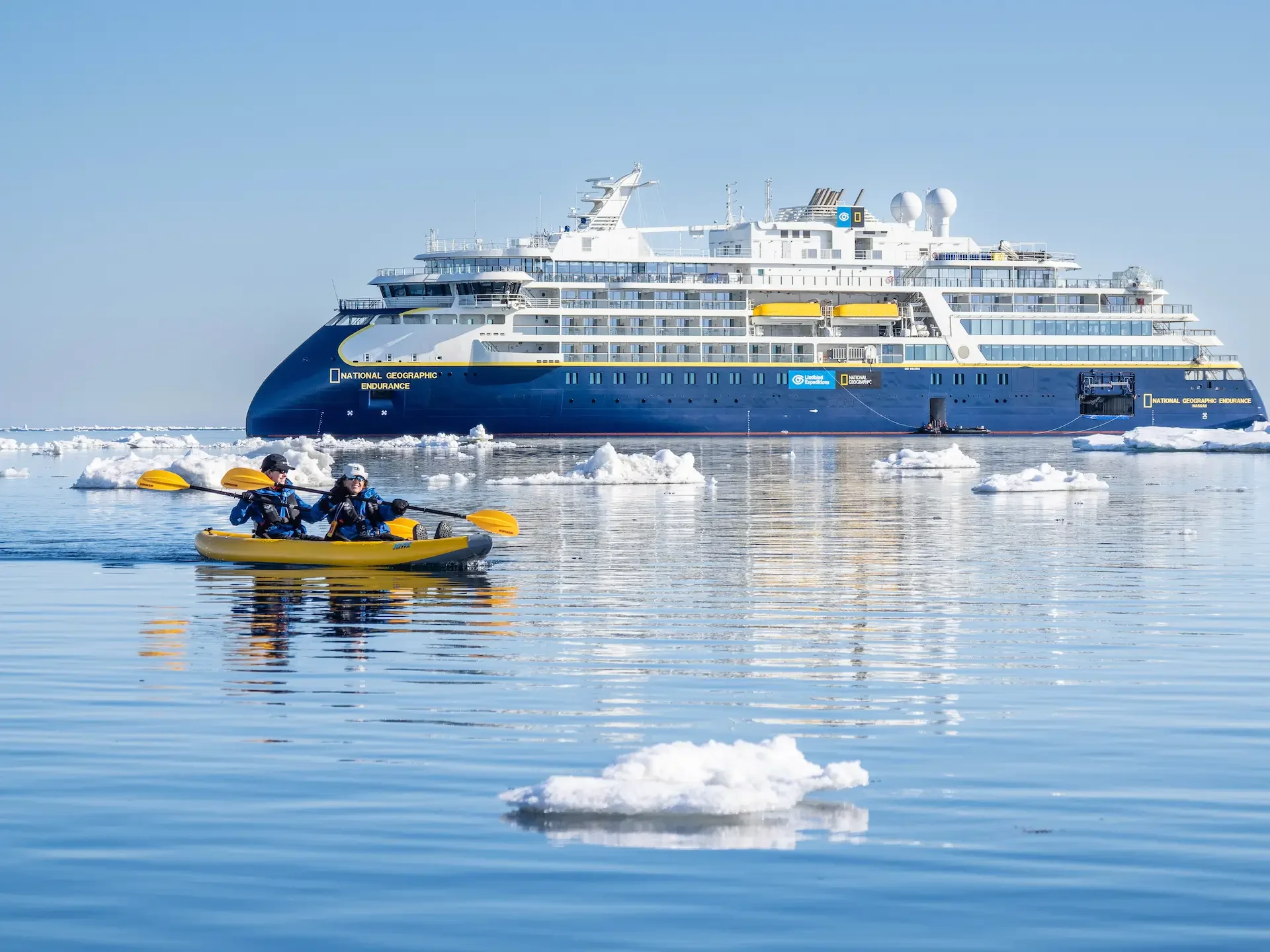
The projects will take place across 11 voyages aboard the expedition ships National Geographic Endurance and National Geographic Resolution.
Supported by the Lindblad Expeditions-National Geographic Fund (LEX-NG Fund), the programme combines scientific research with expedition travel, giving guests a rare opportunity to observe field science taking place in real time.
Six Arctic Research Projects for 2026
Tracking Ocean Change Through Microbes
National Geographic Explorer Catherine Ribeiro is leading a project examining microbial diversity around Svalbard and coastal Norway. By collecting and filtering seawater samples, researchers hope to identify microorganisms that can act as indicators of changes occurring in warming Arctic waters.
Investigating Arctic Plankton
Explorer Gabrielle Corradino and her team will study plankton populations in Icelandic and Greenlandic waters. The research aims to improve understanding of biodiversity patterns in sub-Arctic marine ecosystems, which are experiencing significant environmental change.
Mapping Greenland’s Glaciers
In July 2026, National Geographic Explorer Catherine Walker will begin a project focused on southern Greenland’s glaciers. Using LiDAR technology and advanced imaging techniques, the team will document glacier structure and stability, helping scientists better understand how polar ice is responding to climate change.
Monitoring Arctic Shorelines
National Geographic Explorer Rui Seabra is expanding a long-term biodiversity monitoring network that tracks conditions along rocky shore habitats across the Atlantic. During the 2026 season, new monitoring sites will be added in Svalbard and southern Sweden.
Studying Ice Algae and Polar Microbes
Explorer Allison Fong’s research will focus on microbial communities living in Arctic environments. The project will investigate how warming ocean temperatures are affecting microbial productivity and the biological processes that underpin polar ecosystems.
Following the Trail of Microplastics
Later in the season, National Geographic Explorer Rachael Zoe Miller will lead a project collecting samples of microplastics and microfibres from both seawater and the atmosphere. The research route will stretch from Greenland through Iceland and on to Scotland, building on a growing global dataset gathered across National Geographic-Lindblad Expeditions voyages.
Science at Sea
The Visiting Scientist Program has become a key part of the National Geographic-Lindblad Expeditions experience. Guests are often able to observe research activities, attend presentations from scientists and receive updates on discoveries made during the voyage.
For travellers, it offers a unique perspective on the Arctic beyond wildlife sightings and dramatic landscapes. For researchers, it provides access to remote locations that would otherwise be difficult and costly to reach.
The 2026 season marks the fourth consecutive year that Arctic research has been supported through the programme. Since 2023, the expedition fleet has hosted 16 National Geographic Explorer-led projects across the region.
Why It Matters
The Arctic is changing faster than many other parts of the world, making it a critical area for scientific study. Research into glaciers, marine biodiversity, microorganisms and pollution helps scientists build a clearer picture of how climate and environmental shifts are affecting polar ecosystems.
By bringing scientists and travellers together, National Geographic-Lindblad Expeditions hopes to inspire a deeper understanding of these fragile environments while contributing valuable data to ongoing research efforts.
The Lowdown
If you’re considering an Arctic expedition cruise, sailing with National Geographic-Lindblad Expeditions offers more than just spectacular scenery and wildlife encounters. On selected voyages, you may have the opportunity to witness genuine scientific research taking place around you, from plankton sampling in Greenlandic waters to glacier mapping in southern Greenland. It’s one of the few travel experiences where guests can actively engage with the science helping to shape our understanding of the rapidly changing Arctic.