
Marella Cruises Adriatic Adventure: Complete Port Guide
Planning a Marella Cruises Adriatic Adventure cruise? This detailed port guide covers Dubrovnik, Kotor, Trieste, Koper, Zadar and Split, with practical advice on cruise terminals, things to do, local beaches, food and drink prices, shopping, transport, accessibility and Marella shore excursions.
The Adriatic is one of Europe's most rewarding cruise regions, combining medieval walled cities, Roman ruins, Venetian architecture, spectacular coastlines and some of the most beautiful scenery in the Mediterranean.
Itineraries vary by ship and departure date, so check which ports your particular sailing visits before you travel.
Marella Cruises Adriatic Adventure: Ports, History and Things to Do
Marella Cruises' Adriatic Adventure takes you along one of Europe's most historically interesting coastlines. From Croatia's medieval towns and Montenegro's dramatic mountain scenery to the Italian city of Trieste and Slovenia's attractive coastal towns, there is plenty to discover ashore.
Although the Adriatic is geographically compact, the destinations are remarkably varied. You can spend one day exploring a Roman palace, the next wandering through narrow Venetian streets, and another admiring mountain scenery overlooking a beautiful bay.
This guide covers the six main destinations associated with the Adriatic Adventure itinerary variations, including practical information for independent exploration, local food recommendations, beaches and the excursions worth considering.
Please note: Not every Adriatic Adventure sailing visits all the ports listed below. The itinerary, port order, ship, arrival and departure times can vary. Some departures also have different combinations of destinations. Always check your confirmed itinerary before making independent travel arrangements.
Marella Cruises Adriatic Adventure at a Glance
| Cruise line | Marella Cruises |
| Region | Adriatic and Eastern Mediterranean |
| Main departure port | Dubrovnik, Croatia |
| Cruise duration | Typically 7 nights |
| Countries covered | Croatia, Montenegro, Italy and Slovenia |
| Ports covered in this guide | Dubrovnik, Kotor, Trieste, Koper, Zadar and Split |
| Getting ashore | Predominantly alongside berths; Kotor is a tender port |
| Holiday highlights | Medieval towns, Roman history, spectacular coastlines, beaches and local cuisine |
| Best for | History, culture, architecture, scenery and independent sightseeing |
Adriatic Port Areas and Accessibility
One of the advantages of an Adriatic cruise is that several destinations have historic centres relatively close to their cruise terminals. This makes independent exploration possible without necessarily booking an organised excursion.
| Port | Getting to the town | Independent exploration |
|---|---|---|
| Dubrovnik | Bus, taxi or transfer required | Good |
| Kotor | Tender landing beside Old Town | Excellent |
| Trieste | Central attractions within walking distance | Excellent |
| Koper | Historic centre within walking distance | Very good |
| Zadar | Depends on assigned berth | Very good |
| Split | Historic centre close to cruise port | Excellent |
However, the arrival experience varies considerably.
Dubrovnik's cruise berths are outside the Old Town, meaning you will need a bus, taxi or organised transfer to reach the historic centre. Kotor is particularly convenient once ashore, as its medieval Old Town is close to the tender landing area.
Trieste and Zadar are also relatively straightforward to explore independently, while Koper's compact historic centre is within walking distance of the port.
Split is another excellent destination for independent visitors, with the historic centre and Diocletian's Palace close to the waterfront.
Accessibility is more challenging in some of these historic destinations. Cobbled streets, polished stone paving, steep gradients, steps and narrow passages are common. Kotor's tender arrangements also need consideration for anyone with reduced mobility.
If you require assistance or intend to take a mobility aid ashore, check the arrangements with Marella before travelling.
Currency tip: What money do you need?
You will generally need euros (€) for Croatia, Montenegro, Italy and Slovenia. Montenegro is not an EU member but uses the euro as its currency. Cards are widely accepted in tourist areas, although carrying some cash is useful for smaller cafés, markets and local purchases.
Dubrovnik, Croatia
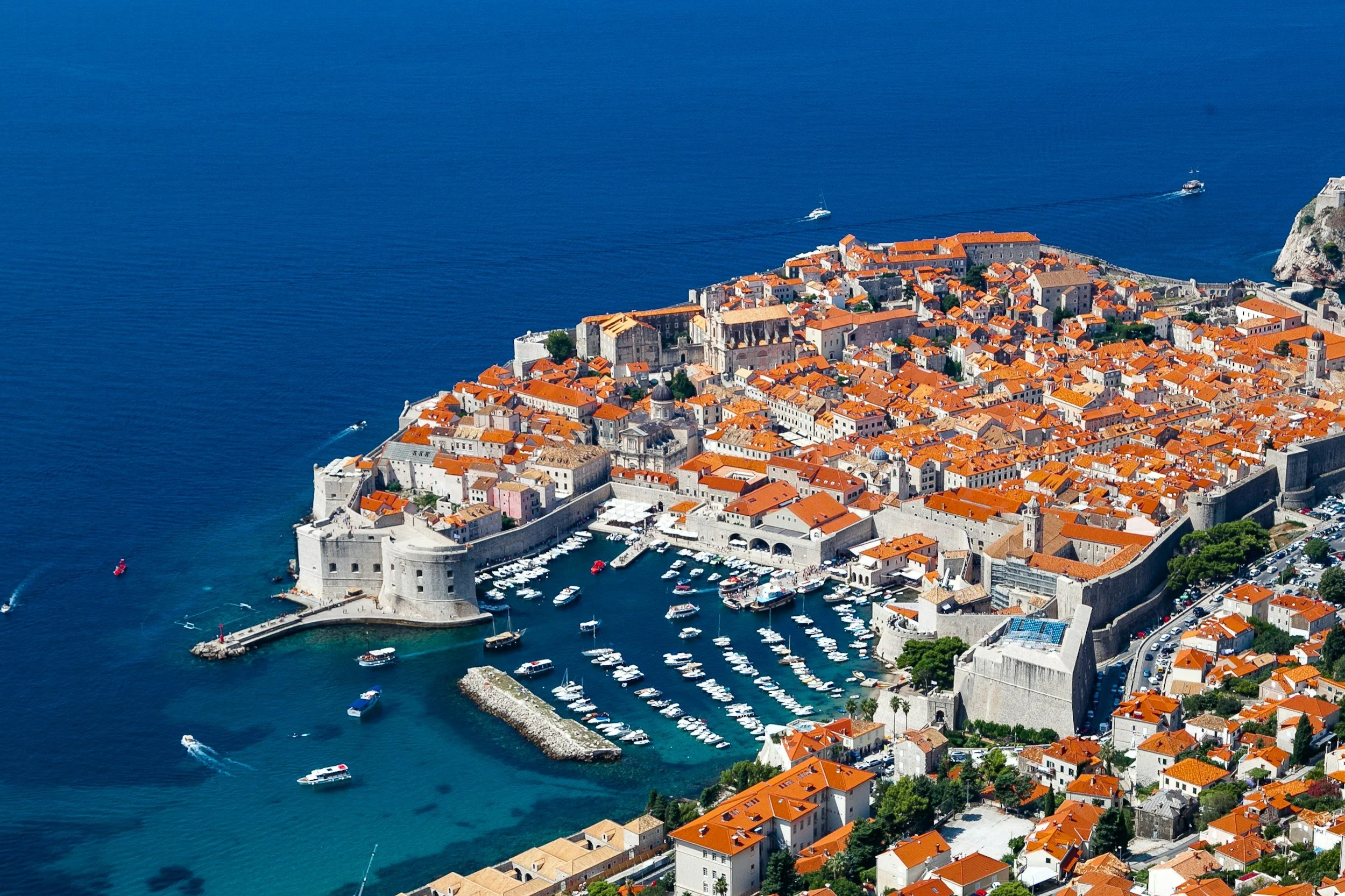
Dubrovnik is one of the Adriatic's most recognisable cruise destinations and a highlight of any Croatian itinerary. Known as the Pearl of the Adriatic, this beautiful walled city combines medieval architecture, terracotta rooftops, historic churches and spectacular coastal views. It is a favourite of mine.
The Old Town is a UNESCO World Heritage Site and is one of the best-preserved medieval urban centres in Europe.
For cruise passengers, Dubrovnik offers plenty to explore, from walking the famous city walls to discovering its historic streets, visiting museums or simply enjoying a coffee overlooking the Adriatic.
Dubrovnik is also an embarkation and disembarkation port for Marella's Adriatic Adventure, depending on the sailing.
Quick Facts:
Language: Croatian.
Currency: Euro (€).
Distance to town: Approximately 3 km to Dubrovnik Old Town.
Accessibility: The Old Town has extensive cobbled and polished stone streets, steps and steep sections. The city walls are particularly challenging for visitors with mobility difficulties.
Cruise Port: What to Expect
Cruise ships generally dock at Dubrovnik's Gruž Port, approximately 3 km from the Old Town.
Gruž is a working commercial harbour with facilities for cruise passengers, including shops, cafés, taxis and local transport.
The Old Town is not within a comfortable walking distance for everyone, particularlyr in the summer heat. Local buses connect the port with the historic centre (take bus from port and disembark at Pile Gate), while taxis and organised transfers are also available. Marella doesn’t usually offer complimentary shuttle buses into town.
Taking the Bus
Liberia’s operate the local bus service and the short journey (single fare) costs between €1.73 if you buy the ticket in advance from a kiosk, newsstand, or app, or €2.50 if you buy it directly from the driver on the bus cash required). A two-ride ticket will cost €3.19.
Which bus to take: After leaving the cruise terminal catch Libertas city bus Line 1A, 1B, or 3, which takes you straight to Pile Gate (the main entrance to the Old Town) in about 10 to 15 minutes.
The journey is relatively short, but traffic can be busy when several cruise ships are in port.
Taking a Taxi
A taxi from the cruise port to the Old Town typically costs between €10 and €22 for the 8-to-10-minute trip. Uber or Bolt are generally the most affordable options at €10 to €16, while standard metered street taxis lined up outside the port terminal usually run from €15 to €22. Prices can surge higher when multiple cruise ships dock simultaneously, so it is always recommended to check apps first or confirm a fixed price with a taxi driver before getting into the car.
Getting Around Dubrovnik
Local buses are one of the easiest ways to travel between Gruž Port and the Old Town. Bus services operate frequently, although schedules and ticket arrangements should be checked locally.
Taxis are readily available around the port, but fares can be considerably higher than local bus prices.
Once inside the Old Town, walking is the best way to explore. The main pedestrian thoroughfare, Stradun, runs through the centre, connecting several of the city's most important landmarks.
Be prepared for steps and steep gradients if you venture away from the main streets.
Things to Do in Dubrovnik
Walk the City Walls
This is a must-do on any visit to Dubrovnik. The famous Dubrovnik City Walls are the city's biggest attraction and provide spectacular views across the Old Town, harbour and surrounding coastline.
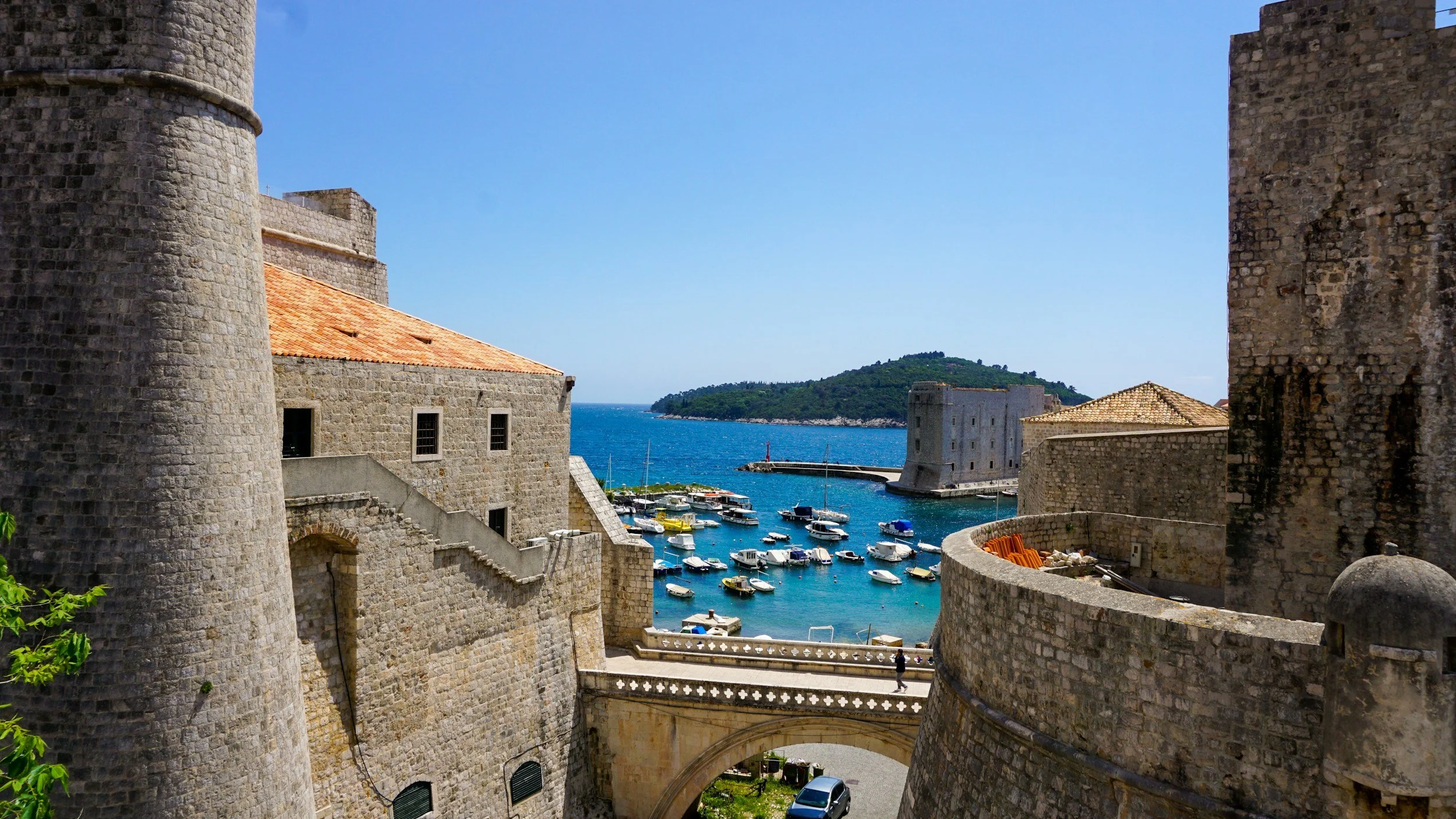
The complete circuit is approximately 2 km and includes numerous steps and exposed sections. Allow around 1.5-2 hours, particularly if you want to stop for photographs.
It can become extremely hot during the summer, so an early visit is advisable. There are no refreshment kiosks along the route so make sure you have water with you.
Whilst the Old Town itself is entirely free to enter and walk around, there is a significant charge to walk the walls. the adult price is €40 (summer)/€20 (winter). There are concessions for children but not seniors. Children under 7 years old are free and children and youth (ages 7 to 18) cost €15 during the regular season, dropping to €5 during the winter off-season. When we first walked the walls twenty years ago it was a modest €5.
Important Information
A complete circuit requires climbing over 1,000 stone steps. There are steep ascents and descents with no ramps or lifts.
No Shade: There is virtually no canopy or shaded cover anywhere on top of the stone wall. The Mediterranean sun shining off the white limestone can be extremely tiring.
The Exit Rule: If you get tired halfway through and need to step off, you cannot reuse your ticket to get back up later, as it only allows for a single, continuous, counterclockwise lap.
Cruise Lowdown Tip: If you want the views without the exercise, skip the walls and buy a ticket for the Dubrovnik Cable Car instead (see below).
Explore the Old Town
The pedestrianised Old Town is full of historic buildings, churches, squares and narrow alleyways.
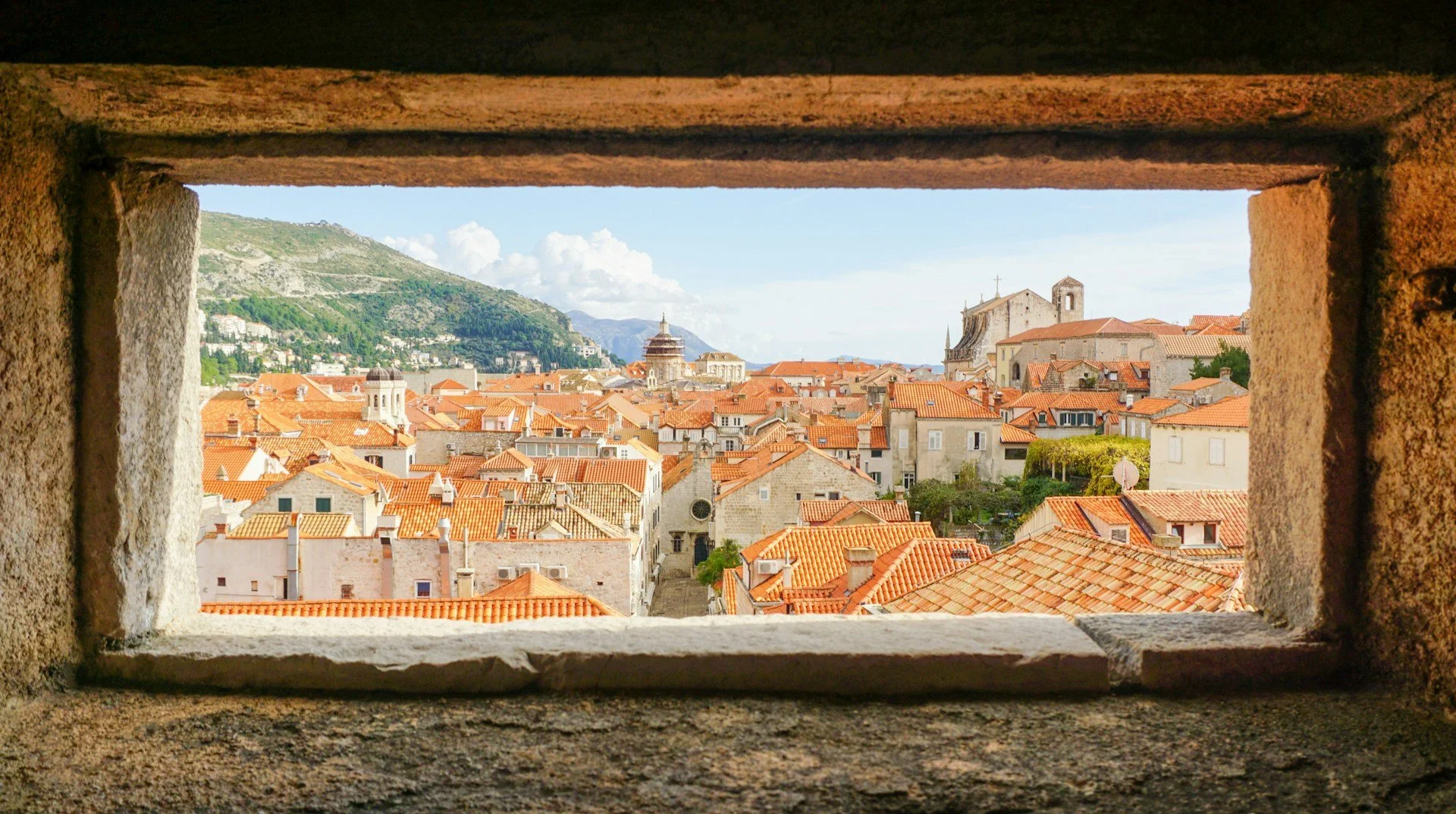
Photo by Arber Pacara on Unsplash
Highlights include:
Stradun: The main limestone-paved street running through the Old Town.
Rector's Palace: A historic Gothic-Renaissance building that once served as the seat of government.
Sponza Palace: A beautiful historic building overlooking Luža Square.
Dubrovnik Cathedral: An impressive Baroque cathedral containing religious artworks and relics.
Franciscan Monastery: Home to one of Europe's oldest continuously operating pharmacies.
Take the Cable Car to Mount Srđ
For some of the best views of Dubrovnik without the exertion, take the cable car to Mount Srđ.
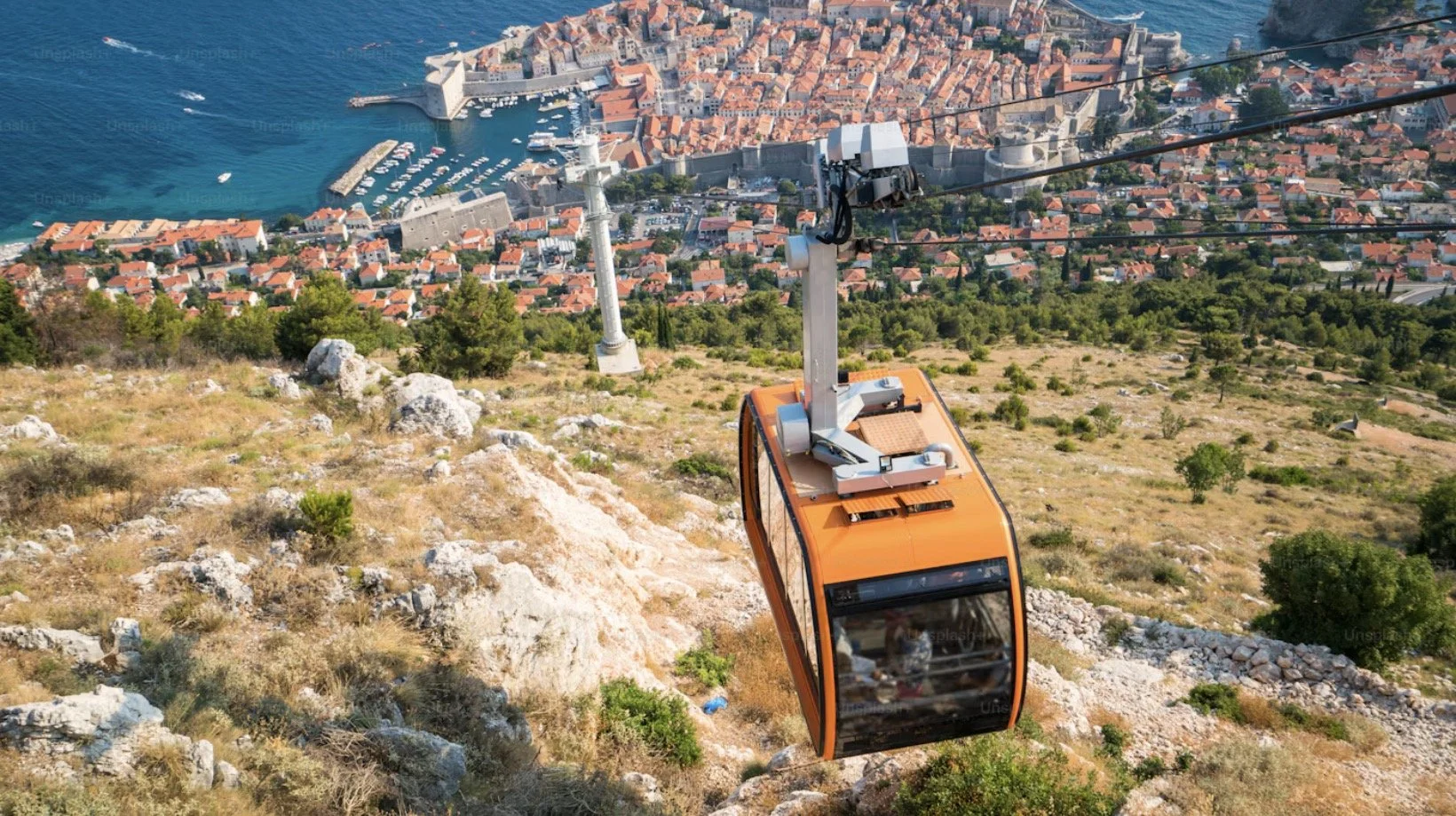
The summit overlooks the Old Town, harbour and surrounding islands. There is also a restaurant and viewing area.
It is a particularly good option for passengers who want panoramic photographs without walking the steep route up the mountain.
The Cable Car whisks you from just outside the city walls to the top of Mount Srđ in under 5 minutes, offering an even higher panoramic view of the Old Town. It is can also be marginally cheaper. There is a zig-zag hiking path if you want to take the cable car Up. It walk down (around 45 mins). The Adult (Round-trip) Is €30 (€17 one-way), children pay €8/€5 and under 4s are free.
Visit Lokrum Island
Lokrum is a small island just offshore from Dubrovnik, reached by a short boat journey from the Old Town harbour.
It offers botanical gardens, walking trails, historic buildings and swimming areas.
Allow sufficient time for the return boat journey and check the operating schedule before setting off.
Where to Eat in Dubrovnik
Dubrovnik has a wide choice of restaurants, from traditional Croatian konobas (taverns) to more expensive waterfront restaurants.
For local food, look for restaurants serving fresh seafood, grilled fish, black risotto and traditional Dalmatian dishes.
Popular areas for eating include the Old Town's side streets and the waterfront around the harbour.
Local Dishes to Try
Crni rižot: Black risotto coloured with cuttlefish or squid ink.
Peka: Meat or seafood slow-cooked beneath a bell-shaped lid.
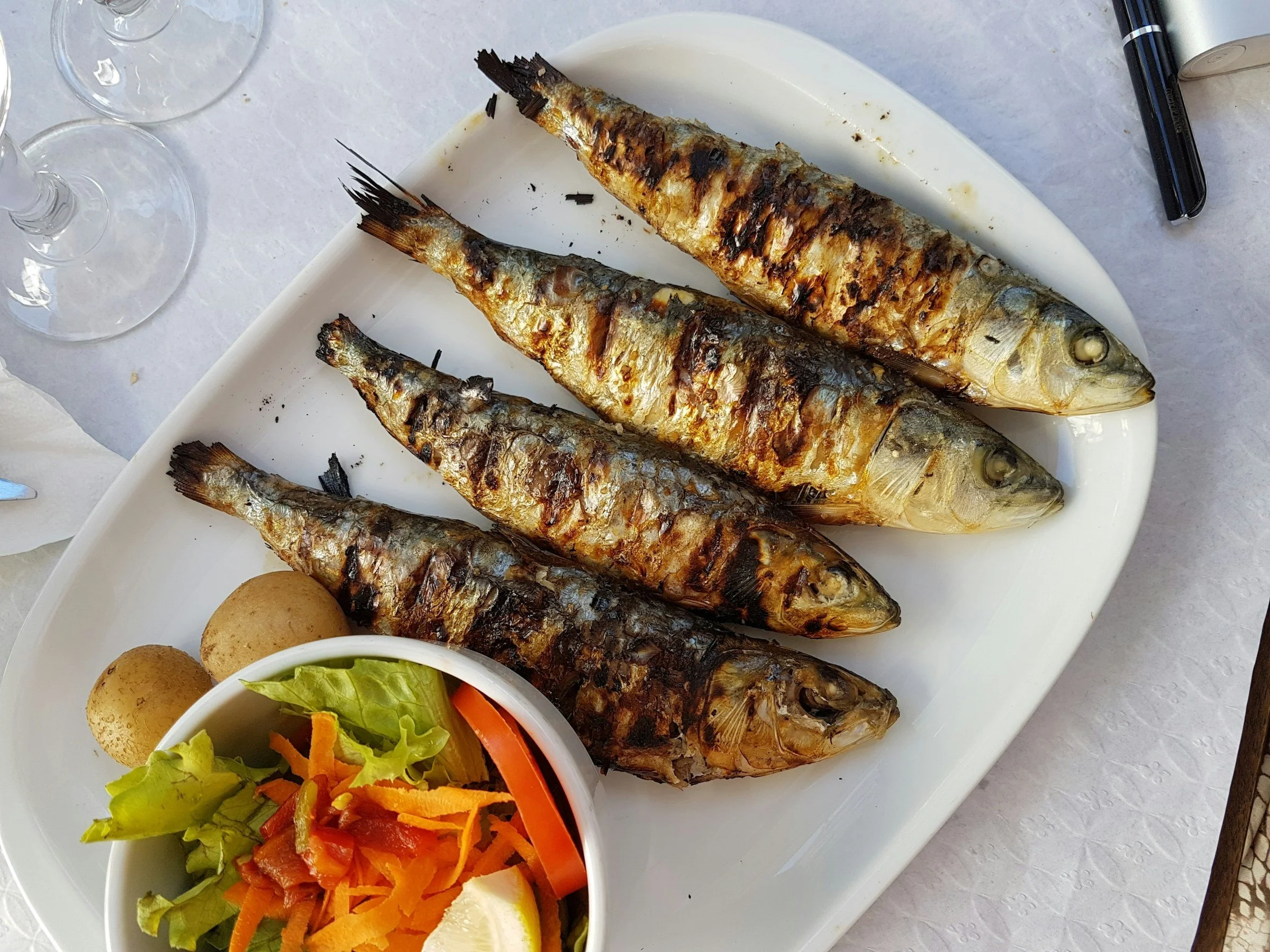
Grilled Adriatic fish: Fresh fish cooked simply with olive oil and herbs.
Pašticada: Slow-braised beef traditionally served with gnocchi.
Fritule: Small sweet fried dough balls, often flavoured with citrus or brandy.
Food and Drink Prices in Dubrovnik
Dubrovnik is one of Croatia's more expensive destinations, particularly around the Old Town and waterfront.
| Coffee | £2.00–£3.50 |
| Soft drink | £2.00–£3.50 |
| Bottled water | £1.50–£3.00 |
| Local beer | £3.50–£6.00 |
| Glass of wine | £4.00–£7.00 |
| Pizza | £10.00–£16.00 |
| Casual lunch | £12.00–£20.00 |
| Restaurant main course | £16.00–£30.00 |
Prices are indicative estimates and will vary according to location, season and restaurant.
Marella Shore Excursions in Dubrovnik
Ideal if you prefer an organised trip, Marella's excursion programme can include guided sightseeing and experiences around the Dubrovnik area.
Options worth looking out for include:
Dubrovnik Walking Tour
A guided introduction to the Old Town, its historic buildings and medieval streets. This is a good option if you want to understand the city's history while seeing its main landmarks.
Dubrovnik and City Walls
A sightseeing experience combining the Old Town with time to explore the famous defensive walls. Check whether wall admission is included.
Panoramic Dubrovnik
A scenic tour taking in viewpoints around the city and coastline. This can be a useful alternative if you prefer not to spend the whole day walking.
Excursion names and availability vary by sailing. Check Cruise Control for the options offered on your departure.
Is Getting Around Independently Easy?
Yes, although the journey from Gruž Port to the Old Town needs planning, and ensure you leave enough time to get back to the ship.
Read: What happens if you miss your cruise ship
Once you reach the historic centre, Dubrovnik is easy to explore on foot, provided you are comfortable with uneven paving and steps.
A good independent day would involve taking a bus or taxi into the Old Town, exploring Stradun and the main historic sights, enjoying lunch and perhaps walking part of the city walls before returning to the ship.
If you want to visit Mount Srđ or Lokrum Island, allow extra time for transport and queues.
Beaches in Dubrovnik
Dubrovnik has several attractive swimming spots, although many are pebble beaches rather than long sandy stretches.
Banje Beach
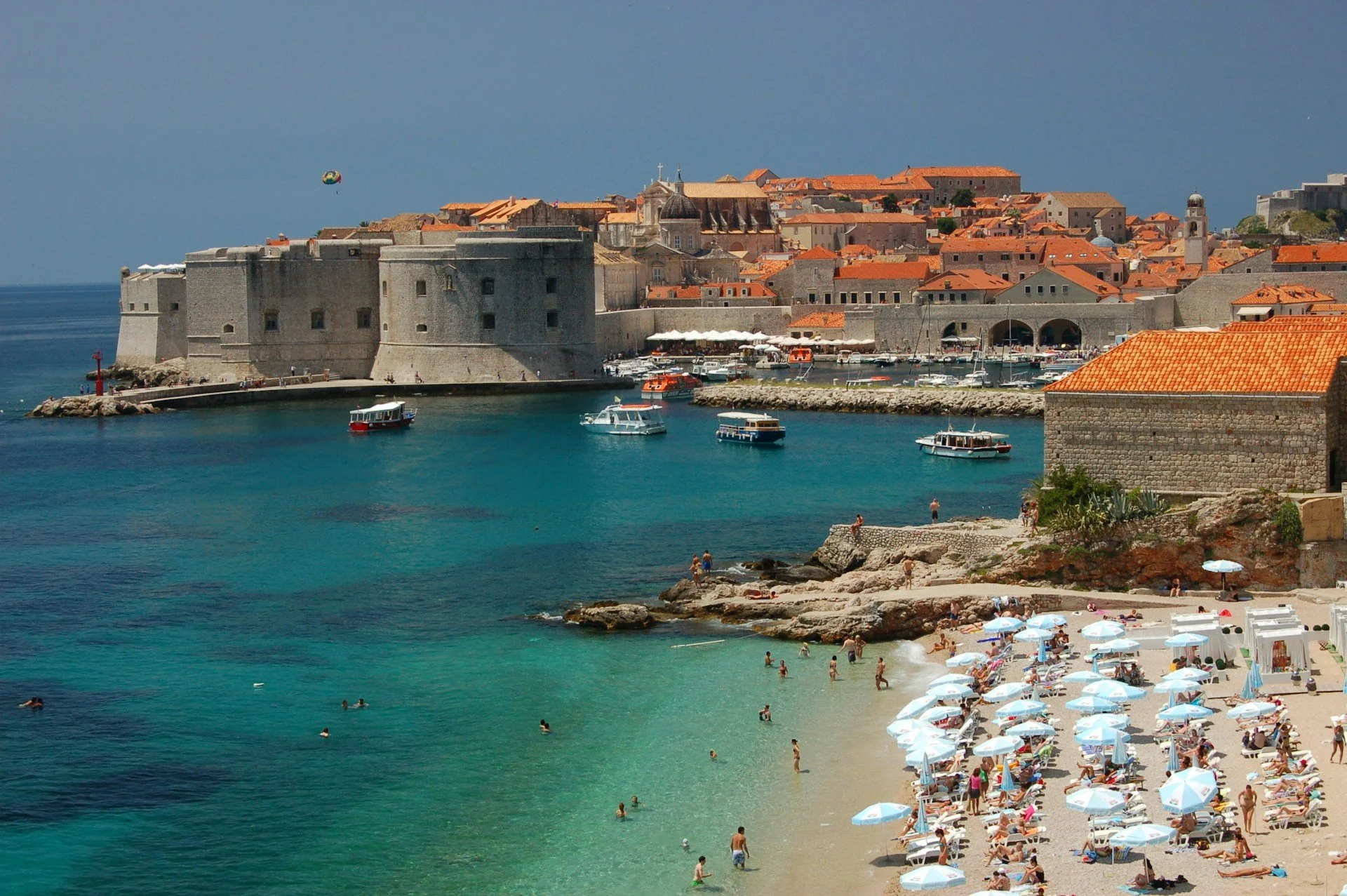
Banje Beach
One of Dubrovnik's best-known beaches, located just outside the city walls. It’s easy to walk to and from the Old Town and It offers excellent views of the city walls and is convenient for combining sightseeing with swimming.
Sveti Jakov Beach
A picturesque pebble beach beyond the Old Town, offering beautiful views across the water. Access involves steps, so it is not ideal for everyone.
Lapad Beach
Located in the Lapad area, this is a popular beach with restaurants, cafés and facilities nearby. It requires a taxi or bus journey from the cruise port.
Shopping in Dubrovnik
The Old Town has plenty of souvenir shops, independent boutiques and specialist food shops.
Popular purchases include:
Croatian olive oil.
Local wines and liqueurs.
Lavender products.
Handmade jewellery.
Traditional crafts.
Croatian food products and souvenirs.
The main shopping streets are concentrated around Stradun and the surrounding alleyways.
Accessibility in Dubrovnik
Dubrovnik is a challenging destination for visitors with limited mobility.
The Old Town has polished stone paving, steps and steep side streets. The city walls involve considerable climbing and are unsuitable for many wheelchair users.
The cable car offers an alternative way to enjoy the scenery, although boarding arrangements should be checked.
Buses and taxis can reduce walking distances, but accessible vehicles should be arranged in advance.
If you require step-free sightseeing, discuss excursion options with Marella before booking.
Kotor, Montenegro
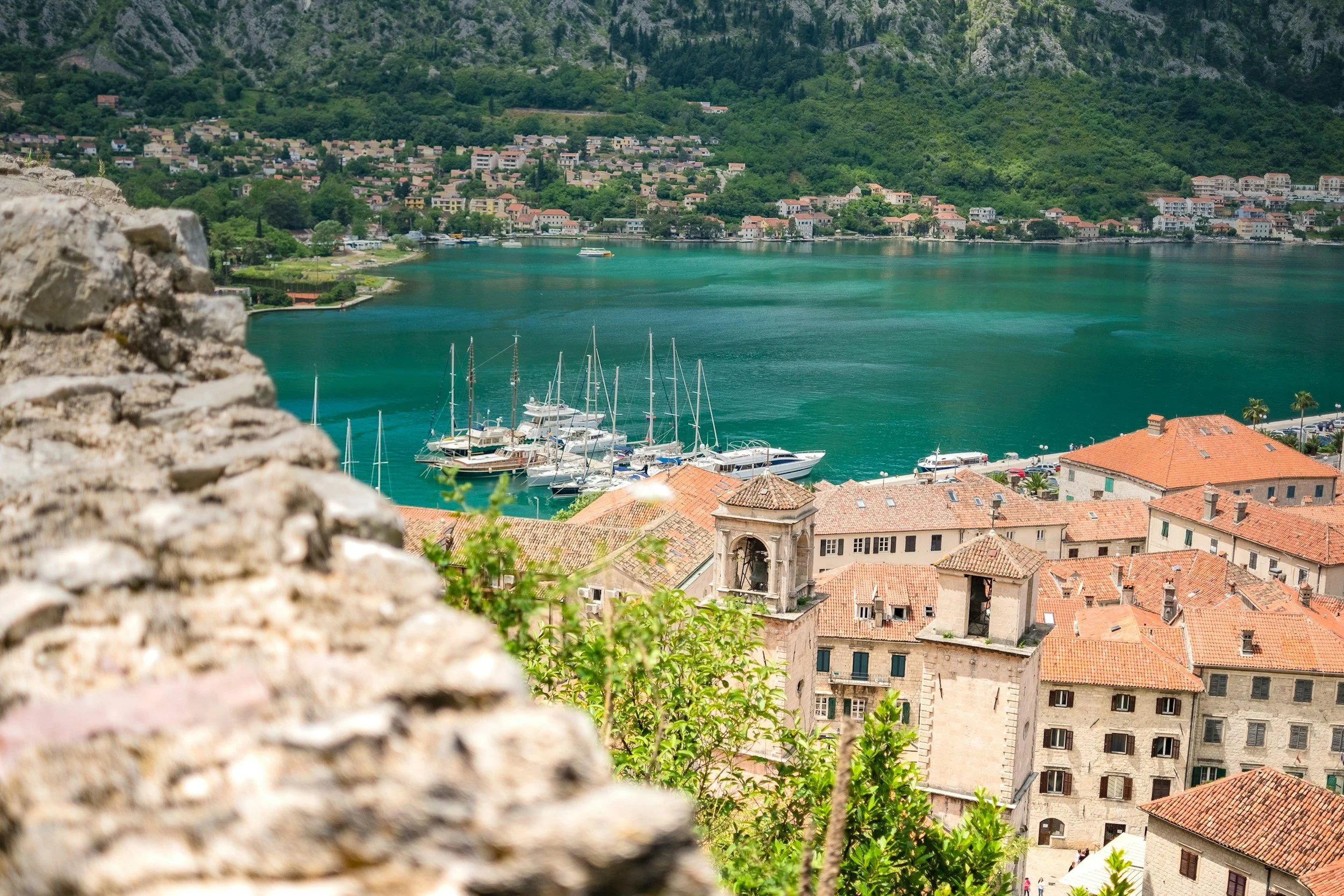
Kotor is one of the most spectacular destinations on the Adriatic coast. Set at the end of the Bay of Kotor and surrounded by dramatic mountains, this historic town combines beautiful scenery with an exceptionally well-preserved medieval centre.
The Old Town is a UNESCO World Heritage Site, with narrow cobbled streets, historic churches, Venetian architecture and imposing defensive walls.
Kotor is also one of the most convenient destinations for independent sightseeing once you have reached the shore.
Cruise Port: What to Expect
Kotor: Important tender information
Kotor is a tender port. Passengers are transferred between the ship and shore by tender boat. Operations depend on weather and sea conditions. If you have reduced mobility or use a wheelchair, check the tender arrangements and assistance available with Marella before travelling.
Ships anchor in the Bay of Kotor and passengers are transferred ashore by tender boat.
The tender landing area is close to the Old Town entrance, making this one of the easiest destinations to explore independently once you are ashore.
However, tender operations are weather-dependent and may be affected by sea conditions.
Language: Montenegrin.
Currency: Euro (€).
Distance to town: The Old Town is immediately adjacent to the tender landing area.
Accessibility: The tender transfer, cobbled streets and steps can make this a challenging destination for passengers with reduced mobility.
Getting Around Kotor
Kotor is best explored on foot. The historic centre is compact, with most of the main attractions within a short walk of the main entrance.
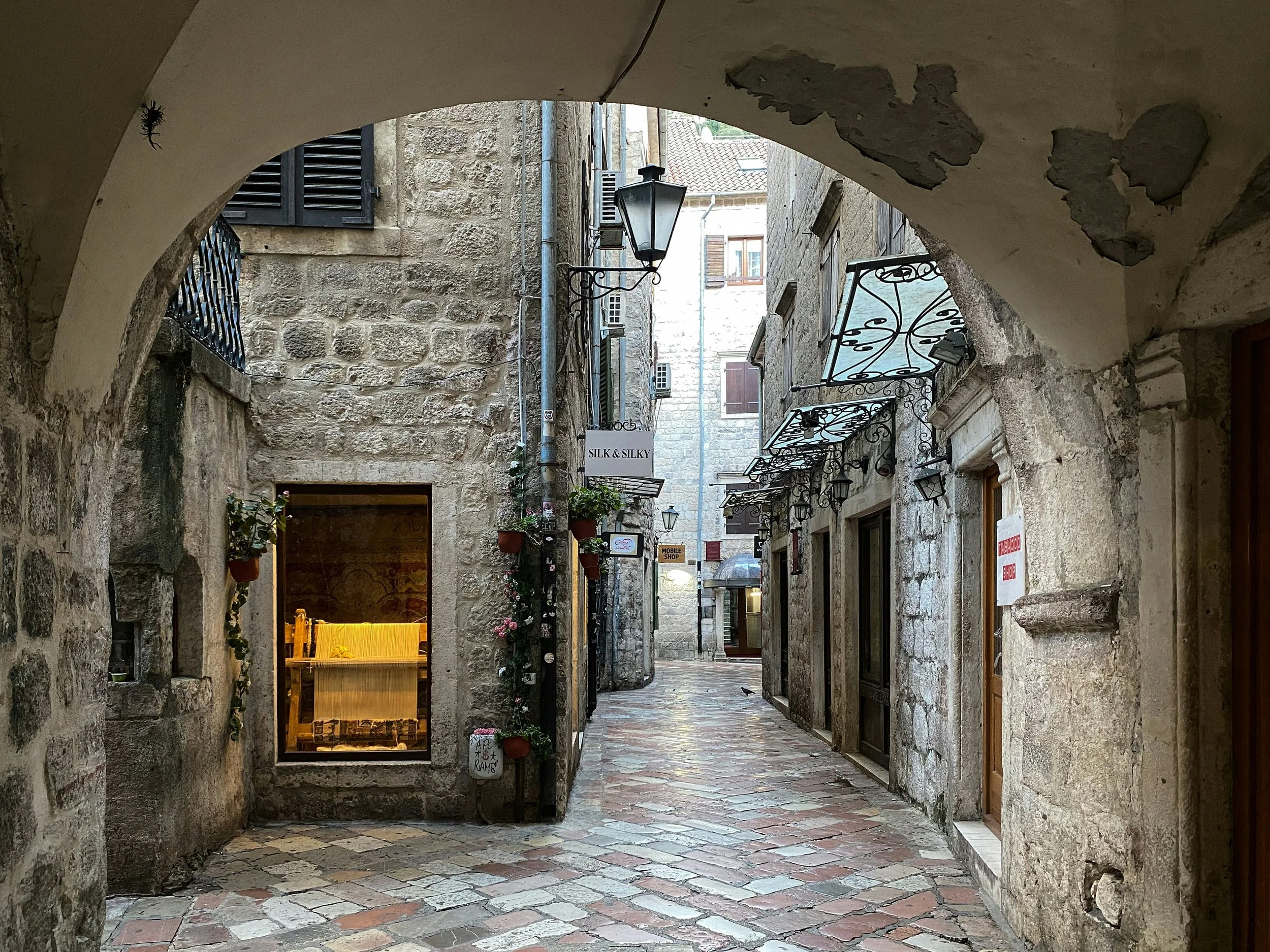
The narrow streets are largely pedestrianised, and you can easily spend several hours exploring the squares, churches and historic buildings.
Taxis are available outside the Old Town, while organised excursions provide transport to other parts of the bay and surrounding countryside.
Cruise Lowdown Warning: Beware of beggars - we were approached several times on our last visit, even whilst sitting having a coffee. However, it all is as it seems - we later saw the “beggar” sitting eating her lunch scrolling her iPhone!
Things to Do in Kotor
Explore Kotor Old Town
The Old Town is the main attraction and is a wonderful place to wander without a fixed itinerary.
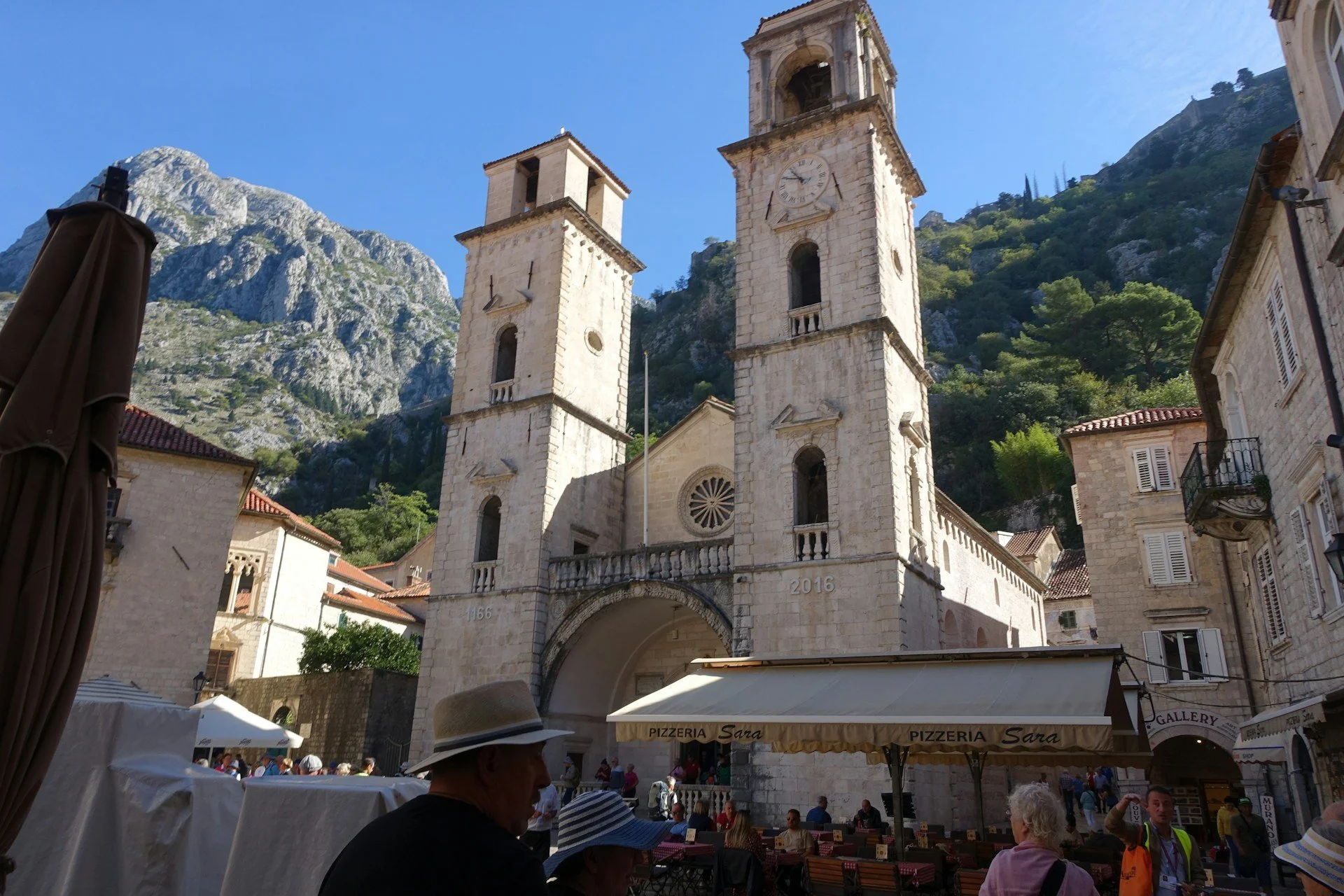
Cathedral of Saint Tryphon, Kotor
Look out for:
Cathedral of Saint Tryphon: One of Kotor's most important historic buildings.
Square of the Arms: The main square, surrounded by cafés and historic architecture.
Maritime Museum: Exploring Montenegro's seafaring heritage.
St Luke's Church: A historic church dating from the 12th century.
Sea Gate: The main entrance to the Old Town.
Walk the City Walls
Kotor's defensive walls climb steeply up the mountainside towards the Fortress of San Giovanni.
The views from the higher sections are spectacular, overlooking the terracotta rooftops and the Bay of Kotor.
However, the climb involves a considerable number of steps and is physically demanding. It is not suitable for everyone, particularly in hot weather.
An adult ticket to hike the Kotor City Walls up to the St. John Fortress (San Giovanni) costs €15. Unlike Dubrovnik’s flat city wall circuit, Kotor’s wall is a steep, rugged mountain hike consisting of roughly 1,350 stone steps that zig-zag straight up the hillside to a maximum altitude of 260 metres above sea level.
Cruise Lowdown tip: There is a free alternative route if you want a more gradual hike. You can completely bypass the paid stairs by walking the Ladder of Kotor. This is an entirely free public gravel switchback trail that runs parallel to the city walls on the outside of the fortifications.
Enjoy the Bay of Kotor
The bay is one of the most scenic parts of Montenegro, with mountains rising dramatically from the water.
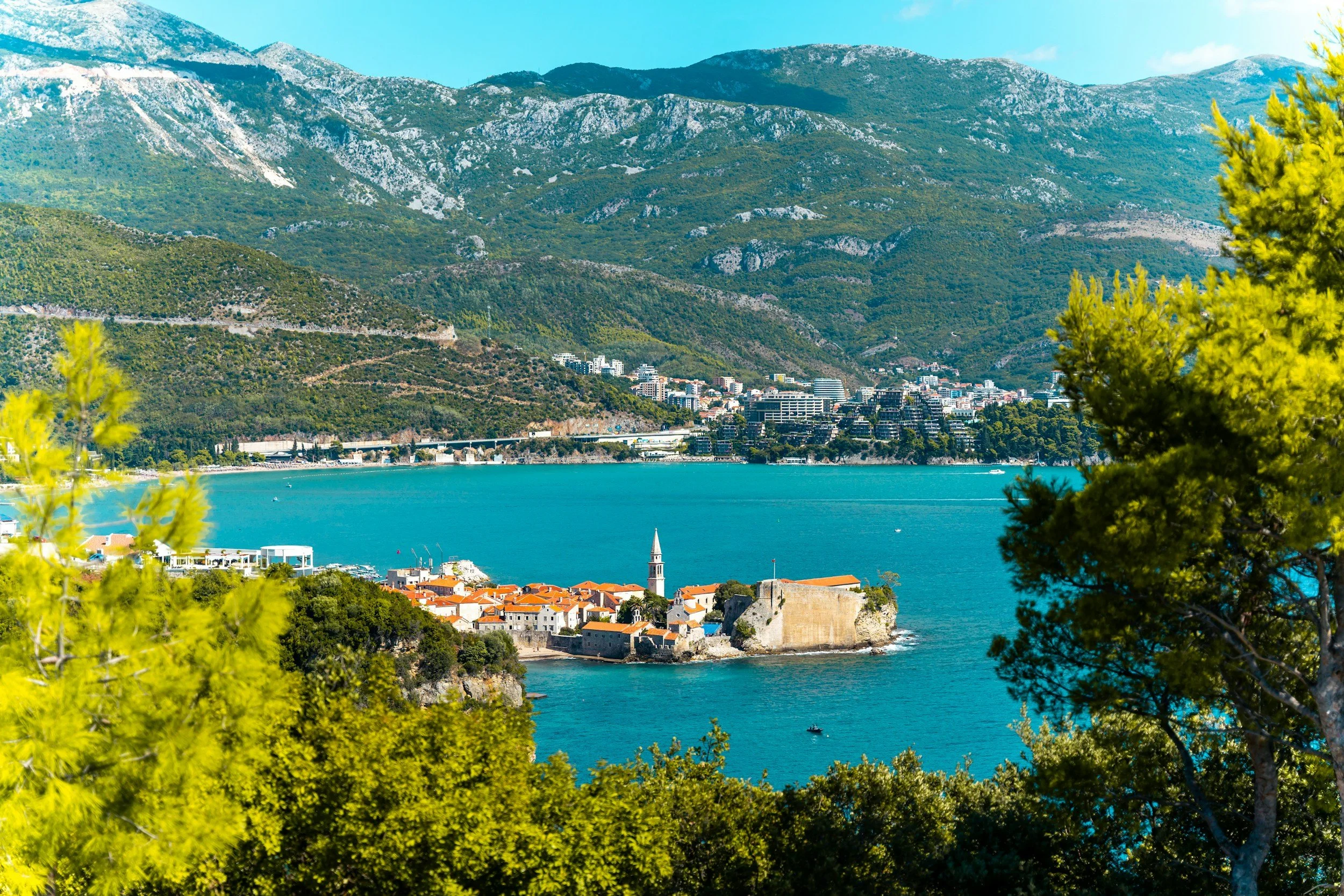
A boat trip offers a different perspective and can include visits to nearby villages and historic waterfront attractions.
Visit Perast
Perast is a beautiful historic village along the Bay of Kotor, known for its Baroque buildings and waterfront setting.
It is a popular excursion destination and can be combined with a boat trip to Our Lady of the Rocks, a small island church in the bay.
Where to Eat in Kotor
Kotor's Old Town has plenty of cafés, restaurants and traditional taverns. Many restaurants offer outdoor seating in historic squares, making them particularly attractive for a leisurely lunch.
Look for seafood, grilled meat, local cheeses and traditional Montenegrin dishes.
Local Dishes to Try
Njeguški pršut: Traditionally smoked and air-dried ham.
Kačamak: A hearty dish made with potatoes, cheese and cornmeal.
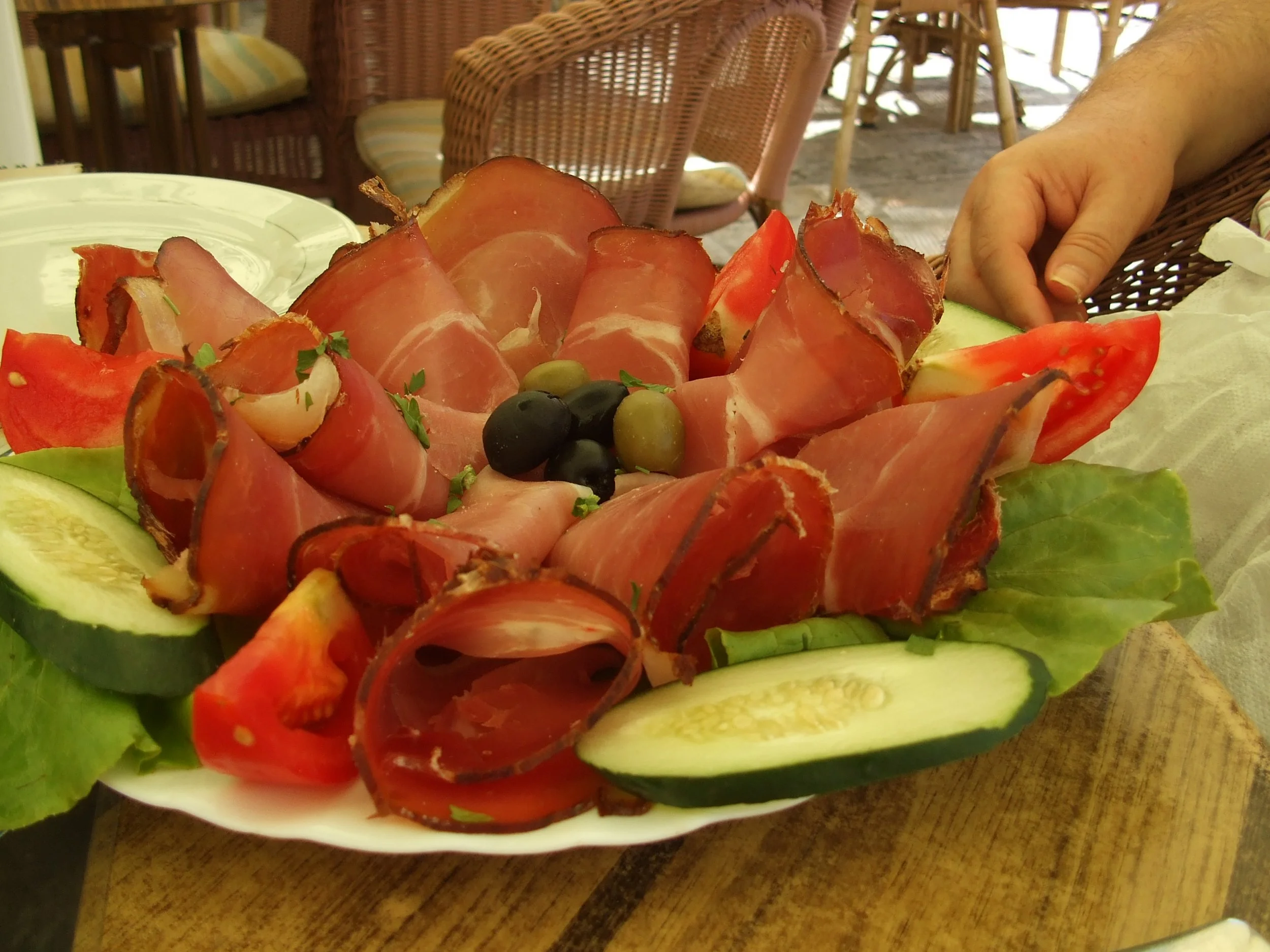
Njeguški pršut
Buzara: Seafood cooked with garlic, wine and herbs.
Grilled Adriatic fish: Often served with potatoes and vegetables.
Montenegrin cheese: Local varieties made from cow's, sheep's or goat's milk.
Food and Drink Prices in Kotor
Kotor is generally less expensive than Dubrovnik, although restaurants directly within the busiest tourist areas can charge more.
| Coffee | £1.50–£2.50 |
| Soft drink | £1.50–£2.50 |
| Bottled water | £1.00–£2.00 |
| Local beer | £2.00–£3.50 |
| Glass of wine | £2.50–£4.50 |
| Pizza | £7.00–£11.00 |
| Casual lunch | £8.00–£14.00 |
| Restaurant main course | £12.00–£22.00 |
Marella Shore Excursions in Kotor
Marella's published excursion programme has included:
Highlights of Montenegro
A sightseeing trip taking in Kotor and other parts of the surrounding region, with opportunities to see the country's historic towns and coastal scenery.
Walking Tour of Kotor
A guided introduction to the Old Town, including its medieval streets, squares, historic buildings and churches.
Traditional Kotor
An excursion featuring the Bay of Kotor and a visit to a traditional olive farm, where visitors can learn about olive production and sample local products.
Other excursions may include scenic drives, visits to Budva and trips around the bay.
Check the available excursions for your sailing.
Is Getting Around Independently Easy?
Yes. Kotor is one of the easiest ports on the itinerary to explore independently. The tender landing area is close to the Old Town, and the main sights are within walking distance.
You can comfortably spend several hours exploring the historic streets, visiting churches and enjoying lunch without needing transport.
If you want to explore further afield, a pre-booked excursion or organised taxi tour is more practical.
Remember to allow time for the return tender journey, particularly if several ships are in port.
Beaches in Kotor
Kotor is not primarily a beach destination, but there are swimming spots around the bay.
Kotor Beach
A small waterfront beach close to the Old Town, useful for a quick swim.
Dobrota
A residential area along the bay with waterfront swimming spots and cafés.
Bajova Kula
A popular swimming area along the bay, although transport is required.
For a full beach day, consider whether the journey and return arrangements are worthwhile within your port time.
Shopping in Kotor
The Old Town has a good selection of independent shops and souvenir outlets.
Look for:
Local olive oil.
Montenegrin wine.
Traditional food products.
Handmade jewellery.
Leather goods.
Local crafts and souvenirs.
Accessibility in Kotor
Kotor can be challenging for anyone with reduced mobility.
The tender transfer is the first consideration, as passengers must be able to board and leave the tender safely under the prevailing conditions.
The Old Town has uneven stone paving, narrow streets and occasional steps.
The fortress walk is particularly strenuous and unsuitable for many visitors with mobility difficulties.
Contact Marella before travelling if you need assistance or are unsure whether tender arrangements are suitable.
Trieste, Italy
Trieste is a fascinating Italian port with a character quite different from many of the country's better-known tourist destinations.
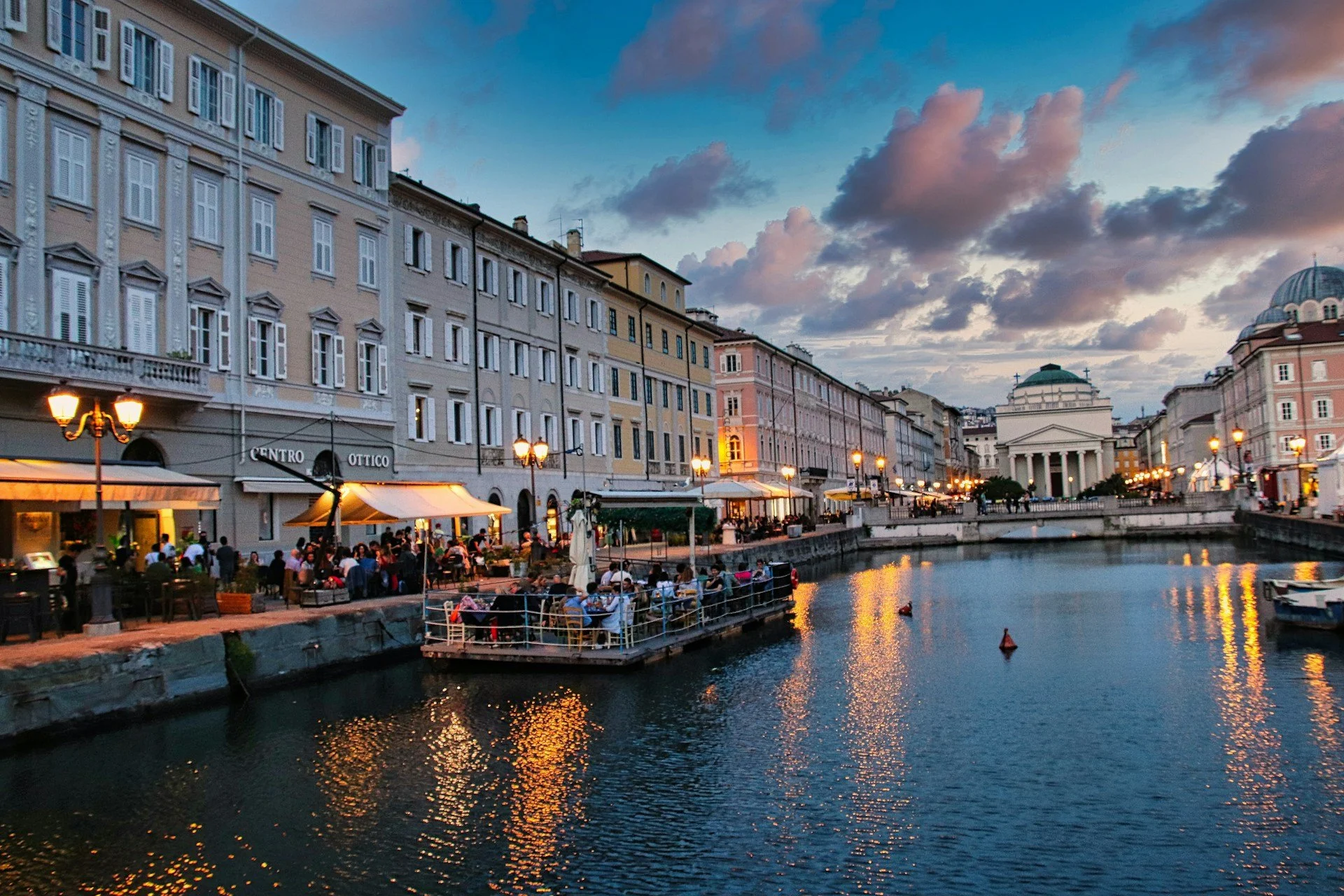
Situated close to the Slovenian border, the city has a distinctive mixture of Italian, Austrian and Slavic influences. Its grand architecture, elegant cafés, historic squares and waterfront setting reflect a complicated past as an important port of the Austro-Hungarian Empire.
For cruise passengers, Trieste is an excellent destination for independent sightseeing, with many of the main attractions within walking distance of the city centre.
Cruise Port: What to Expect
Cruise ships dock at the Port of Trieste, close to the historic centre.
The port is within walking distance of Piazza Unità d'Italia, one of Europe's largest seafront squares.
The exact berth and terminal arrangements can vary, so check the ship's information when you arrive.
Language: Italian.
Currency: Euro (€).
Distance to town: Approximately 1 km or less to the central waterfront, depending on the berth.
Accessibility: The main city centre is relatively manageable, although some historic streets and attractions have steps and uneven paving.
Getting Around Trieste
Trieste is particularly easy to explore independently. Much of the historic centre is walkable, with the main sights clustered around Piazza Unità d'Italia and the surrounding streets.
Taxis are available around the port, while local buses provide access to attractions further away.
If you want to visit Miramare Castle, public transport or a taxi is the most convenient option.
Things to Do in Trieste
Piazza Unità d'Italia
This spectacular waterfront square is the city's most recognisable landmark. Surrounded by grand historic buildings, cafés and restaurants, it is a wonderful place to begin exploring.
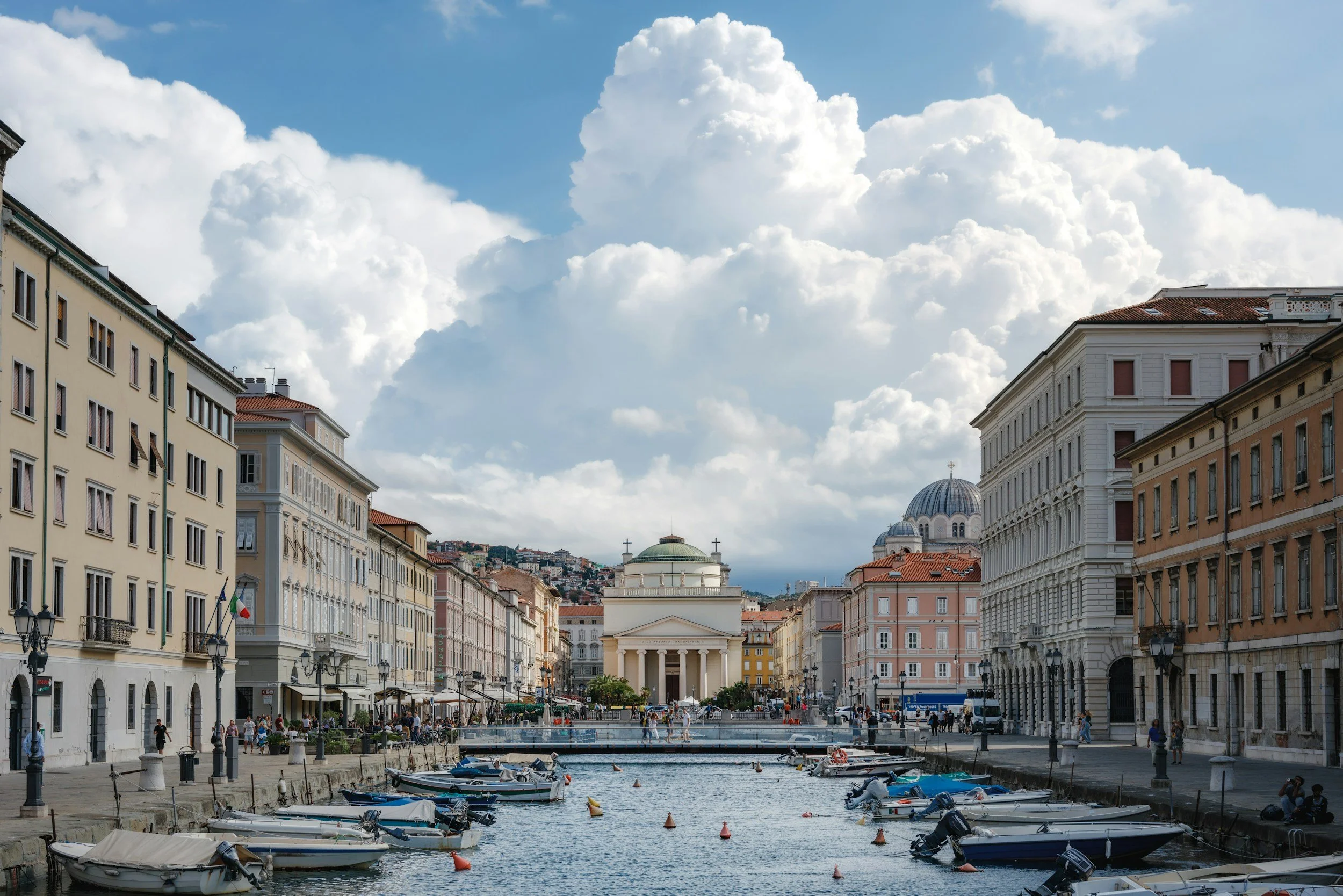
Directions: (About 7 minute walk).
Walk out of the main doors of the terminal building onto Molo dei Bersaglieri.
Cross the Main Coastal Road: Head straight toward the wide waterfront boulevard named Riva del Mandracchio. Use the designated pedestrian crosswalk to safely cross the street.
Arrive at the Square: As soon as you cross, you will step directly into the opening of Piazza Unità d'Italia, Europe's largest sea-facing public square.
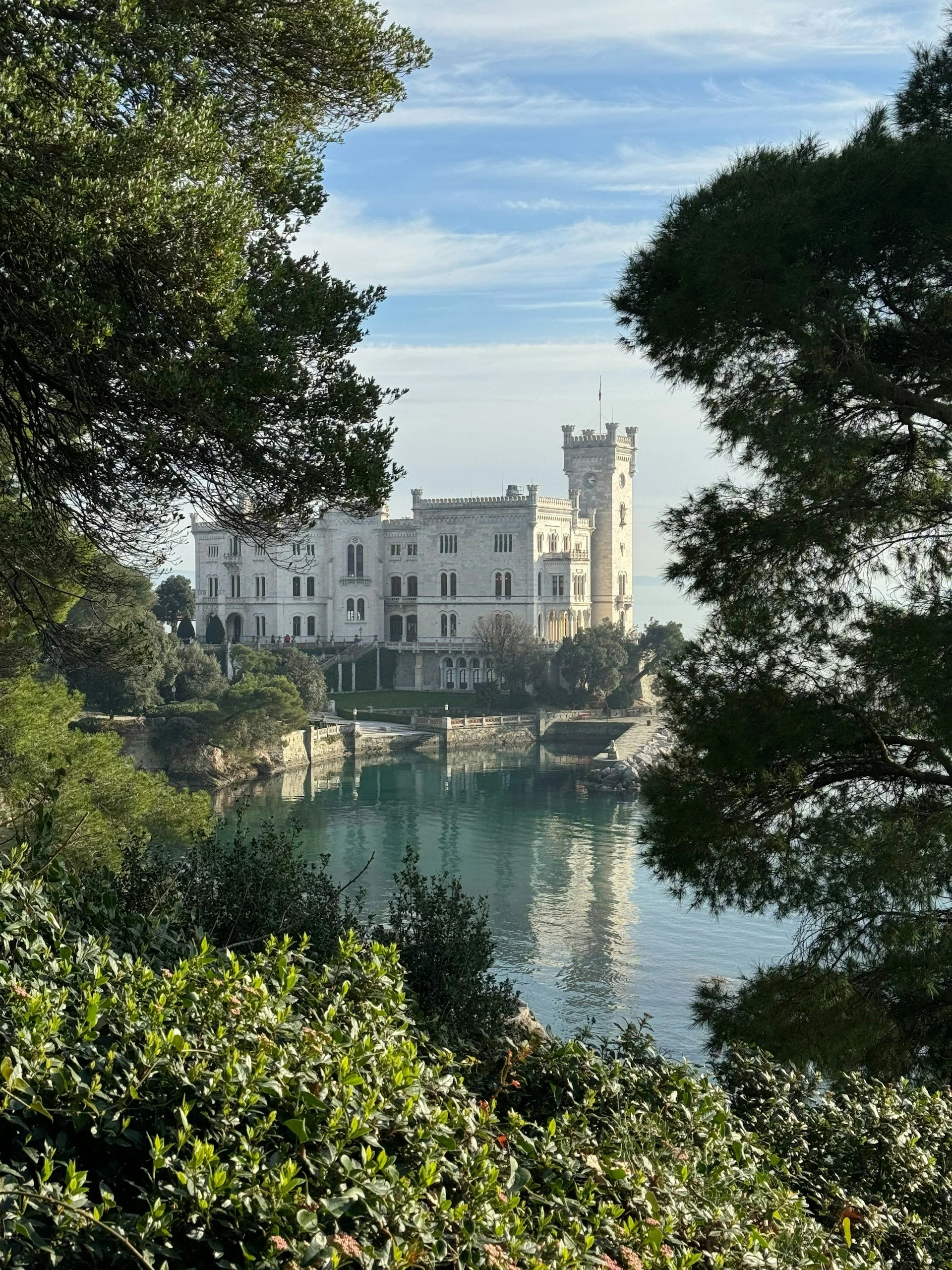
Castello di Miramare, Trieste, Trieste Photo by Mattia Barbieri on Unsplash
Miramare Castle (Castello di Miramare, Trieste)
One of Trieste's most famous attractions, Miramare Castle sits on a rocky headland overlooking the Adriatic.
Built for Archduke Ferdinand Maximilian of Austria, the castle is surrounded by landscaped gardens and offers beautiful coastal views.
The castle sits about 8 km (5 miles) northwest along the coast so allow time for transport.
Getting there:
Taxi 10-15 mins €18-22; Train (station 15 minute walk) 9 Minute journey around €1.50 to €2 each way;
Bus Line 6 or Line 36 from city centre, journey time around 25 mins,
Cruise Lowdown Tip: Get off at the Bivio di Miramare (the castle junction) or Grignano (the end of the line). From there, you will walk about 10 minutes along the coast road or through the park to the castle.
Ferry - If you are visiting during the summer tourist season (typically June to early October), a public passenger ferry called the Delfino Verde departs directly from the harbourfront near your cruise ship. Travel Time: About 40 to 50 minutes, Cost: Roughly €5 each way.
Castello di San Giusto
Located on a hill overlooking the city, San Giusto Castle offers panoramic views of Trieste and its harbour.The surrounding cathedral and historic buildings are also worth exploring.
Walking Up (Scenic but Steep)
The Route: Cross the street from the cruise terminal into Piazza Unità d'Italia, walk past City Hall, and head up into the winding cobblestone alleys of the historic Città Vecchia (Old Town). Follow Via Felice Venezian or Via della Cattedrale straight uphill.
The Terrain: It is a continuous uphill climb up narrow stone streets and steep pedestrian stairs.
Travel Time: Roughly 15 to 20 minutes from the pier.
Canal Grande
This attractive canal runs through the heart of the city and is lined with cafés, restaurants and historic buildings.
It is particularly photogenic and makes a pleasant stop during an independent walking tour.
Roman Theatre
Trieste has several reminders of its Roman past, including an ancient theatre close to the historic centre.
It is an easy addition to a walking tour.
Where to Eat in Trieste
Trieste's food culture reflects its position between Italy and Central Europe. Traditional Italian dishes sit alongside Austrian and Slovenian influences, creating a distinctive local cuisine.
The city is particularly famous for its coffee culture, with historic cafés that have been part of local life for generations.
Local Dishes to Try
Jota: A traditional soup made with beans, sauerkraut and potatoes.
Goulash: A Central European-style meat stew.
Prosciutto cotto: Cooked ham, often served with horseradish.
Gnocchi: Potato dumplings served with a variety of sauces.
Sardoni impanai: Breaded and fried local anchovies.
Strucolo: A local variation of strudel.
Food and Drink Prices in Trieste
Trieste is generally more affordable than Venice and some of Italy's more heavily visited tourist destinations.
| Espresso | £1.00–£1.80 |
| Cappuccino | £1.50–£2.50 |
| Soft drink | £2.00–£3.00 |
| Bottled water | £1.00–£2.00 |
| Beer | £3.00–£5.00 |
| Glass of wine | £3.00–£6.00 |
| Pizza | £8.00–£13.00 |
| Casual lunch | £10.00–£16.00 |
| Restaurant main course | £14.00–£25.00 |
Prices are indicative estimates and vary between cafés and restaurants.
Marella Shore Excursions in Trieste
Marella's published excursion programme has included:
A Taste of Trieste
A sightseeing experience combining the city with a visit to the surrounding Carso region and opportunities to sample local wine, olive oil and regional produce.
Aquileia and Wine Tasting
A visit to the historic Roman town of Aquileia, known for its archaeological remains and remarkable mosaics, followed by a wine-tasting experience.
Trieste Walking Tour
A guided exploration of the city's historic centre, including Piazza Unità d'Italia, the Roman theatre and Canal Grande.
Check the excursion programme for your sailing before booking.
Is Getting Around Independently Easy?
Yes. Trieste is one of the easiest ports on this itinerary for independent exploration. The central sights are close to the cruise port, and you can enjoy a full day without needing to book transport.
A suggested independent day would include Piazza Unità d'Italia, Canal Grande, the Roman theatre and a leisurely lunch in one of the city's traditional cafés.
If you want to visit Miramare Castle, allow extra time for the journey.
Beaches in Trieste
Trieste is not a traditional beach destination, but there are several swimming areas along the coast.
Barcola
A popular waterfront area with free swimming platforms and places to relax beside the sea. It is particularly popular with local residents.
Bagno Ausonia
A historic bathing establishment offering access to the sea and swimming facilities.
Miramare Coast
The coastline around Miramare has attractive swimming areas, although access varies.
Shopping in Trieste
Trieste offers a mixture of independent boutiques, Italian fashion shops and traditional food stores.
Popular purchases include:
Italian coffee.
Local olive oil.
Regional wines.
Chocolate and confectionery.
Italian leather goods.
Traditional food products.
Accessibility in Trieste
The central waterfront and main squares are relatively easy to explore, with wide pedestrian areas and generally manageable gradients.
However, some streets become steep as you move towards San Giusto Castle and the upper parts of the city.
Miramare Castle and its gardens also involve walking, so check access arrangements before visiting.
Koper, Slovenia
Koper is Slovenia's main commercial port and a charming coastal town with a strong Venetian influence.
Its historic centre is compact and easy to explore, with attractive squares, narrow streets, historic buildings and a pleasant waterfront.
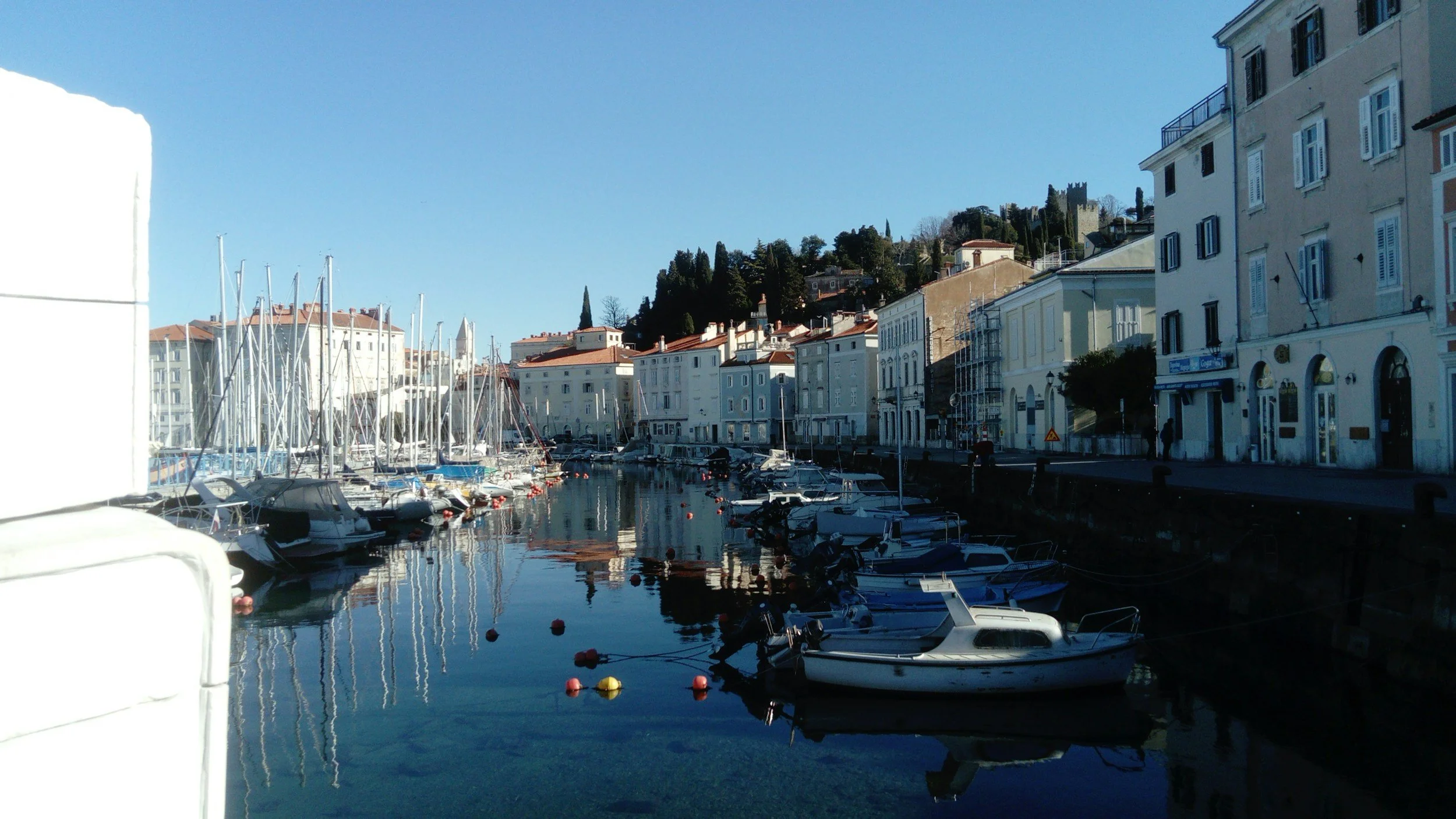
Koper, Slovenia
Koper is also an excellent starting point for exploring more of Slovenia. Excursions can take you to spectacular caves, medieval castles and attractive coastal towns such as Piran.
Cruise Port: What to Expect
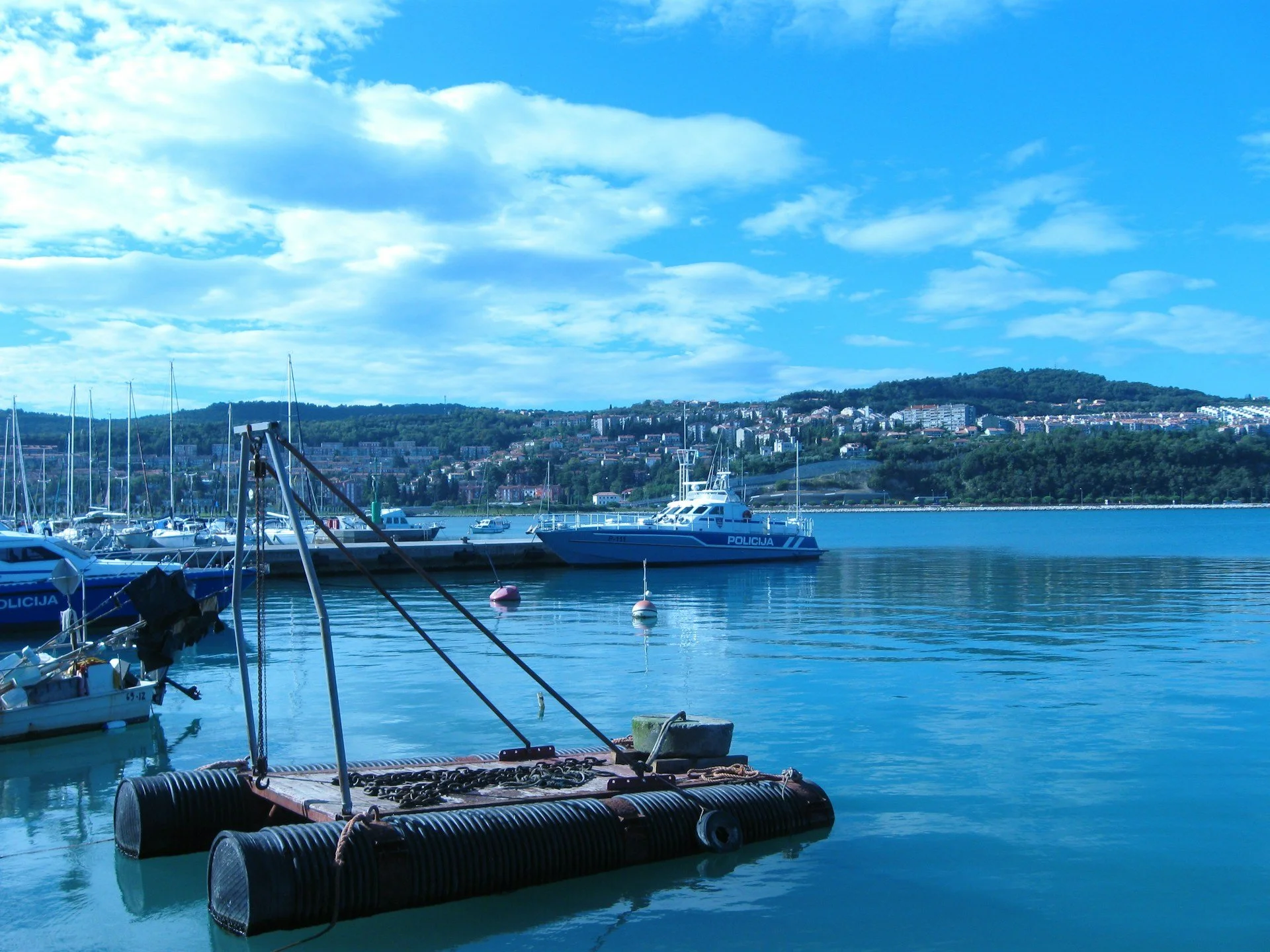
Cruise ships dock at the Port of Koper, close to the historic centre.
Similar to Kotor and Trieste, the Port of Koper Cruise Terminal boasts a highly passenger-friendly location. You dock right up against the edge of the historic town
There is no need for any transport. Once you walk off the ship's gangway and pass through the modern passenger terminal, you are immediately at the base of the historic centre. A short 2-to-5-minute flat walk brings you right into Tito Square (Titov trg), the main square of Koper
The port is an active commercial harbour, so the exact route from the ship to the town can depend on the berth and any security arrangements. Right at the pier, you will find a tourist information booth, local tour operators, and taxi ranks if you are looking to take an excursion out of town
Language: Slovenian. Italian is also widely used in parts of the coastal region.
Currency: Euro (€).
Distance to town: Approximately 500 metres to 1 km, depending on the berth.
Accessibility: The historic centre is relatively flat in places, although cobbled streets and uneven paving can be challenging.
Getting Around Koper
Koper Cruise Terminal sits right on the edge of the historic town, you can easily explore the city's top sights entirely on foot without spending money on transport. The historic centre is compact, and most of its main attractions are within a short walk of one another. Taxis are available for visitors who want to travel further afield.
The bus station (Avtobusna postaja Koper) is a 15 minutes walk from the cruise pier.
If you are planning to visit Postojna Caves, Predjama Castle or Piran, an organised excursion or pre-arranged transport is advisable.
Things to Do in Koper (Walkable from Port)
You can easily hit all of these local gems in a relaxed, flat 2-to-3-hour walking tour right from the gangway:
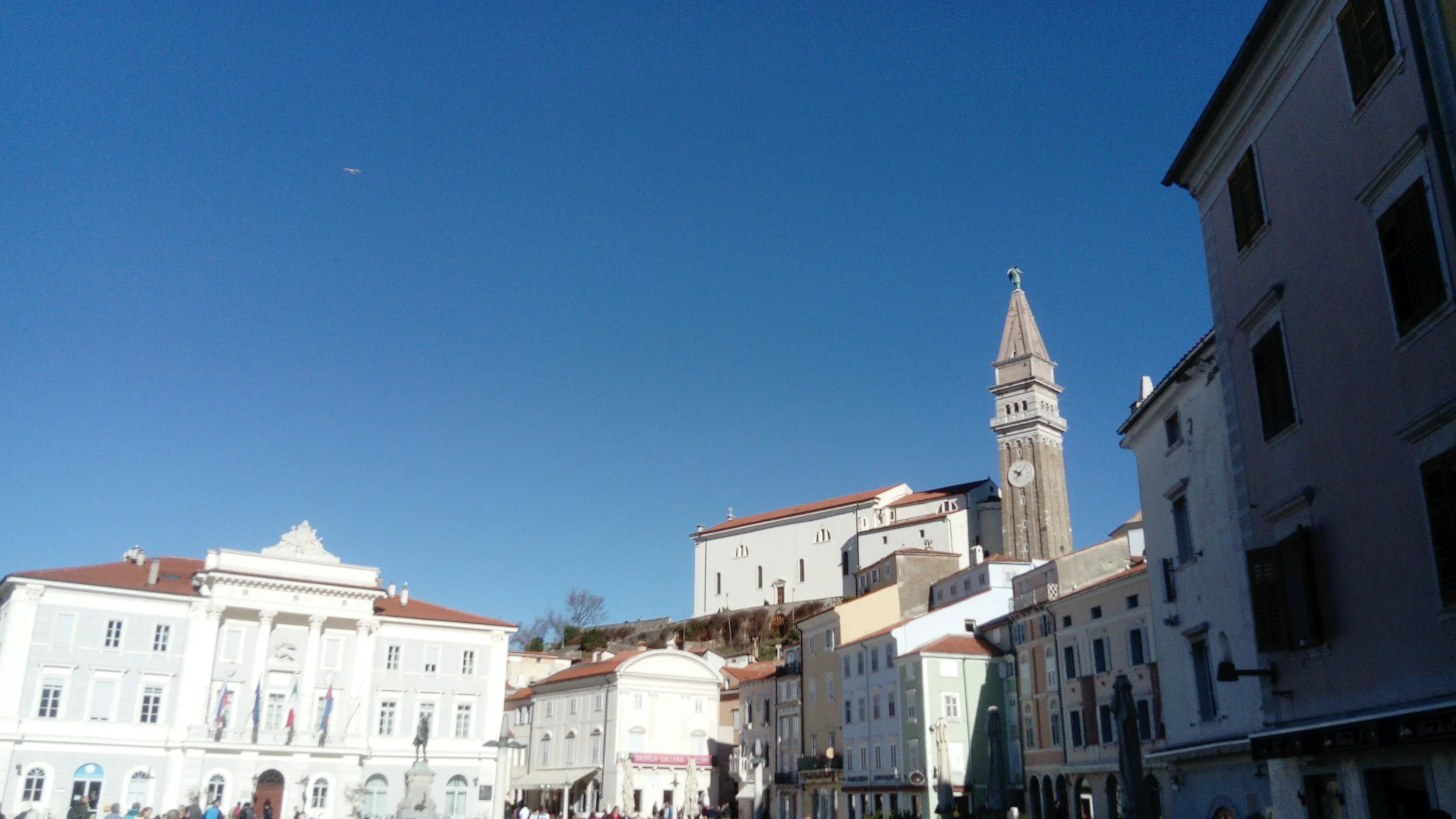
Explore Tito Square
Tito Square is the historic heart of Koper and is surrounded by impressive Venetian-style buildings.
The main sights include:
Praetorian Palace: Dominating Tito Square, this magnificent 15th-century palace serves as Koper's city hall. You can step inside to view the old pharmacy and courtroom.
Key Highlights
The Architecture: Dating back to the 13th century and extensively rebuilt in 1452, this magnificent palace is a textbook example of Venetian-Gothic and Renaissance style. Its exterior features a striking cream-and-white stone facade, stepped battlements along the roofline, external stone staircases, and a prominent statue of Justice holding her scales.
The "Bocca di Leone" (Lion's Mouth): Look closely at the palace walls to find a historical stone plaque with a slot shaped like a lion's mouth. During Venetian rule, citizens used this slot to drop off anonymous accusations against fellow locals - a feature mirrored directly from the Doge's Palace in Venice.
What's Inside: Today, the beautifully restored palace serves as Koper's City Hall, the mayor's office, and the main Tourist Information Centre (TIC) on the ground floor. While the ground-floor tourist centre is entirely free to enter, you can pay a small fee (around €4 to €6) to take a guided tour of the grand upper rooms, including the old council chambers and the historical courtroom.
Cathedral of St. Nazarius (also known as the Cathedral of the Assumption of the Blessed Virgin Mary) is Koper’s main church, located directly on Tito Square (Titov Trg).
Key Highlights
The Architecture: The cathedral features a fascinating mix of architectural styles. The lower exterior façade is built in raw, local white stone displaying a 14th-century Gothic-Venetian style, while the upper tier is built in a 17th-century Baroque design.
The Bell Tower (Campanile): Standing right next to the cathedral, this 54-metre-tall tower originally served as a medieval Romanesque fortification tower before being converted into a church belfry. For €3 to €5, you can climb its 204 steps for the absolute best aerial view of Koper and your cruise ship.
The Interior Art: Inside, the cathedral is heavily Baroque, spacious, and airy. It houses incredible historical treasures, including a massive 15th-century painting by Venetian master Vittore Carpaccio (The Madonna and Child with Saints) and a stunning marble sarcophagus dedicated to Koper’s patron saint, St. Nazarius.
Loggia: a striking 15th-century Venetian-Gothic building located directly on Tito Square (Titov Trg), right across the square from the Praetorian Palace and adjacent to the Cathedral of St. Nazarius.
Cruise Lowdown Tip: Visit the Historic Café. Unlike many preserved historic buildings that function strictly as quiet museums, the ground floor of the Loggia houses Loggia Caffè. It is one of the oldest and most atmospheric cafés in Koper, allowing you to sit right underneath the medieval arches.
Visit the Regional Museum of Koper
The museum provides an insight into the history and culture of the region, including its Venetian heritage.
Walk the Waterfront
Koper has a pleasant waterfront promenade where you can enjoy views across the harbour and surrounding coastline.
It is a good place for a relaxed stroll or a coffee stop.
Key Sightseeing Beyond Koper (Short Excursions)
If you have a longer day in port (6+ hours), these world-famous destinations are highly accessible via taxi, local bus, hire car (around €60-€80) or a pre-booked tour:
Piran (The Coastal Jewel): widely considered the absolute jewel of the Slovenian coastline. It is a stunning, historic fishing town that juts out into the Adriatic Sea on a narrow peninsula. Because Koper and Piran are only 17 kilometres (10.5 miles) apart, it is one of the easiest, cheapest, and most popular day trips you can take from your cruise ship.
Located just 20 minutes west of Koper. Piran is a breathtaking, car-free fishing town jutting out into the sea, heavily influenced by Venetian architecture. You can take a cheap, direct local Arriva bus from Koper's main station (30-40 minutes journey) for around €2 to €3 each way. Taxi would cost around €30-€40 each way.
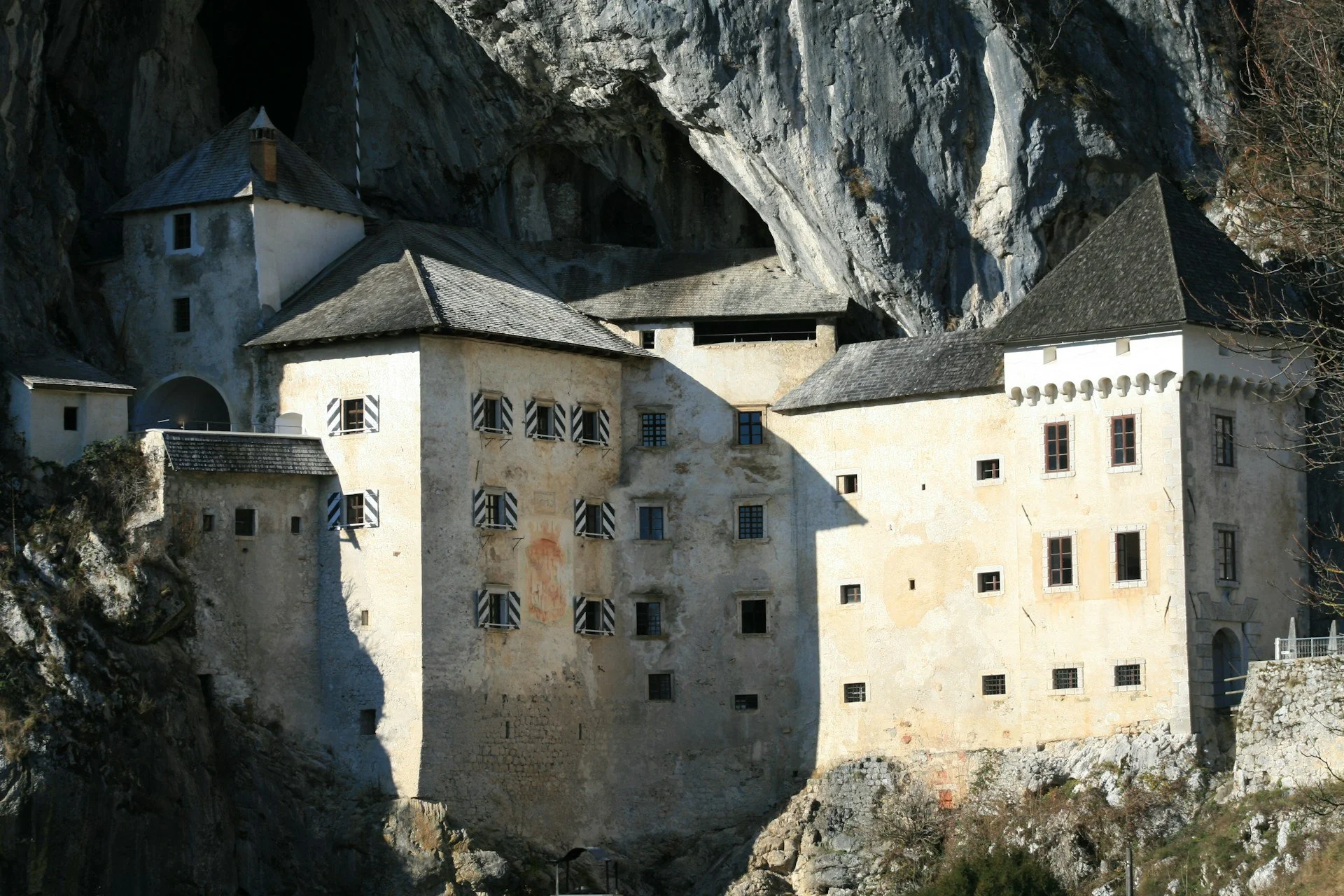
Postojna Cave & Predjama Castle: Located 45 minutes inland. Postojna is a massive, world-famous karst cave network that you explore via an underground electric train. Just 15 minutes further up the road sits Predjama Castle, a dramatic 800-year-old fortress built directly into the mouth of a vertical cliff cave.
You can take a direct regional bus operated by Arriva from the main Koper Bus Station (a 15-minute flat walk from the pier) straight to the Postojna town station. From the Postojna bus stop, it is a pleasant 1-kilometre (0.6-mile) walk to the cave park entrance. Tickets cost around €6 to €9 each way, but you must check the timetables carefully to ensure the return bus aligns with your ship's departure. Taxi is far more expensive at between €120-€150.
The Škocjan Caves: A UNESCO World Heritage site located 35 minutes away. Recommended for the super-fit only, this is a more rugged, nature-focused alternative to Postojna, featuring a mind-blowing underground canyon and roaring river bridges that feel like something out of The Lord of the Rings.
You will walk about 2.5 to 3 kilometres (1.8 miles), climb roughly 500 stairs, and tackle steep paths. Sturdy walking shoes or trainers are mandatory.
The cave interior remains a constant, chilly 12°C (54°F) year-round. Bring a light jacket, sweater, or fleece, even if it is a hot summer day out on the cruise ship.
Pre-Booking is Mandatory: The park strictly caps the number of visitors allowed inside each hourly guided tour group. You must buy your tickets online in advance via the official Škocjan Caves Portalto secure a morning time slot that matches your ship's itinerary, otherwise you risk arriving and finding the tours completely sold out.
Adult Ticket Prices (Regular Season): Roughly €24 to €30 depending on the specific months and tour paths chosen.
This may be a good choice for a guided excursion, as although relatively close, there is no reliable public transport and a taxi will cost between €100-€150.
Ljubljana (The Capital): Slovenia’s capital is one of Europe’s greenest and most charming cities, famous for its hilltop castle, willow-lined river cafes, and whimsical dragon bridges.
Direct, comfortable coach buses run frequently from the Koper main bus station straight to the central Ljubljana bus station, which sits right on the edge of the historic pedestrian downtown. The ride takes about 1 hour and 20 minutes and costs roughly €9 to €12 each way.
Postojna Caves and Predjama Castle
Where to Eat in Koper
Koper's restaurants reflect the influence of both Slovenian and Italian cooking.
You will find seafood, pasta, grilled meat, local wines and traditional regional dishes.
The area around Tito Square and the waterfront is a good place to look for cafés and restaurants.
Local Dishes to Try
Jota: A hearty bean, potato and sauerkraut soup.
Kraški pršut: Air-dried ham from the Karst region.
Fuži: Traditional Istrian pasta.
Seafood risotto: Often prepared with locally caught seafood.
Fritaja: A traditional Slovenian and Istrian omelette, often made with seasonal ingredients.
Food and Drink Prices in Koper
| Coffee | £1.50–£2.50 |
| Soft drink | £2.00–£3.00 |
| Bottled water | £1.00–£2.00 |
| Local beer | £2.50–£4.00 |
| Glass of wine | £3.00–£5.00 |
| Pizza | £8.00–£12.00 |
| Casual lunch | £9.00–£15.00 |
| Restaurant main course | £13.00–£23.00 |
Marella Shore Excursions in Koper
Marella's published programme has included:
Caves and Castles
A visit to Postojna Caves followed by a stop at the impressive Predjama Castle.
Piran and Portorož – Little Italy
An excursion to the historic coastal town of Piran, with time to explore its streets, followed by a visit to the resort town of Portorož.
Slovenia Off-road
A countryside experience using 4x4 vehicles to explore rural areas and scenic viewpoints.
These excursions provide an opportunity to see more of Slovenia beyond Koper itself.
Check the excursion listings for your departure, as availability and inclusions can change.
Is Getting Around Independently Easy?
Yes. Koper is a very manageable port for independent visitors.The historic centre is compact, and you can comfortably explore its main attractions on foot.
If you want to visit Piran or Portorož, independent travel is possible, but you will need to organise transport and allow sufficient time for the return journey.
For Postojna Caves and Predjama Castle, an organised excursion is generally the more convenient option.
Beaches in Koper
Koper City Beach
A small swimming area close to the town centre, convenient if you want to cool off without travelling far.
Žusterna Beach
A popular coastal area just outside central Koper, with swimming facilities and places to relax.
Portorož Beach
A popular seaside resort with a more developed beach area, cafés and restaurants.
Piran Waterfront
There are several swimming spots around Piran, although much of the coastline is rocky rather than sandy.
Shopping in Koper
Koper has a mixture of independent shops, boutiques and souvenir outlets.
Look for:
Slovenian honey.
Local olive oil.
Regional wines.
Traditional Istrian products.
Handmade crafts.
Lavender and herbal products.
Accessibility in Koper
Koper is one of the more manageable ports for visitors with limited mobility.
The historic centre is relatively compact, and much of the main sightseeing area is reasonably level.
However, cobbled streets and uneven surfaces can make some routes difficult.
Excursions to caves, castles and other towns may involve steps, slopes and longer walking distances.
Check accessibility before booking.
Zadar, Croatia
Zadar is one of Croatia's oldest cities and a particularly appealing Adriatic cruise destination.
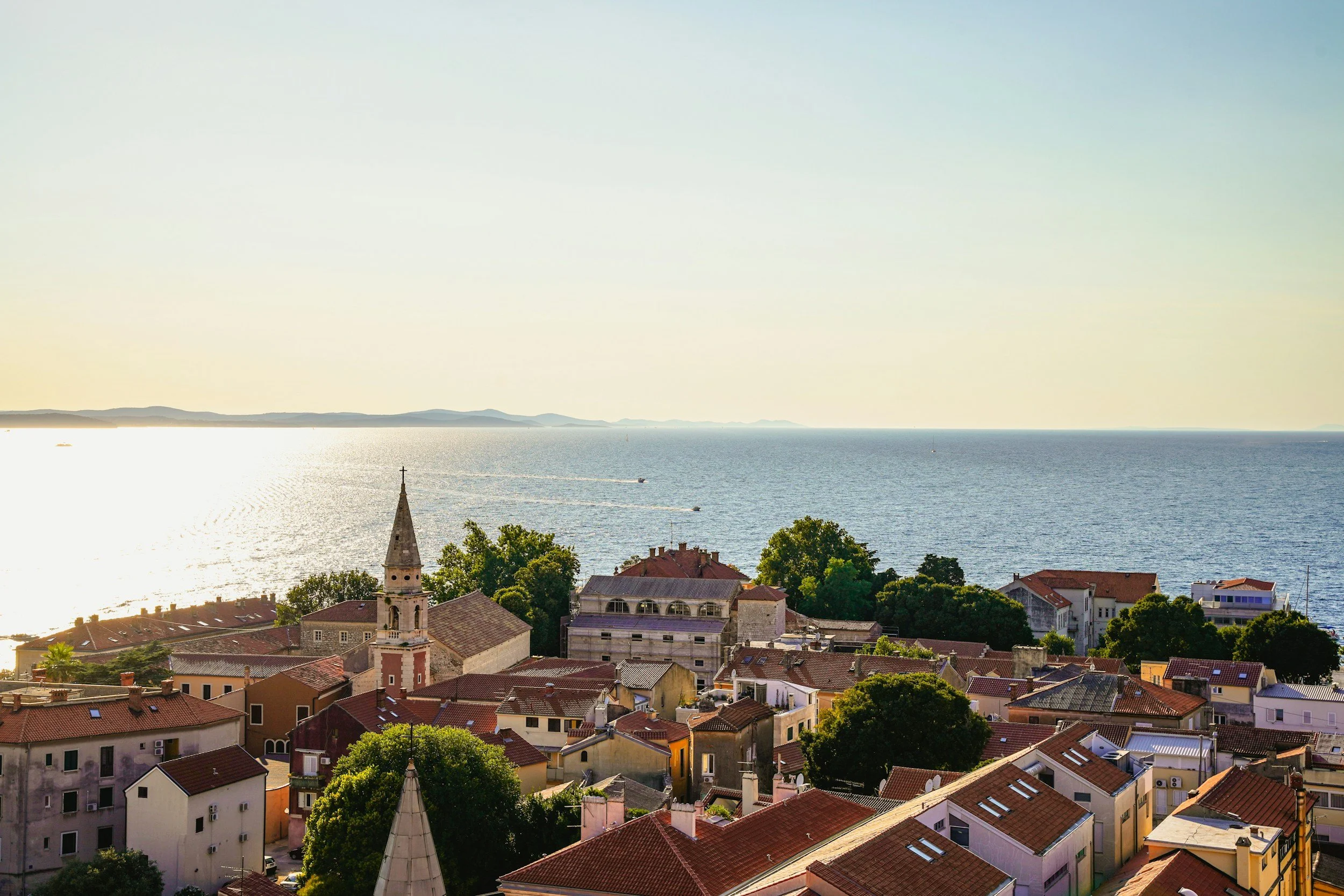
Its historic centre sits on a peninsula surrounded by ancient walls, with Roman remains, Venetian architecture, medieval churches and an attractive waterfront.
Zadar is also famous for two unusual modern attractions: the Sea Organ and the Greeting to the Sun.
The city is easy to explore independently, and most of its main sights can be reached on foot.
Cruise Port: What to Expect
Cruise ships may dock at the Port of Zadar or use other berths depending on the vessel and port arrangements.
Unlike Koper or Kotor, Zadar’s modern cruise terminal is located in an industrial zone called Gaženica, which sits roughly 4 km (2.5 miles) south of the historic Old Town centre.
The passenger terminal is a brand-new, modern facility. Inside, you will find complimentary Wi-Fi, cafes, souvenir shops, car rental desks, and currency exchange offices.
Because it is too far to walk comfortably, you will need to take a 10-minute taxi ride, a cruise-line shuttle bus, or the local public bus (Line 9) from the port terminal straight to the main city centre.
Check the ship's information on arrival, as shuttle arrangements may operate when ships are berthed further from the centre.
Language: Croatian.
Currency: Euro (€).
Distance to town: Varies by berth; approximately 2-4 km to the Old Town from the main cruise port area.
Accessibility: The Old Town is largely flat but has extensive stone paving and some uneven surfaces.
Getting Around Zadar
The absolute cheapest way into town is via the municipal bus system operated by Libertas Zadar.
The Route: Walk out of the terminal building to the bus platform and board Line 9 (Gaženica – Central Bus Station).
Warning!: Line 9 drops you at Zadar's Central Bus Station (Kolodvor). From there, you need to transfer to Line 2 or Line 4 for a quick 5-minute hop directly into the historic Old Town peninsula (stopping at the bridge or city gates). Alternatively, it is a flat, 20-minute walk from the station to the historic centre.
Cost: Roughly €1.60 for a single ticket if bought at a kiosk, or slightly more if purchased directly from the driver using coins.
An Uber will cost approximately €7-€12 each way.
Taxi €12-€18 each way.
Exploring the Old Town
Once you cross the pedestrian bridge or pass through the historic Land Gate, you can put your wallet away. The historic core of Zadar is flat, entirely pedestrianised, and easily crossable from end to end in under 20 minutes on foot.
Cruise Lowdown tip: For a unique local touch, keep an eye out for the Barkajoli at the northern harbour. These traditional rowboat captains have spent 800 years rowing passengers across the narrow peninsula harbour for a mere €1.50. It saves you a long walk around the marina, supports a beautiful local tradition, and makes for a brilliant photo opportunity.
Highlights of the Old Town
Once you enter the historic core, you will find a compact maze of Roman ruins, medieval churches, and lively Venetian-style streets. Everything is flat and fully pedestrianised, meaning you can easily walk between all of these major highlights:
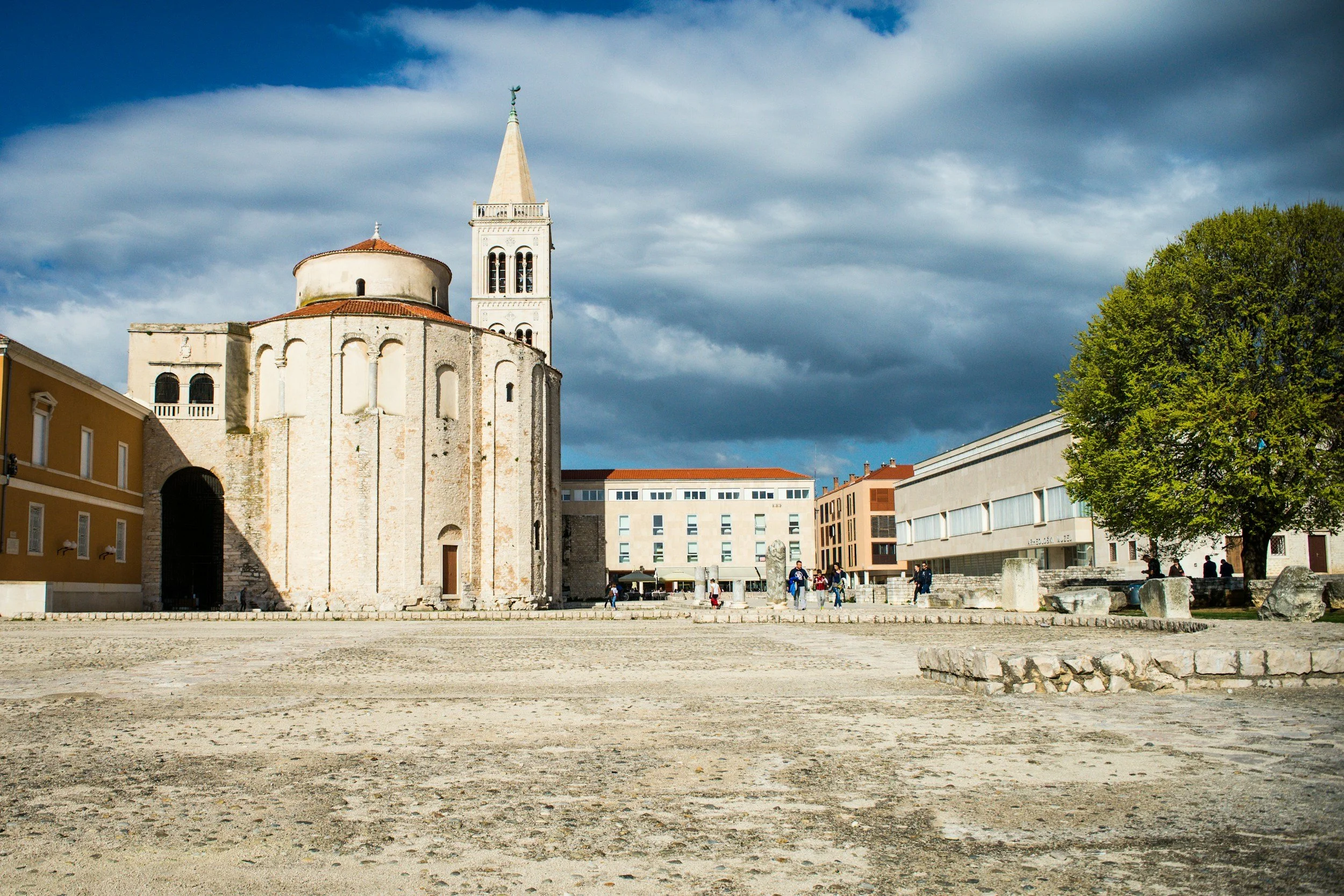
The Roman Forum: Located in the literal centre of the peninsula, this grand public square was founded by Emperor Augustus in the 1st century BC. Today, it operates as an open-air museum where you can walk right up to, and touch, ancient stone columns, altars, and temple foundations.
How to get there: Walk straight down the main pedestrian artery, Široka ulica (also known as Kalelarga), from People's Square for about 3 minutes. It will open up directly onto the ruins on your left.
The Church of St. Donatus: This massive, 9th-century circular Byzantine church stands directly on top of the Roman Forum. It is the iconic symbol of Zadar, built using stone columns scavenged directly from the ruins below. Because of its incredible acoustics, you might catch local musicians practicing inside if you pop your head in.
How to get there: It stands directly adjacent to the Roman Forum; you cannot miss its towering, circular stone shape right in the centre of the square.
The Land Gate (Kopnena Vrata): If you arrive by Uber or taxi, this will likely be your dramatic entrance to the city. Built by the Venetians in 1543, this magnificent triumphal stone arch features a large relief of the winged Lion of St. Mark and acts as a beautiful reminder of Zadar's historic ties to Venice.
How to get there: Located at the southeastern entrance of the Old Town peninsula, right next to the small Foša Harbour. It is the primary drop-off point for taxis and shuttles coming from the cruise terminal.
The Cathedral of St. Anastasia: The largest church in all of Dalmatia, featuring a gorgeous 12th-century Romanesque façade with distinct rose windows. You can enter the church for free, but paying a couple of Euros to climb the Bell Tower is highly recommended for an sweeping view of the red-roofed Old Town.
How to get there: Located just behind the Church of St. Donatus. Walk 30 seconds north from the Roman Forum along Trg Svete Anastazije.
The People’s Square (Narodni Trg): This is the bustling social hub of Zadar. Flanked by the historic City Guard building and a clock tower, it is the perfect spot to grab an outdoor table, order a coffee, and watch local life roll past.
How to get there: If you enter the Old Town via the pedestrian bridge (Gradski most), walk straight through the historic city gate and continue ahead for 1 minute along Ulica Jurja Barakovića until it opens up into the square.
Things to Do in Zadar
If you want to go beyond looking at old buildings and experience the best activities Zadar has to offer during a cruise stop, make sure to add these things to your itinerary:
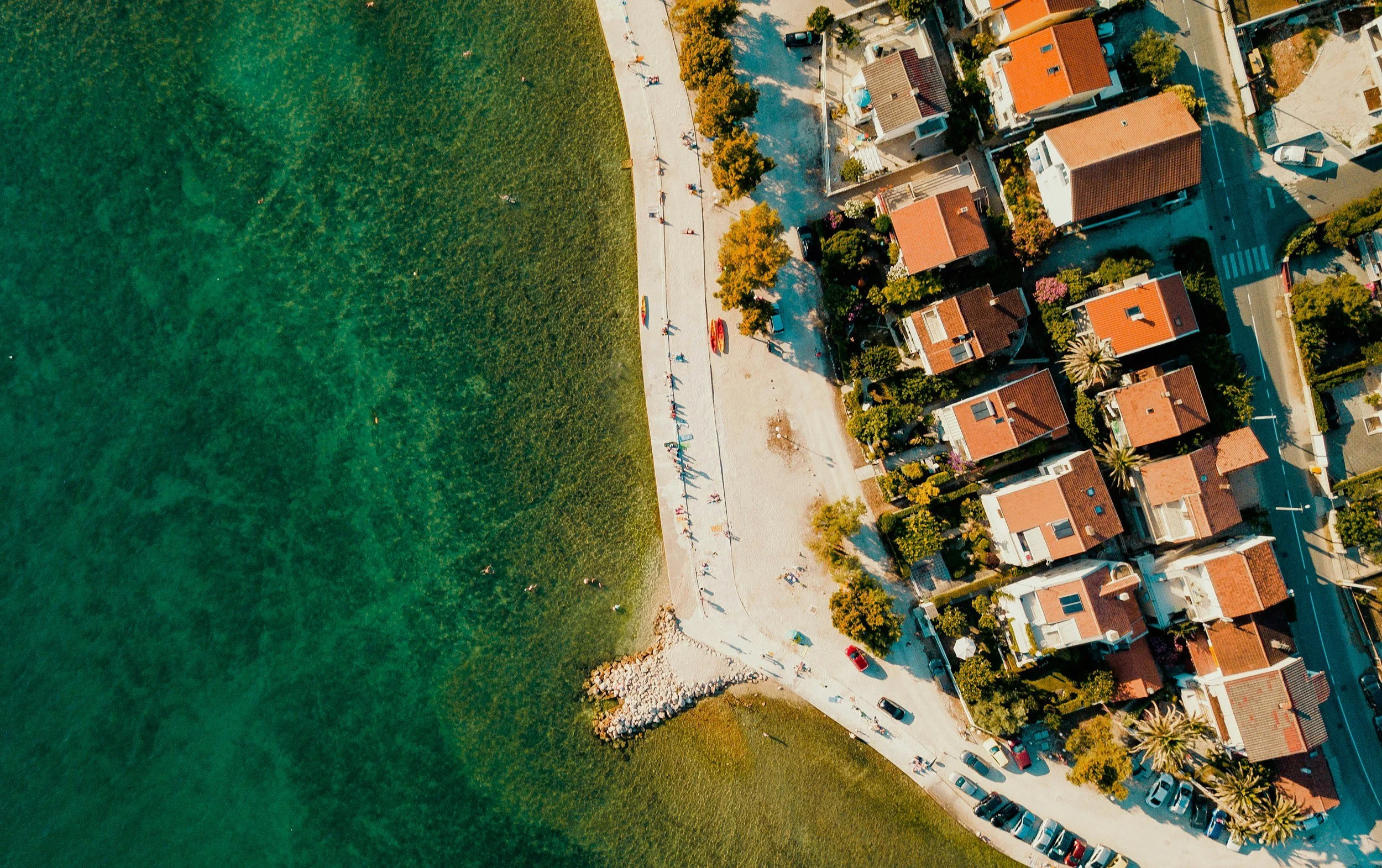
Listen to the Sea Organ (Morske Orgulje): Located at the very western tip of the peninsula, this is a world-famous architectural art installation. Experimental architect Nikola Bašić cut a series of stone stairs into the promenade that conceal 35 underwater pipes. As the waves push air through the pipes, the sea literally plays a continuous, hauntingly beautiful musical chord. It is a completely free, mesmerising experience where you can sit on the steps right next to the water.
How to get there: Follow the wide waterfront promenade (Obala kralja Petra Krešimira IV) all the way to the western tip of the peninsula. It is a scenic 10-minute flat walk from the Roman Forum.
Stand on the Sun Salutation (Pozdrav Suncu): Right next to the Sea Organ sits a massive 22-metre circle cut into the stone, filled with 300 multi-layered glass solar panels. During the day, it absorbs the intense Croatian sun. At night, it puts on a spectacular, motion-activated light show that mimics the solar system. Cruise Tip: If your ship departs late enough, this is the premier spot in the city to watch the sunset—which Alfred Hitchcock famously called the most beautiful sunset in the world.
How to get there: It is located directly adjacent to the Sea Organ on the same waterfront promenade at the very tip of the peninsula.
Climb the Bell Tower of St. Anastasia: If you want the ultimate panoramic photo of your cruise ship docked down at Gaženica Port and the surrounding islands, head to the cathedral and tackle the steps up the belfry. The climb is a bit tight, but the aerial perspective of the peninsula is completely unmatched.
How to get there: Enter via the side door located right outside the main entrance of the Cathedral of St. Anastasia on Trg Svete Anastazije.
Sample Maraschino Liqueur at a Café: Zadar is the historical birthplace of Maraschino, a clear, sweet liqueur made from local Marasca cherries. You can order a glass at any café in the Old Town or purchase a beautifully woven bottle from a local shop to take back to the ship as an authentic souvenir.
How to get there: For an iconic experience, grab an outdoor table at Caffè Lovre located right in People's Square, which is built directly into the ruins of an old 12th-century church.
Explore the Museum of Ancient Glass: Housed in a 19th-century palace overlooking the Jazine harbour, this unique museum holds one of the best collections of Roman glass vessels outside of Italy. The real highlight for visitors is the live glassblowing demonstrations on the top floor, where you can watch artisans create delicate replicas using ancient techniques.
How to get there: Located on the eastern side of the peninsula at Poljana Zemaljskog Odbora 1. It is a short 3-minute walk north from the pedestrian bridge along the inner ramparts.
Beyond the Old Town: Accessible Day Trips
If you want to break away from the city streets and explore Croatia's spectacular natural landscapes, several world-class destinations sit just outside Zadar. Because your time is capped by a cruise schedule, these "further afield" spots are specifically chosen because they are reachable within a 30-to-60-minute drive from the port, making them perfectly safe for a day trip.
Krka National Park (The Waterfall Wonderland)
Krka is one of Croatia's absolute crown jewels - a lush, green paradise where a roaring river cascades down over a series of 17 massive travertine limestone waterfalls.
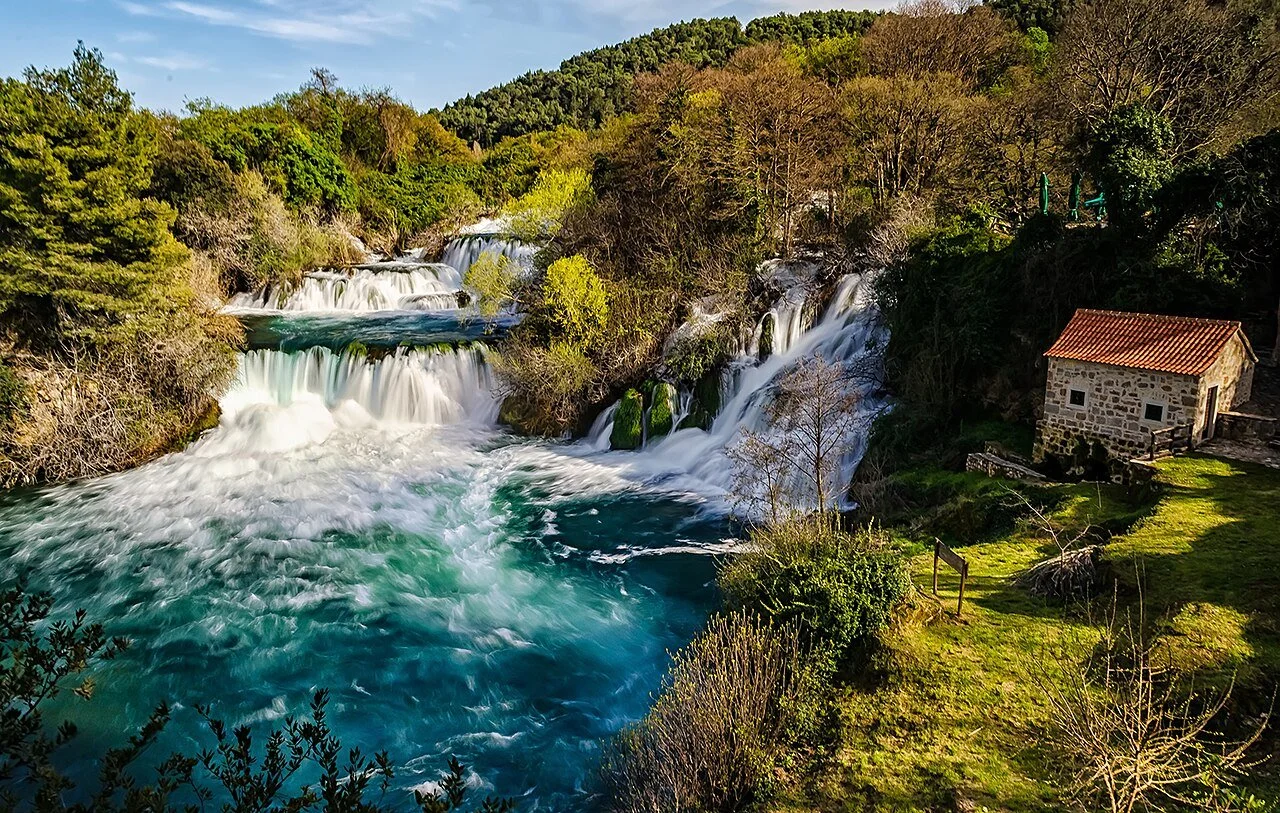
What to do: Walk the beautifully maintained wooden boardwalk loop that floats directly over the rushing emerald green waters, explore historic stone watermills, or take a scenic river boat cruise down the canyon to the picturesque island town of Skradin. (Note: To protect the ecosystem, swimming in the falls is no longer permitted, but the views are breathtaking).
How to get there: Krka sits roughly 75 km (46 miles) southeast of Zadar. The fastest way is via the A1 motorway, which takes about 50 to 60 minutes each way.
Car Rental: You can pick up a rental car directly at Gaženica Port and drive the empty, easy-to-navigate motorway.
Private Shore Excursion: Dozens of local providers right at the pier terminal offer small-group minibus transfers tailored to your ship’s docking hours.
Cruise Lowdown Advice: I always prefer public transport but in this case avoid public buses, as they drop you in nearby towns and rely on rigid schedules that carry too high a risk for a tight cruise timeline.
Nin (The Historic Island Town & Sandy Beach)
If you want a mix of fascinating ancient history and relaxed beach time without the massive crowds of Zadar, the tiny, romantic town of Nin is a spectacular alternative.
What to do: Explore the tiny, car-free island town which is connected to the mainland by two historic stone bridges. Nin houses the 9th-century Church of the Holy Cross (officially celebrated as the smallest cathedral in the world) and ancient Roman temple ruins. Right outside the town sits Queen’s Beach (Kraljičina Plaža), a rare, beautiful stretch of shallow, fine golden sand - perfect if you want a proper swim in the Adriatic.
How to get there: Nin is located just 16 km (10 miles) north of Zadar. The drive takes a quick 20 to 25 minutes each way.
Uber / Bolt: Because the distance is short, you can simply hail a rideshare straight from the cruise terminal doors for roughly €15 to €25 each way.
Public Bus: Direct suburban buses run regularly from Zadar’s central bus station (Kolodvor) straight to the entrance of Nin for less than €3 per ticket.
Paklenica National Park (The Dramatic Mountain Canyon)
For hikers, climbers, and outdoor enthusiasts, Paklenica offers some of the most raw, dramatic mountain scenery in the country, where the towering Velebit mountain range crashes directly down into the sea.
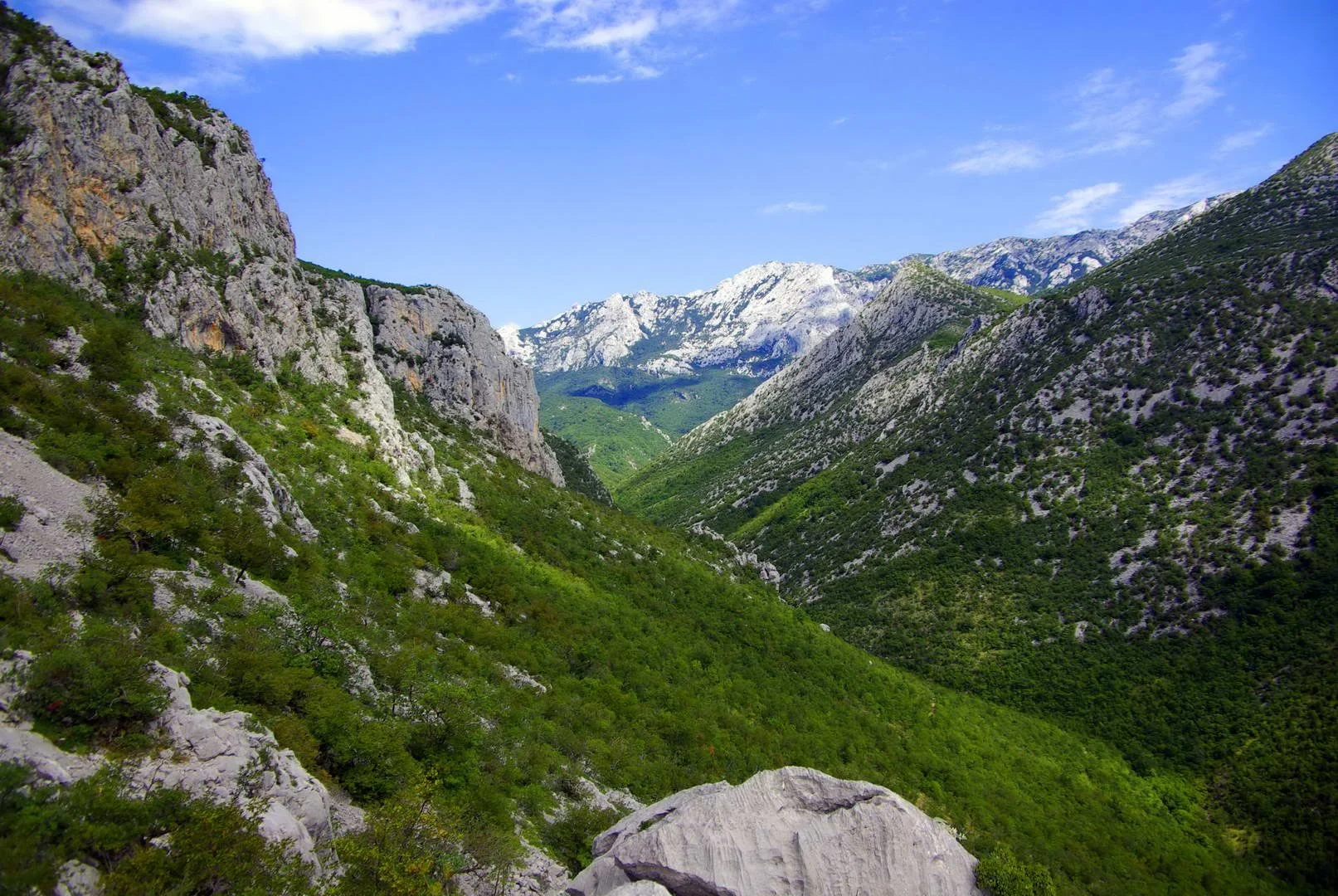
What to do: Hike between dizzying, 700-metre-high vertical limestone cliffs that frame the dramatic Velika Paklenica canyon. The main trail is wide, gently graded, and beautifully paved, allowing you to walk into the centre of the canyon past rushing mountain streams. You can even tour the secret underground bunkers built inside the cliffs by the Yugoslav military during the Cold War.
How to get there: Located 45 km (28 miles) northeast of Zadar. The drive takes about 40 to 45 minutes each way.
Car Rental or Private Taxi: Renting a car at the port or hiring a dedicated taxi driver for the day is the only reliable way to reach the park entrance gate at Starigrad-Paklenica and return comfortably before your ship's all-aboard call.
Where to Eat in Zadar
Zadar has an excellent selection of restaurants, cafés and traditional taverns.
Seafood is a major feature of local menus, with grilled fish, squid, shellfish and black risotto particularly popular.
The streets around the Old Town and the waterfront are good places to look for lunch.
Local Dishes to Try
Pašticada: Slow-cooked beef served with gnocchi.
Crni rižot: Black seafood risotto.
Grilled squid: A popular Adriatic seafood dish.
Brudet: A traditional fish stew.
Pag cheese: A distinctive sheep's cheese from the nearby island of Pag.
Maraschino: A cherry liqueur associated with Zadar.
Food and Drink Prices in Zadar
| Coffee | £1.50–£2.50 |
| Soft drink | £2.00–£3.00 |
| Bottled water | £1.00–£2.00 |
| Local beer | £2.50–£4.50 |
| Glass of wine | £3.00–£5.50 |
| Pizza | £8.00–£13.00 |
| Casual lunch | £10.00–£16.00 |
| Restaurant main course | £14.00–£25.00 |
Prices are indicative estimates and vary according to location and season.
Marella Shore Excursions in Zadar
Marella's published excursion programme has included:
Zadar by Foot
A guided walking tour of the historic centre, covering its Roman and medieval heritage, including the Church of St Donatus and the old city streets.
Zadar Tuk Tuk Adventure
A different way to explore the city, taking in coastal areas, the Sphinx of Zadar, the Sea Organ and Greeting to the Sun.
Plitvice National Park
A full excursion to one of Croatia's most famous natural attractions.
Plitvice is a UNESCO World Heritage Site, known for its beautiful lakes, waterfalls and forested landscapes.
The journey from Zadar takes considerably longer than visiting the city itself, so this is best suited to passengers who want a full day exploring the Croatian countryside.
Check the walking requirements and excursion duration before booking.
Is Getting Around Independently Easy?
Yes, particularly if your main interest is Zadar's historic centre.
Once you reach the Old Town, most attractions are within walking distance.
You can comfortably explore the Roman Forum, Church of St Donatus, Cathedral and waterfront during a typical port call.
If you want to visit Plitvice Lakes, an organised excursion is the more practical option because of the journey time and the need to return to the ship.
Beaches in Zadar
Kolovare Beach
One of Zadar's most popular beaches, located within reasonable distance of the historic centre.
It is a pebble beach with swimming access and nearby facilities.
Borik Beach
A popular coastal area with hotels, restaurants and watersports.
It is further from the Old Town and is best reached by taxi or local transport.
Puntamika
A pleasant coastal area with swimming spots and views across the Adriatic.
Shopping in Zadar
The Old Town has a good selection of souvenir shops, boutiques and traditional food outlets.
Popular purchases include:
Maraschino liqueur.
Pag cheese.
Croatian olive oil.
Local wines.
Lavender products.
Handmade jewellery and crafts.
Accessibility in Zadar
Zadar is relatively manageable for visitors with limited mobility compared with some of the region's hillier historic towns.
The Old Town is largely flat, but its stone paving can be slippery, particularly when wet.
The waterfront and main attractions are accessible on foot, although some historic buildings have steps.
Check the assigned cruise berth and any shuttle arrangements before planning your route.
Split, Croatia
Split is one of Croatia's most important historic cities and a highlight of an Adriatic cruise.
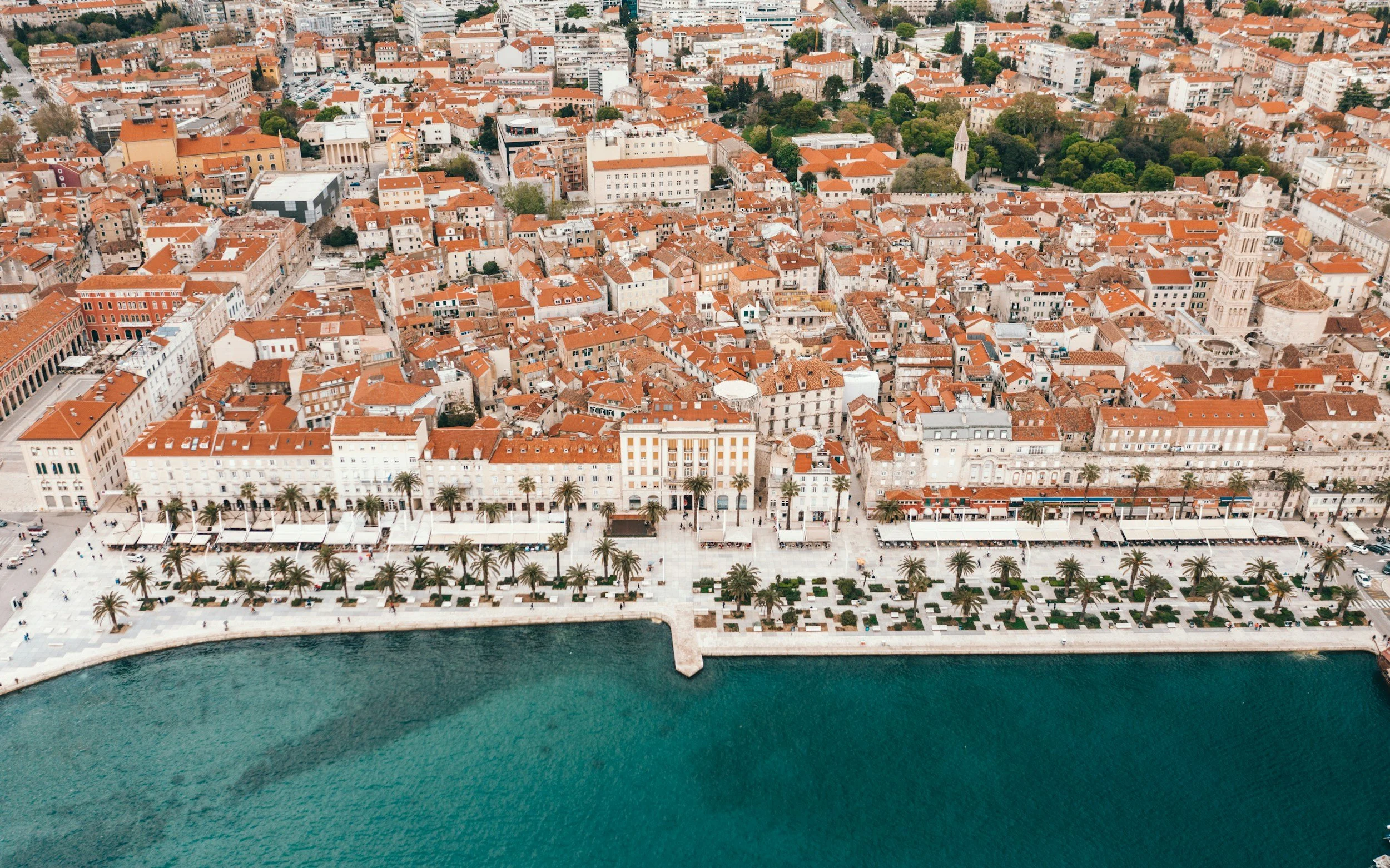
The city's most famous attraction is Diocletian's Palace, an extraordinary Roman complex that forms the heart of the modern Old Town.
Unlike many historic monuments, the palace is not simply an archaeological site. It is a living part of the city, with shops, cafés, restaurants and residential streets occupying the ancient buildings.
Split also has an attractive waterfront promenade, beautiful coastal scenery and easy access to other Dalmatian destinations.
Cruise Port: What to Expect
Cruise ships visiting Split, Croatia dock directly at the city’s main harbour along Obala kneza Domagoja, placing passengers within a flat 10-to-15-minute walk of the Old Town. Because the terminal sits right on the edge of the historic core, Marella Cruises rarely needs to operate a town shuttle here, making Split one of the easiest ports on an Adriatic itinerary to explore independently.
Cruise Port Area & Docking
Docking Location. Ships berth along the outer piers of the Port of Split on Obala kneza Domagoja. If multiple ships are in port at the same time, one vessel may occasionally drop anchor and use tender boats to bring passengers directly to the waterfront promenade.
Port Facilities. The cruise berths sit alongside the main Ferry Port of Split. You will find basic amenities right by the piers, including restrooms, luggage storage, ATMs, and local tour kiosks selling boat trips and hop-on, hop-off bus tickets.
Transport Hub Proximity. The city's main bus terminal (Autobusni kolodvor Split) and train station sit directly opposite the ferry piers, making onward regional travel straightforward.
Getting to Split Old Town & Diocletian's Palace
Walking (Recommended). Exit the pier area and turn right (north) onto Obala kneza Domagoja. Follow the flat, paved waterfront past the ferry terminals and bus station for roughly 10 to 15 minutes until you reach the Riva Promenade and the southern walls of Diocletian's Palace.
Step-Free Access. The entire route from the cruise berths into the Old Town is flat. For wheelchair users or strollers, enter Diocletian's Palace via the Bronze Gate (off the Riva) or the Silver Gate (on the eastern side) for step-free access into the historic core.
Taxis & Ride-Hailing. Official taxis and minivans line up just outside the port gates along Obala kneza Domagoja. Because the city centre is pedestrianised and so close, taxis are best saved for longer trips to Klis Fortress, Trogir, or Krka National Park. Apps like Uber and Bolt also operate locally.
Marella Shuttles. Because the port is within easy walking distance of the centre, Marella Cruises does not typically run a paid town transfer in Split. However, if your ship docks at one of the furthest outer berths, a complimentary port-authority shuttle may run from the gangway to the main port gates.
Language: Croatian.
Currency: Euro (€).
Distance to town: Approximately 500 metres to 1 km to the historic centre, depending on the berth.
Accessibility: The waterfront is relatively level, but the historic centre has uneven stone paving, steps and narrow passages.
Getting Around Split
Split is an excellent destination for exploring on foot.
The cruise port is close to the Riva and the entrance to Diocletian's Palace.
Most of the main attractions are within a compact area, and you can easily spend several hours exploring independently.
Taxis and local buses are available for visitors wanting to travel further afield.
Things to Do in Split
Explore Diocletian's Palace
Built for the Roman Emperor Diocletian in the late third and early fourth centuries, the palace is the city's most important historic attraction.
Its complex of streets, courtyards, gates and underground chambers is now part of the living Old Town.
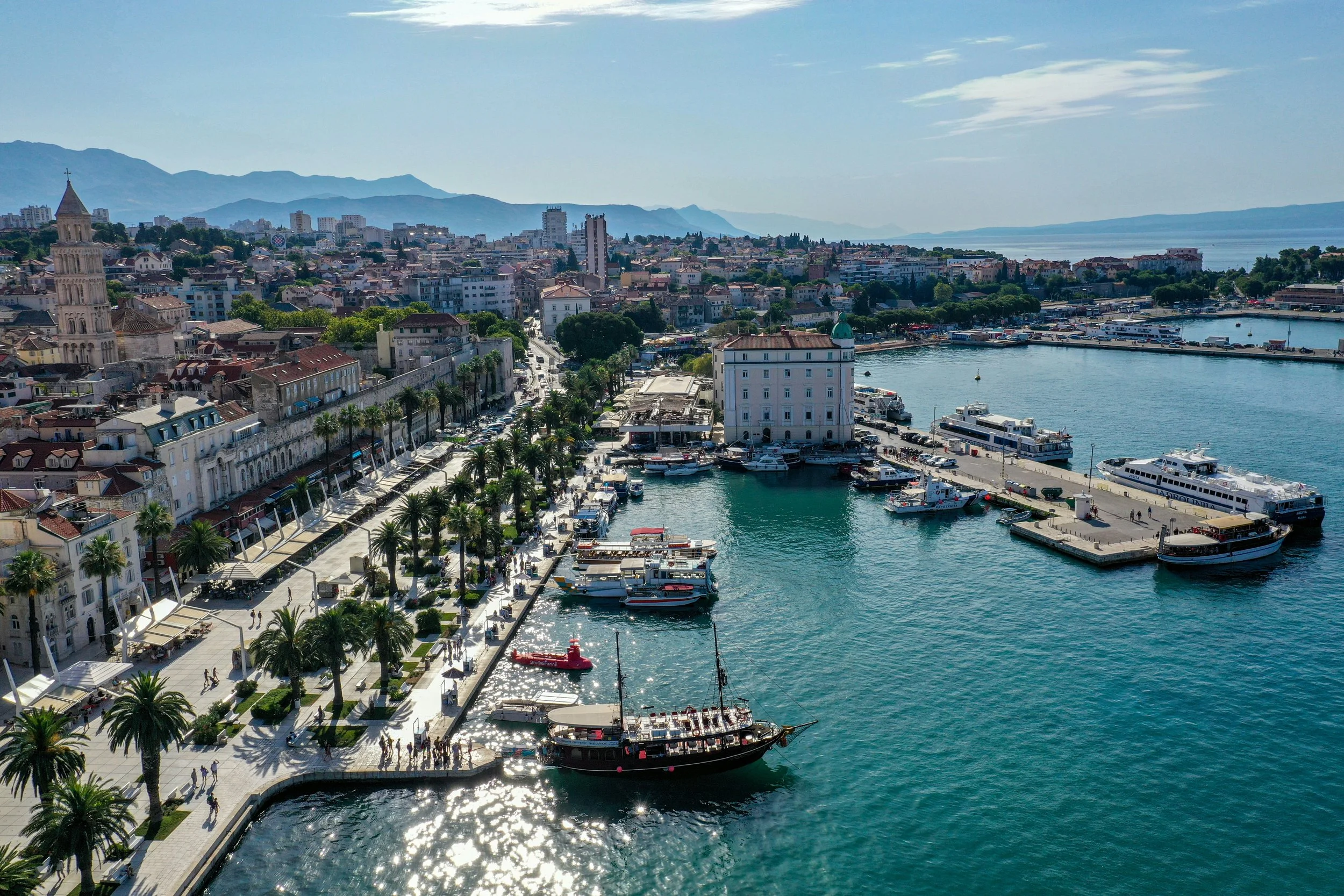
Highlights include:
Peristyle: The palace's central ceremonial courtyard.
Golden Gate: The most elaborate of the palace's historic entrances.
Silver Gate: Another important entrance to the ancient complex.
Temple of Jupiter: A small but impressive Roman temple.
Cathedral of Saint Domnius: Originally built as Diocletian's mausoleum.
Palace Cellars: A fascinating underground area beneath the palace.
Walk Along the Riva
Split's waterfront promenade is one of the city's most enjoyable areas.
Lined with palm trees, cafés and restaurants, it is a great place to sit and watch the world go by.
Visit Marjan Hill
Marjan Hill provides beautiful views across Split and the surrounding islands.
It is a popular walking and cycling area, although some routes involve steep climbs.
Explore the Green Market
The Pazar, or Green Market, is close to the eastern side of Diocletian's Palace.
It is a lively place to browse local produce, fruit, vegetables, flowers and souvenirs.
Visit Trogir
Trogir is a beautiful historic town located outside Split.
Its medieval centre is a UNESCO World Heritage Site, with narrow streets, historic buildings and an attractive waterfront.
It makes an excellent excursion for visitors who have already explored Split.
Where to Eat in Split
Split has a wide range of restaurants, from traditional Dalmatian taverns to modern waterfront establishments.
Seafood is particularly popular, but you will also find grilled meat, pasta, risotto and local specialities.
The streets around Diocletian's Palace and the Riva are particularly convenient for cruise passengers.
Local Dishes to Try
Peka: Meat or seafood slow-cooked beneath a traditional bell-shaped lid.
Pašticada: Slow-cooked beef served with gnocchi.
Soparnik: A traditional savoury pie filled with Swiss chard.
Black risotto: Seafood rice coloured with squid ink.
Grilled Adriatic fish: A local favourite, usually served simply.
Fritule: Small fried dough treats.
Food and Drink Prices in Split
| Coffee | £1.50–£2.50 |
| Soft drink | £2.00–£3.00 |
| Bottled water | £1.00–£2.00 |
| Local beer | £2.50–£4.50 |
| Glass of wine | £3.50–£6.00 |
| Pizza | £9.00–£14.00 |
| Casual lunch | £10.00–£17.00 |
| Restaurant main course | £14.00–£27.00 |
Prices are indicative estimates and will vary according to the restaurant and season.
Marella Shore Excursions in Split
Marella's published excursion programme has included:
Walking Split
A guided walking tour of the historic centre, including Diocletian's Palace, the palace cellars, historic gates and the main squares.
Salona and Trogir
A combination of Roman archaeological remains at Salona and the historic town of Trogir.
Best of Split and its Countryside
A sightseeing experience combining Split's Old Town with a journey into the surrounding countryside, including the coastal town of Omiš and a boat trip through the Cetina River canyon.
These excursions are worth considering if you want to see more than the city centre during your port call.
Is Getting Around Independently Easy?
Yes. Split is one of the best ports on the itinerary for independent sightseeing.
The cruise terminal is close to the waterfront and Diocletian's Palace, so you can explore the main attractions without needing a taxi or organised transfer.
A good independent day would include the palace, cathedral, Peristyle, Green Market and Riva, followed by lunch in a traditional restaurant.
If you want to visit Trogir, Salona or the surrounding countryside, you will need to organise transport or book an excursion.
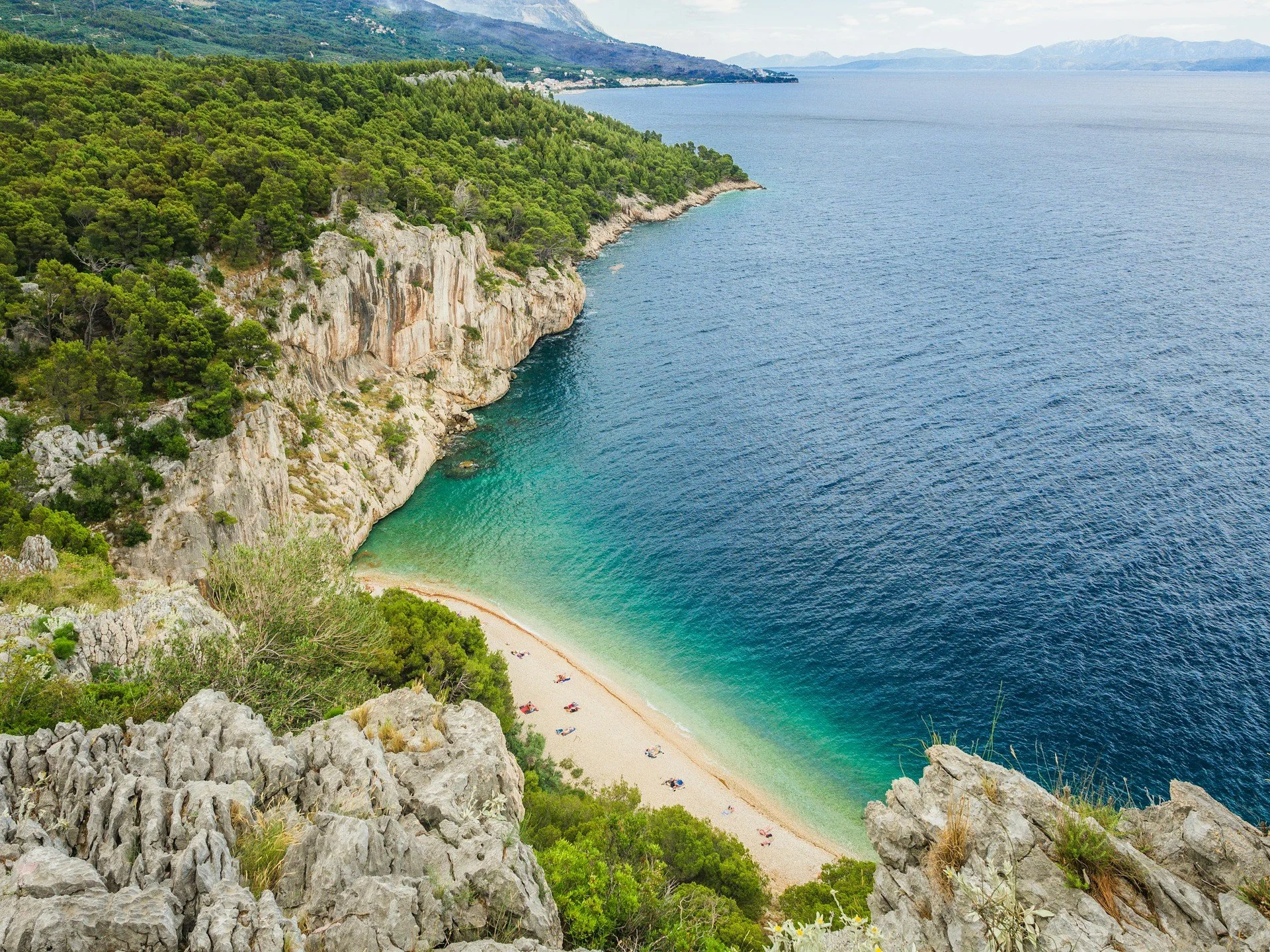
Beaches in Split
Bačvice Beach
One of Split's best-known beaches, located within walking distance of the city centre.
It is sandy in places and has cafés and facilities nearby.
Kašjuni Beach
A picturesque pebble beach beneath Marjan Hill, with beautiful views and clear water.
A taxi is the easiest way to reach it from the port.
Bene Beach
Located within the Marjan Park area, this is a popular swimming spot surrounded by trees.
It is further from the city centre and requires transport.
Shopping in Split
Split has a good mixture of traditional markets, independent boutiques and modern shops.
Popular purchases include:
Croatian olive oil.
Local wines.
Lavender products.
Pag cheese.
Traditional crafts.
Jewellery and leather goods.
The Green Market is particularly worth visiting if you want to see local produce and everyday market life.
Accessibility in Split
Split is relatively easy to explore because the port and main attractions are close together.
The Riva is largely level and provides a straightforward walking route.
However, Diocletian's Palace has uneven paving, steps and narrow passages. Some underground areas and historic buildings may also have restricted access.
Visitors with mobility difficulties should plan their route carefully and check accessibility at individual attractions.
Planning Your Marella Adriatic Adventure - FAQ
Which ports are easiest to explore independently?
Several destinations on the Adriatic Adventure itinerary are particularly suitable for independent sightseeing.
| Port | Getting to the town | Independent exploration |
|---|---|---|
| Dubrovnik | Bus, taxi or transfer required | Good |
| Kotor | Tender landing beside Old Town | Excellent |
| Trieste | Central attractions within walking distance | Excellent |
| Koper | Historic centre within walking distance | Very good |
| Zadar | Depends on assigned berth | Very good |
| Split | Historic centre close to cruise port | Excellent |
These are general assessments rather than accessibility ratings. Walking conditions and berth locations can affect the experience.
What currency do I need for an Adriatic cruise?
You will generally need euros for Croatia, Montenegro, Italy and Slovenia.
Although Montenegro is not a member of the European Union, it uses the euro as its currency.
Cards are widely accepted in the main tourist areas, but carrying a little cash is useful for smaller cafés, market stalls and occasional local purchases.
Is English widely spoken?
English is widely understood in tourist areas, particularly in Croatia, Montenegro, Italy and Slovenia.
You should have little difficulty ordering food, asking for directions or arranging transport in the main cruise destinations.
Are the Adriatic ports within walking distance of the ship?
It depends on the destination.
Split, Trieste, Koper and Kotor are particularly convenient for independent sightseeing.
Zadar is also manageable, although the assigned berth can affect the distance to the Old Town.
Dubrovnik requires transport from the main cruise port to the historic centre.
Which Adriatic port is best for beaches?
Split, Dubrovnik and Zadar offer some of the best opportunities for combining sightseeing with beach time.
Kotor has swimming areas around the bay, while Trieste and Koper offer more limited coastal bathing options.
Is Kotor a tender port?
Yes. Kotor is a tender port on the relevant Marella itineraries.
Passengers are transferred from the ship to the shore by tender boat. This is worth considering if you have mobility requirements or are uncomfortable boarding small boats.
Tender operations can also be affected by weather and sea conditions.
Do I need to book Marella shore excursions?
No. Several of the Adriatic destinations are easy to explore independently.
Split, Trieste, Koper and Kotor are particularly suitable for visitors who prefer to make their own arrangements.
However, excursions can be useful for attractions further inland, such as Plitvice Lakes, Postojna Caves, Predjama Castle and the surrounding countryside.
If you choose to explore independently, always allow sufficient time to return to the ship.
Is the Adriatic suitable for a first-time cruiser?
Absolutely. The Adriatic is an excellent introduction to cruising, particularly if you enjoy history, culture, architecture and exploring different countries.
The relatively short distances between destinations mean you can experience several different cultures and landscapes during a single cruise.
There is also a good balance between destinations that can be explored independently and those where an organised excursion can add something extra.
The Lowdown
The Adriatic Adventure is an excellent choice if you want a cruise that combines history, culture, scenery and a little time beside the sea.
It is particularly appealing to passengers who enjoy exploring independently. Several ports have historic centres close to the ship, allowing you to step ashore and discover the destination without necessarily paying for an organised excursion.
Dubrovnik and Kotor are arguably the most spectacular destinations for scenery and historic architecture, while Split offers an extraordinary combination of Roman history and modern Croatian life.
Trieste and Koper provide a different perspective, introducing you to the cultural influences of Italy and Slovenia.
Zadar is another highlight, with its unusual Sea Organ, historic Old Town and attractive waterfront.
Our advice: Don't try to cram too much into every port day. Some of the best Adriatic experiences come from simply wandering through historic streets, stopping for a coffee, enjoying a leisurely lunch and taking in the scenery.
The combination of easy-to-explore cities, fascinating history and beautiful coastline makes this one of Marella's most appealing European cruise itineraries.